

















































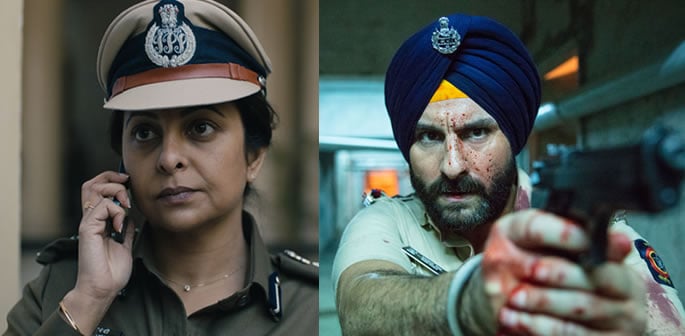
“Streaming has taught me to work faster."
Indian crime thrillers have become a prominent genre on streaming platforms, with shows like Sacred Games, Mirzapur and Delhi Crime helping establish crime dramas as a major part of India’s streaming landscape.
The genre’s rise is linked to several factors, including cheaper internet access, the advantages of long-form storytelling and audience interest in stories that reflect real social issues in India.
It has also given Indian filmmakers and writers more space to explore crime alongside issues such as politics, policing, inequality and social tensions.
From Sacred Games becoming Netflix’s first Indian original series to Mirzapur emerging as a major Amazon Prime Video title, crime dramas have played an important role in the growth of Indian streaming.
So, why have Indian crime thrillers found such a strong audience on OTT platforms, and what has made them so effective at telling stories rooted in contemporary India?
Why Streaming Platforms grew Rapidly in India
The growth of streaming platforms in India accelerated significantly after September 2016, when Reliance Jio launched its 4G network.
Before Jio’s entry, 1GB of mobile data in India cost approximately Rs 225. Prices later fell to around Rs 10 per GB, representing a drop of more than 90%, according to Rest of World.
The change had a significant impact on mobile data consumption.
Within six months of Jio’s launch, India’s monthly mobile data consumption rose from 200 million GB to more than 1 billion GB, according to a 2018 report by the Institute for Competitiveness at Harvard Business School.
The shift coincided with the expansion of India’s streaming market.
Netflix launched in India in January 2016, followed by Amazon Prime Video and Disney+ Hotstar. ZEE5, Sony LIV and JioCinema also expanded their original programming, giving audiences more platforms and Indian-language content to choose from.
The Covid-19 lockdowns provided another major boost to streaming.
With cinemas closed across India in 2020, audiences increasingly turned to streaming platforms for films and series, accelerating a market that had already been expanding.
Crime thrillers became particularly prominent within this growing streaming landscape.
Series including Sacred Games, Mirzapur and Delhi Crime demonstrated how OTT platforms could support Indian crime stories that combined suspense with themes drawn from society, politics and policing.
How the OTT Format allowed Crime Thrillers to Thrive

The OTT format suits crime storytelling because it gives creators more time to develop narratives than a conventional theatrical release.
A Bollywood film typically has to tell and resolve its story within a single sitting, which can limit the amount of time available for character development and gradually building tension.
An OTT crime series, by comparison, can unfold across eight or more episodes. This gives writers and directors greater scope to develop storylines, explore character motivations and allow tension to build over multiple episodes.
Research published by the Film and Television Institute of India has highlighted how serialised storytelling can sustain moral complexity across episodes. Characters can be explored from different perspectives over time, creating more opportunities to examine their motivations and decisions.
Sacred Games creator Vikramaditya Motwane has also discussed how working in the streaming format influenced his approach to filmmaking.
He said: “Streaming has taught me to work faster. You get more instinctive and tend to make the right choices in a shorter span of time.
“The experience of working in long-format content has massively helped me in making movies.”
Indian crime thrillers have subsequently used this longer format to explore subjects including caste violence, institutional corruption and political collusion.
Indian cinema has addressed many of these issues for decades, but streaming has given some creators more room to examine complex social themes within an extended narrative.
The Crime Thrillers That Defined Indian OTT
Several shows established that the crime thriller genre could dominate Indian streaming.
Each succeeded for a different reason, reflecting a distinct aspect of Indian social and political life.
Delhi Crime
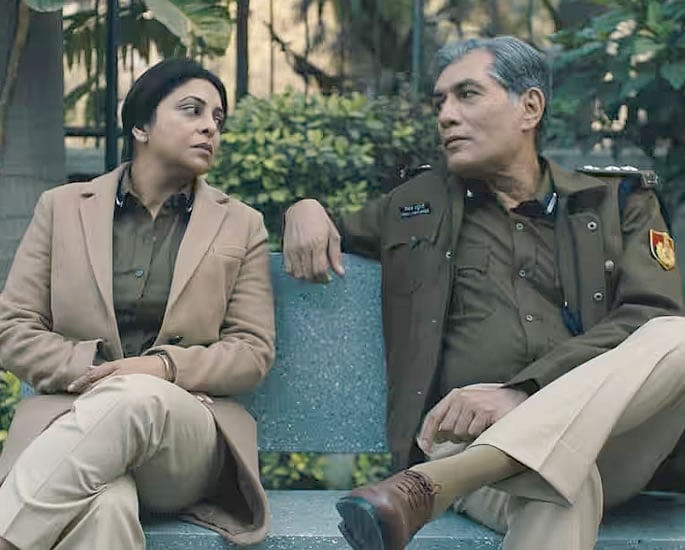
Delhi Crime was the first Indian show to win the International Emmy Award for Best Drama Series, taking the prize in 2020.
It dramatised the 2012 Nirbhaya gang rape investigation, following the Delhi police officers who led the case rather than the victims or perpetrators.
Creator Richie Mehta spent four years researching the investigation, reviewing police files and interviewing the officers involved:
“I want it to be a different point of view that no one’s considered.”
“I want the story to show the emotional process in catching them.”
The show’s International Emmy win demonstrated that Indian OTT crime content could compete at a global level and that realism, rather than spectacle, could drive international recognition.
Paatal Lok

Paatal Lok used a murder investigation to examine political corruption, caste violence, and the relationship between media power and political machinery in India.
Its protagonist, Inspector Hathiram Chaudhary, is neither heroic nor corrupt but a working police officer trying to solve a case within a system designed to obstruct him.
The show earned Jaideep Ahlawat the Best Actor award at the Filmfare OTT Awards and generated substantial critical discussion about how it depicted Indian institutions.
The Economic and Political Weekly described the show as “a ruthless deconstruction of contemporary India with its disturbing social stratification”.
The show also drew criticism from some quarters: Swarajya Magazine argued that its portrayal of Hindu characters reflected a political agenda.
Its second season, set in Nagaland, prompted academic debate about the accuracy of its regional portrayal, with researchers at the International Journal of Research Publication and Reviews noting concerns about stereotypical depictions of the Northeast.
Mirzapur
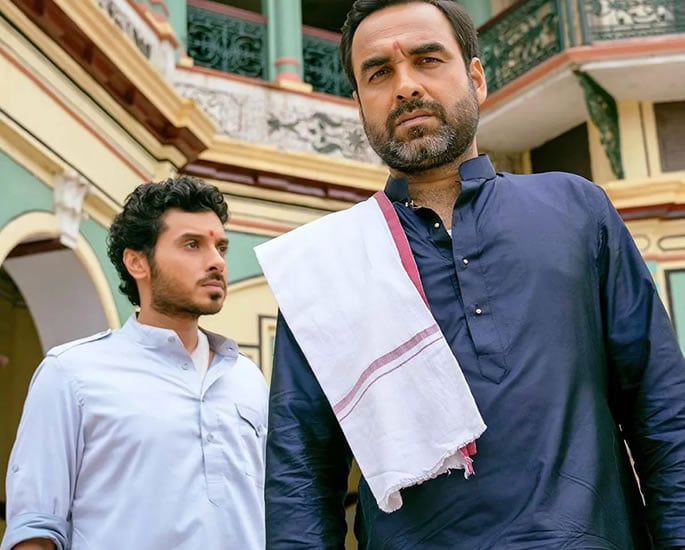
Mirzapur depicted the gang warfare, caste hierarchies, and political patronage networks of Uttar Pradesh’s Purvanchal region across three seasons.
Season 3, which premiered in July 2024, became the most-watched show on Prime Video in India on its launch weekend.
It broke all previous records, including those set by Season 2, according to Prime Video’s head of India originals, Nikhil Madhok.
The season was watched across 98% of India’s pin codes on its opening weekend and trended in the Top 10 across 85 countries, including the US, UK, Canada, and Australia.
Sacred Games
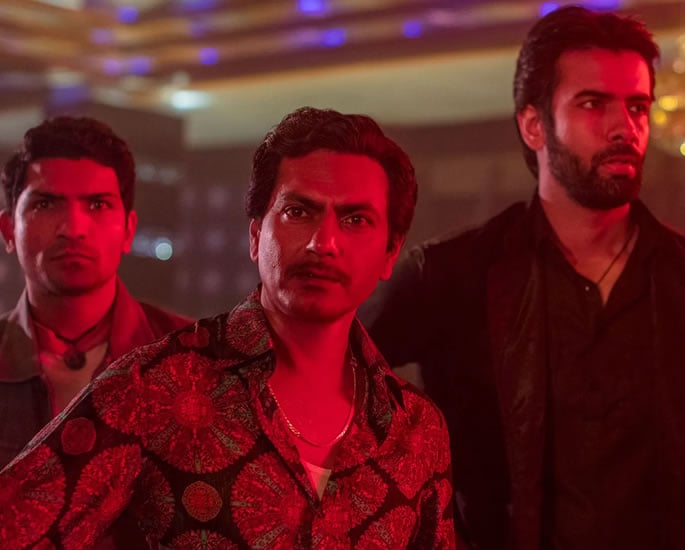
Sacred Games was Netflix India’s first original series, premiering in July 2018 and marking an important early step in the platform’s investment in Indian-language original programming.
Based on Vikram Chandra’s 2006 novel, the series follows Mumbai Police Inspector Sartaj Singh, who receives a call from wanted gangster Ganesh Gaitonde, who warns that Mumbai has 25 days before an unspecified catastrophe.
The series moves between Sartaj’s investigation and Gaitonde’s account of his rise through Mumbai’s criminal underworld. This dual timeline allowed the story to explore organised crime alongside political corruption, religious extremism and the city’s changing power structures.
Sacred Games ran for two seasons, demonstrating how a crime story could sustain a long-form narrative across multiple episodes and seasons.
Its scale, structure and subject matter also helped establish the potential for Indian crime dramas to become ambitious streaming productions rather than simply shorter adaptations of familiar Bollywood crime narratives.
Aarya

Aarya demonstrated that the Indian crime thriller genre on streaming platforms could centre on female protagonists with the same commercial success and critical reception as male-led shows.
Sushmita Sen played Aarya Sareen, a woman who takes over her family’s criminal network to protect her children after her husband’s murder.
The series follows Aarya as she navigates the drug trade, law enforcement, and rival criminal organisations, while trying to keep her children safe and understand who orchestrated her husband’s death.
The show was nominated for the International Emmy for Best Drama Series in 2021 and ran for three seasons on Disney+ Hotstar.
How Regional Language Shows are Expanding the Genre

Indian crime thrillers on OTT platforms are not confined to Hindi-language content.
Tamil, Malayalam, Telugu and Marathi productions have expanded the genre, with regional stories reaching audiences beyond their original linguistic markets.
Tamil-language crime content has been particularly prominent.
Prime Video’s Suzhal: The Vortex follows two police officers investigating the disappearance of a schoolgirl during an annual temple festival in a small Tamil Nadu town.
The series combines the investigation with the social and cultural dynamics of the community, giving its crime narrative a distinctly regional setting.
It went on to win the Best Drama Series award at the 2023 Asian Academy Creative Awards and received an International Emmy nomination.
Malayalam crime dramas have also found an audience through streaming.
Kerala Crime Files on Disney+ Hotstar follows police investigating a murder in Kerala, with the first season centred on the search for a suspect based on limited information. Its procedural approach places the investigation and police work at the centre of the story rather than relying primarily on spectacle.
Telugu-language crime content has expanded through platforms including ZEE5 and Aha.
ZEE5’s Puli Meka follows a female police officer investigating a series of murders linked to a serial killer. The series uses the investigation to explore the pressure placed on the police as they attempt to identify the killer and prevent further deaths.
In Marathi, Manvat Murders on Sony LIV dramatises a series of murders in Maharashtra’s Manvat village. Released in October 2024, the series is based on a real case from the 1970s and follows the investigation into multiple deaths that initially appeared unrelated.
The expansion across regional languages has given streaming platforms a wider range of Indian crime stories, with local settings, dialects and social contexts becoming part of the genre.
It has also allowed viewers to encounter crime narratives from different parts of India without relying solely on Hindi-language productions.
Why are Indian Audiences choosing Crime Thrillers?

The popularity of crime thrillers on Indian OTT platforms reflects several audience preferences that the genre is well placed to address.
Its combination of suspense, ongoing investigations and interconnected storylines gives viewers reasons to continue watching across multiple episodes.
The multi-episode format is particularly suited to crime narratives.
Investigations can unfold gradually, while characters, motives and new evidence can be introduced throughout a season. This creates opportunities for cliffhangers and unresolved questions that encourage viewers to continue with the story.
Indian crime thrillers have also used recognisable social and political settings to give their stories wider context.
Mirzapur explores power and criminal networks in eastern Uttar Pradesh, while Paatal Lok examines corruption and inequality through a police investigation.
Delhi Crime, meanwhile, dramatises police investigations based on real cases, including the events surrounding the 2012 Delhi gang rape and murder.
These different approaches allow crime dramas to operate as both entertainment and social storytelling.
The genre can use an investigation as its central narrative while examining wider issues such as policing, political influence, inequality and the relationship between institutions and the public.
The binge-watching model has further strengthened this format.
Viewers can watch several episodes in succession or return to a series across multiple sessions, allowing longer crime narratives to build gradually rather than resolving their central mystery within a single film.
The Global Reach of Indian OTT Crime Content

The international reach of Indian OTT crime thrillers has grown significantly in recent years, with several series finding audiences beyond India.
Delhi Crime was a major milestone for the genre when it won the International Emmy Award for Best Drama Series in 2020, becoming the first Indian series to receive the honour.
Delhi Crime was acquired by Netflix for international distribution, making the series available to viewers across multiple overseas markets. Meanwhile, Aarya was distributed internationally through Disney+ Hotstar, extending its reach beyond its original Indian audience.
The international appeal of these series is closely tied to their Indian settings and storylines.
Viewers outside India encounter social structures, policing systems, political dynamics and cultural contexts that differ from those commonly presented in American and European crime dramas.
At the same time, the genre does not depend entirely on large-scale action or visual effects. Many Indian crime thrillers place greater emphasis on characters, dialogue, investigations and narrative development.
This allows platforms to offer crime stories with a strong production value while keeping the focus on storytelling rather than spectacle.
What Challenges does the Genre Face?

The growth of Indian crime thrillers on streaming platforms has taken place alongside a significant change in how streaming content is regulated.
In February 2021, the Indian government introduced the Information Technology (Intermediary Guidelines and Digital Media Ethics Code) Rules, bringing OTT platforms under a formal regulatory framework overseen by the Ministry of Information and Broadcasting.
The rules introduced a code of ethics for digital media and requirements including content classification and grievance redressal mechanisms.
Legal analysts have examined how these obligations affect OTT platforms and could influence decisions around content and compliance.
The controversy surrounding individual shows has also highlighted the regulatory and legal pressures facing streaming services.
Amazon Prime Video’s Tandav faced legal complaints following its 2021 release over its portrayal of Hindu deities and political figures. The series was subsequently edited after the controversy.
Netflix’s A Suitable Boy also faced a police complaint over a kissing scene featuring an interfaith relationship filmed at a temple.
These cases demonstrate that OTT platforms in India operate within an environment where creative decisions can attract legal complaints, public criticism and regulatory scrutiny.
Indian OTT Crime Thrillers - Key Facts
- Sacred Games was Netflix India's first original series, premiering in July 2018.
- Delhi Crime became the first Indian show to win the International Emmy Award for Best Drama Series in 2020.
- Mirzapur Season 3 became Prime Video's most-watched show in India on its launch weekend, trending in the Top 10 across 85 countries.
- Before Reliance Jio's launch in September 2016, 1GB of mobile data in India cost approximately Rs 225. After Jio, prices fell to around Rs 10 per GB.
- The IT Rules 2021 brought Indian OTT platforms under the Ministry of Information and Broadcasting for the first time, requiring content classification and grievance mechanisms.
- Aarya on Disney+ Hotstar was nominated for the International Emmy for Best Drama Series in 2021.
The crime thriller genre also faces a growing challenge around saturation.
As Indian platforms commission more crime thrillers, shows can increasingly compete for similar stories, settings and themes.
Regional crime, police investigations, organised crime and political corruption have become recurring elements across the streaming landscape, making differentiation more important for new productions.
Maintaining audience interest across multiple seasons presents another challenge.
Mirzapur Season 3 received a more mixed critical response than its earlier seasons, with critic Uday Bhatia writing that the season “struggles to justify its existence beyond serving fan expectations”.
The response illustrates one of the difficulties facing established crime franchises: continuing a successful story while giving audiences a reason to remain invested.
The pressure is not limited to individual series.
As more platforms compete for viewers, crime thrillers need to distinguish themselves through their characters, settings, investigations and approach to familiar themes while maintaining consistency across episodes and seasons.
Indian crime thrillers have become a defining part of OTT, shaped by the combination of affordable internet access, long-form storytelling and growing demand for stories rooted in contemporary India.
The streaming format has given creators more room to develop complex investigations, characters and social themes across multiple episodes.
Series such as Sacred Games, Mirzapur and Delhi Crime have shown how crime stories can examine issues including corruption, political power, policing and inequality while remaining accessible to a broad audience.
Their reach has also extended beyond India, with large fan followings and international awards.
The genre nevertheless faces challenges, from changing regulation and audience expectations to increasing competition between platforms.
As more crime thrillers enter the market, originality, strong characters and distinctive settings are likely to become increasingly important.
For now, the factors that helped Indian crime thrillers grow remain central to streaming: accessible mobile data, the flexibility of the OTT format and audiences’ continued interest in stories that reflect different aspects of Indian society.
The next phase of Indian OTT crime drama will show whether the genre can maintain that momentum while continuing to find new stories to tell.