
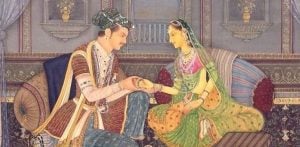

















































the decision involves her wife's daughter
There are soap betrayals, and then there is kissing your wife’s daughter.
For years, EastEnders viewers watched Suki Panesar-Unwin (Balvinder Sopal) and Eve Panesar-Unwin (Heather Peace) fight to build a life together.
Their relationship offered something still relatively unusual on mainstream British television: an older British Asian woman openly loving another woman, without abandoning her identity or family.
Now, with Eve kissing Suki’s daughter Ash (Sakira Vel), that hard-won story looks dangerously close to becoming a scandal for scandal’s sake.
The question is not whether queer British Asian characters should experience conflict. Of course they should.
It is whether EastEnders can explore their flaws without making betrayal and family shame the defining features of their lives.
A Betrayal Built on Another Betrayal
The latest twist did not arrive without warning. Suki and Eve had been trying to adopt Ria Virdi, the girl placed in their care.
When Ria’s birth mother, Harleen, sought to reunite with her daughter, Suki secretly offered her money to withdraw her challenge.
After seeing Harleen’s love for Ria, however, Suki changed course. She argued that mother and daughter deserved another chance, leaving Eve blindsided.
Ash then exposed the payment, bringing the couple’s adoption journey to an abrupt end.
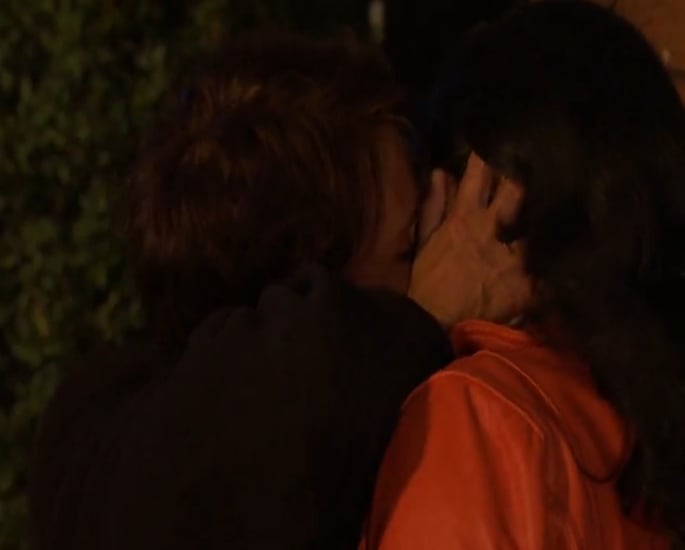
Eve lost the child she had hoped to raise, alongside much of her trust in her wife. On 19 November, she removed her wedding ring and turned to alcohol at The Albert, where Ash was nursing her own resentment towards Suki.
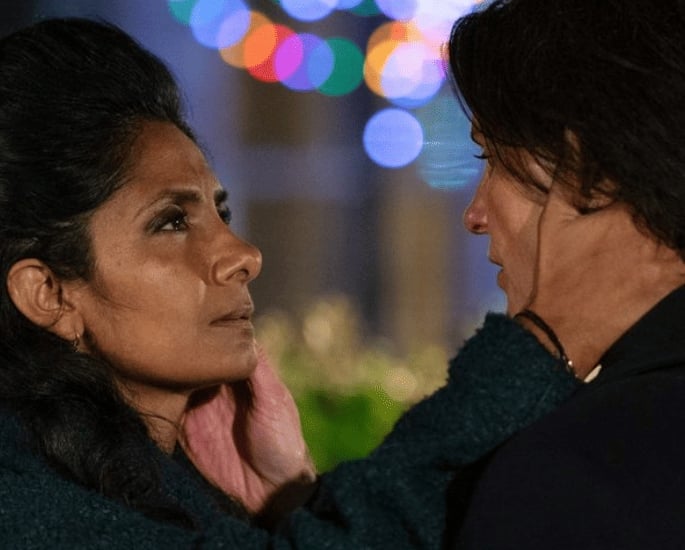
One conversation became several drinks, dancing and a passionate kiss. The two then entered Ash’s GP surgery together, with the episode implying that their encounter might go further.
It did not establish what happened behind the closed door.
There is a cruel symmetry here. Suki betrayed Eve’s trust while trying to protect their family. Eve responded by betraying Suki with someone capable of inflicting maximum emotional damage: her own daughter.
Yet Ria and Harleen should not disappear beneath the scandal. Their relationship raised genuine questions about birth families, children’s welfare and who gets to decide what makes a good parent.
Those questions deserve more than a convenient route to the next explosive cliffhanger.
Why Suki and Eve Mattered
When Suki arrived in Walford, she was formidable, controlling and often cruel. She had spent years in a heterosexual marriage with Nish Panesar, while struggling to acknowledge her own sexuality.
Her disapproval of Ash’s bisexuality made their mother-daughter relationship especially painful.
That history gave her romance with Eve emotional weight. Suki’s journey was not simply about falling in love.
It involved recognising the double standards she had imposed on her daughter, confronting a violent and controlling marriage, and choosing a future she once denied herself.
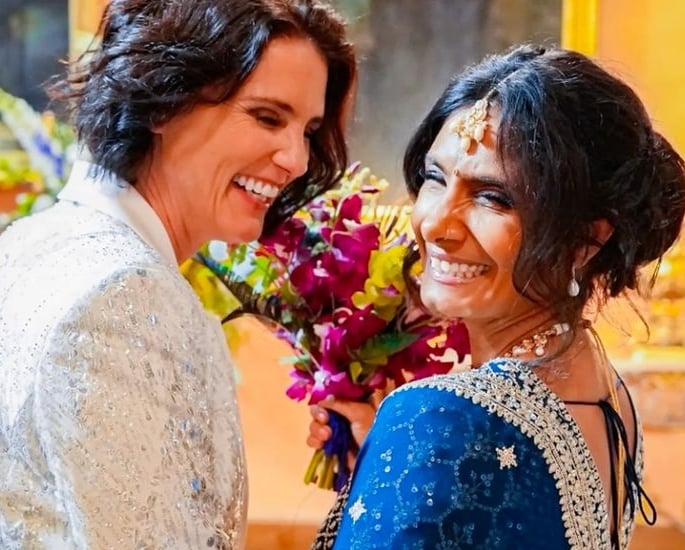
On 1 January 2025, Suki and Eve became the first lesbian couple to marry in EastEnders. The wedding mattered because an older South Asian woman was allowed a public, celebrated commitment, not just a secret romance.
It also challenged familiar assumptions about British Asian women on screen. Suki was neither a dutiful stereotype nor an uncomplicated role model. She could be affectionate, ambitious, selfish and vulnerable at once.
Sopal has embraced that complexity. Speaking to Radio Times earlier in 2026, she welcomed the return of Suki’s darker side, questioning the expectation that Asian women should always appear compliant.
That is precisely why this storyline deserves careful writing. Suki’s identity must remain more than the explanation for her mistakes, just as Eve and Ash’s sexuality must remain more than the mechanism for a shock.
What Queer British Asian Experiences Tell Us
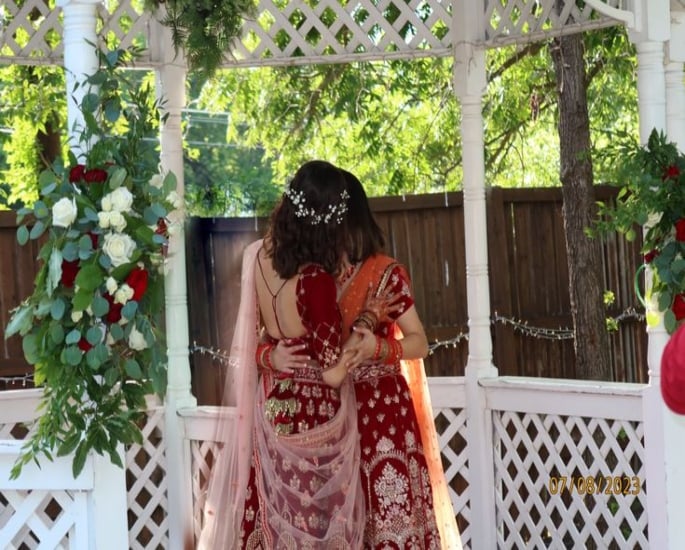
The stakes extend beyond Walford because the intersection of sexuality, family and cultural belonging is not purely fictional.
One woman described how her family became distant after she told them she was a lesbian.
She said:
“I felt like a stranger in my own home.”
Another interviewee recounted a different response. Although her father struggled with the revelation, her mother embraced her and told her never to apologise for being herself.
These women were not commenting on the current EastEnders storyline. Their earlier testimonies illustrate something important, however: British Asian family relationships cannot be reduced to a single narrative of rejection.
Suki and Ash’s earlier clashes echo some of those tensions. But the possibility of reconciliation also matters.
Viewers should be able to imagine a British Asian parent learning, apologising and growing, rather than watching every tentative repair collapse into another humiliation.
These experiences show why stories of acceptance, estrangement and chosen family need space to coexist.
When Complexity Becomes a Shock Tactic
EastEnders is a soap, not a public-information campaign. Affairs, secrets and impossible family entanglements are its currency.
Demanding that Suki, Eve and Ash behave perfectly because they represent marginalised groups would deny them the complexity afforded to countless heterosexual characters.
The concern is not that Eve makes a terrible decision. It is that the decision involves her wife’s daughter, after viewers have already watched this family endure secrecy, manipulation, violence and the collapse of their hopes of parenthood.
There is a difference between writing conflict that emerges from character and introducing an extreme betrayal to guarantee attention.
Eve’s grief and Ash’s anger explain their vulnerability, but they do not automatically make their attraction convincing.
Ash’s return was supposed to reopen unresolved wounds with Suki. As a bisexual British Asian daughter who had faced her mother’s judgement, she has a story worth telling independently of Eve.
Making her the instrument of her mother’s most devastating romantic betrayal risks narrowing that story.
There is also a troubling irony in turning a series about queer family-making into one where the central queer family destroys itself from within.
One dramatic plot cannot represent an entire community, but when comparable stories remain scarce, each portrayal can carry disproportionate weight.
That does not make this twist inherently harmful. Its value will depend on whether the aftermath examines motivations and consequences, or simply moves from one sensational reveal to the next.
The strongest outcome would be neither instant forgiveness nor punishment for its own sake.
Suki needs to face the harm caused by her secrecy, without being reduced to the domineering Asian mother. Eve must take responsibility for her actions, even while grieving Ria. And Ash needs a voice beyond anger at Suki or attraction to Eve.
Crucially, the programme should return to the questions it has opened about parenthood. Ria is a child, not just a plot device. Harleen’s right to seek reunification and the emotional impact on everyone involved deserve sensitive attention.
The writers could also give Suki and Ash a conversation long overdue: not simply about Eve, but about Suki’s earlier rejection of her daughter’s sexuality and how difficult acceptance can be to rebuild.
Queer British Asian representation is strongest when characters are allowed ordinary happiness alongside extraordinary drama. That means friendships, family meals, reconciliation and mundane domestic life matter just as much as secrets and heartbreak.
EastEnders has earned praise for giving Suki and Eve a love story with history, tenderness and visibility. The latest twist has put that achievement under pressure, but it has not erased it.
The real test is what happens after the shock wears off. The problem is not that queer British Asian characters behave badly. It is whether the programme remembers that they deserve full lives beyond the betrayal.