

















































local services appear to face harsher enforcement
India has banned 25 streaming platforms over allegations of promoting “obscene” content, marking one of the country’s most aggressive digital crackdowns to date.
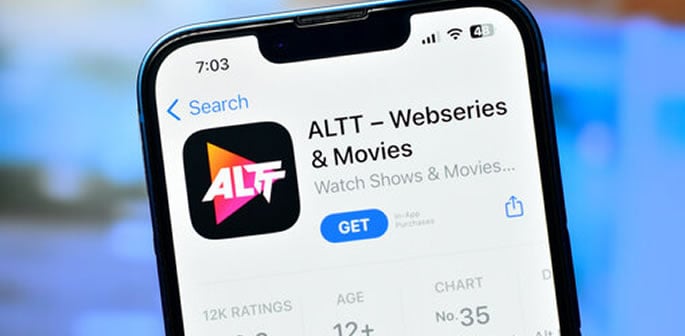
The order, issued by the Ministry of Information and Broadcasting, targets platforms such as Ullu and ALTT, lesser-known globally, but wildly popular in India for edgy and adult-centric programming.
Many of these services had amassed millions of users, including paying subscribers.
The Indian authorities instructed internet service providers and app stores, including Google Play and Apple’s App Store, to restrict access earlier this week.
The ministry invoked the Information Technology Act of 2000 and IT Rules of 2021 to justify the block.
The action follows months of pressure from the National Commission for Protection of Child Rights and a Parliamentary Standing Committee on Information Technology, which raised concerns about mature content streaming without safeguards.
According to data from Appfigures, 10 of the banned services had been offering in-app purchases via the app stores, collectively generating around £4.2 million since launch with nearly 105 million downloads.
Their lower subscription fees, compared to global players like Netflix, contributed to the high download-to-revenue gap.
Some platforms, never listed on official app stores or removed previously, offered APKs directly through their websites.
Balaji Telefilms, which owns ALTT, reported that the platform added 1.06 million subscribers in 2025, with content watched for over 5.8 million hours.
It generated £1.7 million in revenue that year, and drew 160 million annual views.
By July 25, 2025, ALTT’s website was inaccessible via most Indian internet providers, and its app was unavailable on the Google Play Store and Apple App Store in India.
Ullu, another popular platform on the list, remained live on the Indian Play Store. Its iOS version, however, was no longer listed. The website remained accessible as well.
According to a regulatory filing, Ullu Digital, Ullu’s parent company, posted a net profit of £1.8 million for the 2024 financial year.
It reported a revenue of £8 million and a net worth of £17 million.
Despite the crackdown, the platforms were continuing to attract large audiences.
Ullu saw 1.9 million worldwide visits in June 2025, up 10% year-on-year. ALTT recorded over 130% growth, reaching 776,400 visits.
In India, Ullu saw 18.9% growth to 1.8 million visits. ALTT’s local traffic surged by 157.8%, hitting 696,200 visits in June.
This isn’t the first time Indian authorities have targeted streaming content.
Global platforms like Netflix and Amazon Prime Video have also been pressured to remove or censor content deemed offensive.
However, local services appear to face harsher enforcement, especially on the grounds of obscenity, despite the legal ambiguity.
Under Indian law, watching consensual adult content in private is not a criminal offence. Yet, authorities continue to clamp down in the name of public decency and child safety.
In 2023, the then Information and Broadcasting Minister warned streamers not to distribute abusive or obscene content.
Thousands of pornographic websites have been blocked in India over the years.
And earlier in 2025, the Supreme Court issued notices to both streaming platforms and the government in response to a petition demanding stricter regulation of explicit online material.
Still, enforcing such bans remains a challenge.
One digital policy analyst said: “These smaller platforms often vanish and return under different names, apps or web domains.
“And with platforms using Instagram and YouTube for promotion, full eradication is nearly impossible.”
Even intermediaries like Google, Apple and internet providers struggle to contain the spread, particularly when apps and videos resurface through alternative channels or private networks.