














































Another major similarity lies in the conflicts
The Odyssey and the Ramayana are two of the great epics but are they similar?
The two ancient pieces of literature have sparked renewed discussion following the release of Christopher Nolan’s The Odyssey in cinemas.
While the stories emerged from different cultures and traditions, both follow heroic figures separated from their homes, tested through extraordinary challenges and eventually reunited with their kingdoms.
From legendary bows and battles for love to supernatural obstacles and questions of duty, the similarities between Homer’s epic and Valmiki’s epic have fascinated readers for centuries.
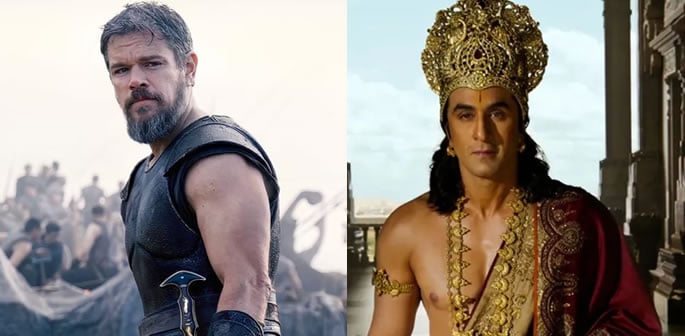
Since Nolan’s adaptation was released, social media users have pointed out similarities to the Ramayana, which will see its own adaptation released in late 2026.
Understanding the similarities requires looking beyond individual scenes and exploring the deeper ideas that shape both narratives.
Two Ancient Epics built around Extraordinary Journeys
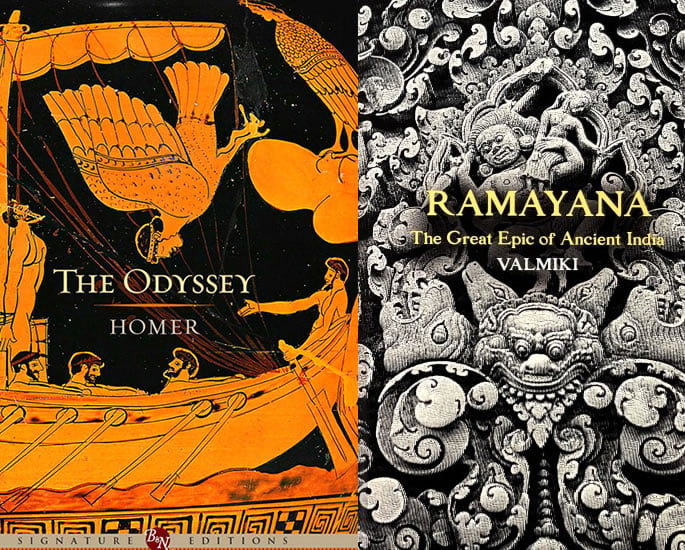
The Ramayana and The Odyssey are among the world’s most influential ancient epics.
The Ramayana, traditionally attributed to the sage Valmiki, is believed by many scholars to have developed between the first millennium BCE, with its earliest layers often dated between the 7th and 1st centuries BCE.
The Odyssey, attributed to the Greek poet Homer, is generally dated to around the 7th or 8th century BCE.
Both stories centre on heroes whose lives are transformed by separation, conflict and the struggle to restore order.
In Homer’s epic, Odysseus attempts to return home to Ithaca after the Trojan War. His journey lasts 10 years and follows a decade-long war, meaning he is away from his wife Penelope and son Telemachus for around 20 years.
The Ramayana follows Rama’s 14-year exile from Ayodhya. Accompanied by Sita and Lakshmana, Rama’s journey changes after Sita is abducted by Ravana, leading to the battle in Lanka and his eventual return home.
Although the circumstances differ, both epics are ultimately shaped by the hero’s struggle to return and reclaim a rightful place.
The Hero who must Prove Himself
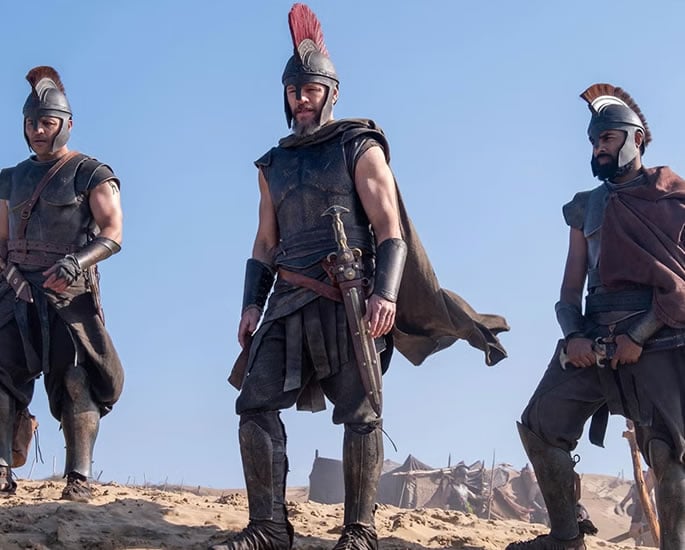
One of the most discussed similarities between The Odyssey and the Ramayana involves a powerful bow that only the true hero can master.
In The Odyssey, Odysseus returns to Ithaca disguised as a beggar after years away. His wife Penelope has been pressured by numerous suitors who want to marry her and claim power over the kingdom.
To identify her rightful husband, Penelope announces a challenge involving Odysseus’ great bow. None of the suitors can string it.
When Odysseus attempts the challenge, he succeeds effortlessly and reveals his true identity.
The scene has drawn comparisons with Sita’s swayamvara in the Ramayana.
During the ceremony, King Janaka declares that whoever can lift and string Lord Shiva’s divine bow will marry Sita.
Many powerful rulers fail, but Rama successfully lifts the bow and breaks it while attempting to string it, proving his strength and worthiness.
While the circumstances are different, both scenes use the bow as a symbol of legitimacy, identity and exceptional ability.
Wars Fought to rescue a Beloved Woman

Another major similarity lies in the conflicts that drive each hero’s journey.
In The Odyssey, the Trojan War begins after Helen is taken to Troy by Paris, leading Greek forces to launch a prolonged campaign against the city.
Odysseus becomes one of the key warriors involved in the conflict before beginning his difficult journey home.
In the Ramayana, Rama’s battle against Ravana begins after Sita is abducted and taken to Lanka.
Both wars are deeply personal as the conflicts are shaped by loyalty, love and honour.
However, the motivations and cultural meanings behind these conflicts differ.
The Trojan War is connected to ideas of reputation, alliances and heroic achievement in ancient Greek tradition, while Rama’s battle is closely associated with dharma, righteousness and restoring moral order.
Supernatural Forces
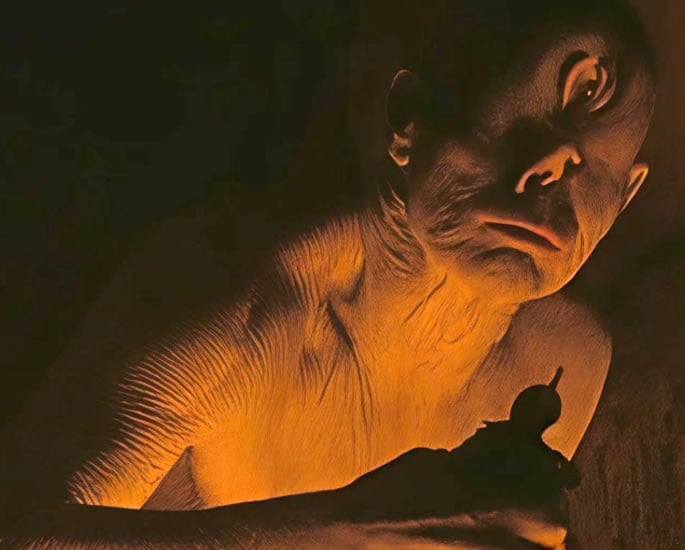
Both epics move beyond ordinary human experiences by introducing gods, mythical creatures and supernatural challenges.
Odysseus encounters a series of extraordinary obstacles during his journey, including the Cyclops, the Sirens and the sorceress Circe.
The gods also influence his fate, with Poseidon creating obstacles while Athena supports his return.
Rama’s journey also involves supernatural forces. During his search for Sita, he encounters demons and receives assistance from divine and extraordinary beings, including Hanuman and the vanara army.
Both heroes also face moments involving deception and illusion.
In the Ramayana, the golden deer that captures Sita’s attention is revealed to be the demon Maricha in disguise. The deception draws Rama away and creates the opportunity for Ravana to abduct Sita.
In The Odyssey, Odysseus faces magical transformations and illusions, including Circe turning his companions into animals.
These moments highlight a shared ancient storytelling idea: heroes must overcome not only physical enemies but also deception and temptation.
Penelope and Sita represent Loyalty
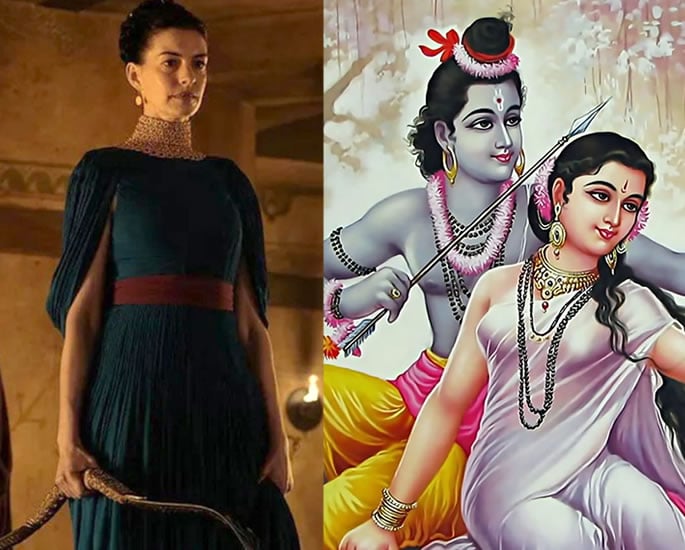
The absence of the hero creates another connection between the two epics: the portrayal of the women waiting for their return.
In the Ramayana, Sita remains committed to Rama despite being held captive in Lanka by Ravana. Her faith and endurance become central aspects of her character.
Penelope faces a different form of hardship in The Odyssey. While she is not physically imprisoned, she is surrounded by suitors in Ithaca who attempt to force her into choosing a new husband while Odysseus is presumed dead.
Penelope delays their demands through clever strategies, including promising to choose a husband once she finishes weaving a cloth, which she secretly unravels each night.
Both characters represent loyalty, patience and resilience.
However, their stories reflect different cultural expectations and ideals surrounding marriage, duty and virtue.
The Return of the Rightful Ruler
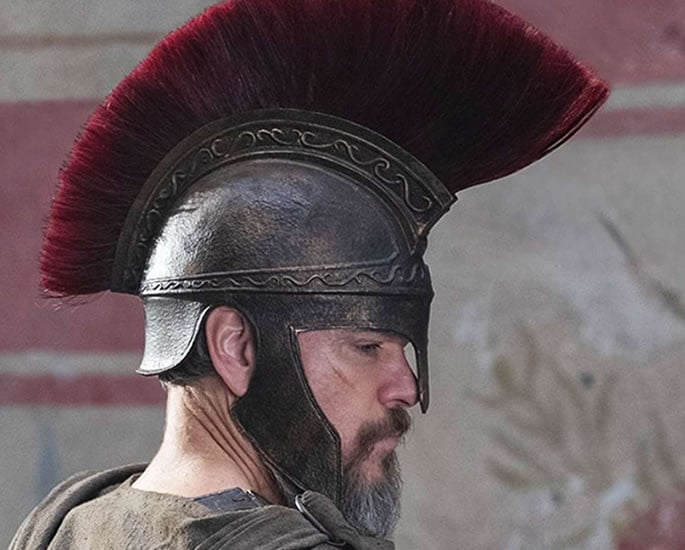
At the heart of both epics is the restoration of order after years of uncertainty.
Odysseus returns to Ithaca and removes the suitors who have taken control of his household. His return restores his authority as king and reunites him with Penelope and Telemachus.
Rama returns to Ayodhya after defeating Ravana and completing his exile. His return is celebrated as a restoration of justice and is traditionally associated with the festival of Diwali.
Both present the hero’s return as the rebuilding of society after a period of disruption.
Was Homer influenced by the Ramayana?
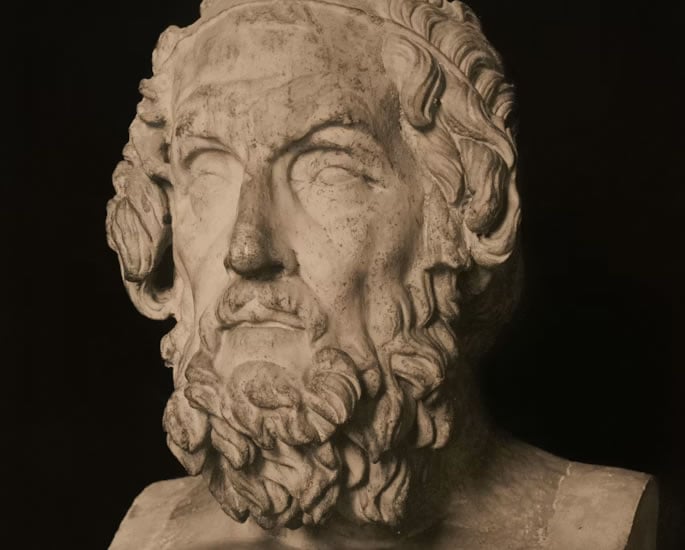
The similarities between The Odyssey and the Ramayana have led some writers and researchers to question whether one epic influenced the other.
In the 19th century, French scholar Hippolyte Fauché suggested that Homer may have been influenced by Indian literature, including the Ramayana.
However, this idea remains debated.
There is currently no established academic consensus that Homer drew directly from the Ramayana.
Both epics developed within rich oral traditions, meaning stories and themes could travel across cultures over long periods. At the same time, similarities do not necessarily prove direct influence.
Many scholars argue that elements such as heroic journeys, lost loved ones, supernatural challenges and the restoration of justice are common features of ancient epic storytelling.
Different Heroes, Different Ideals
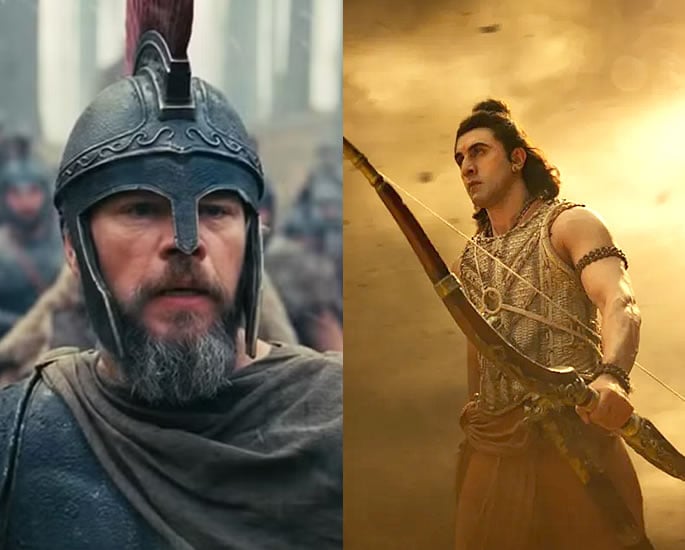
Although The Odyssey and the Ramayana share several narrative similarities, the values at the centre of each story are distinct.
Odysseus is celebrated for his intelligence, adaptability and ability to overcome challenges through strategy. His greatest strength is often described as his cleverness.
Rama, meanwhile, is revered in Hindu tradition as an avatar of Lord Vishnu and an embodiment of dharma, representing duty, righteousness and moral responsibility.
Their journeys may contain similar storytelling patterns, but the lessons they communicate reflect the cultures and philosophies from which they emerged.
The renewed interest in The Odyssey shows that stories written thousands of years ago still resonate with modern audiences.
The comparisons with the Ramayana highlight recurring themes of love, loyalty, sacrifice and the search for justice that have endured across cultures for centuries.
While there is no scholarly consensus that one epic directly inspired the other, their narrative parallels continue to spark discussion among historians, filmmakers and audiences alike.
With Christopher Nolan bringing The Odyssey to the big screen and Nitesh Tiwari preparing his two-part Ramayana adaptation starring Ranbir Kapoor, these timeless epics are once again shaping conversations about mythology, cinema and the universal appeal of the hero’s journey.