

















































"I think we should be able to find a way out of this."
An undercover investigation exposed a lawyer explaining how he could make a £45,000 illegal-working fine go away.
Bradford-based Mohammad Alias Yousaf, known as Alias, made the offer to an undercover BBC reporter posing as a mini-mart owner facing a penalty for employing someone illegally.
He suggested naming someone abroad as the business owner, potentially shifting responsibility for the fine away from the person running the shop.
Alias denied advising anyone to provide false information to the Home Office or put a penalty in someone else’s name when they were not responsible for the business.
The investigation comes as at least £150 million in illegal-working fines remains uncollected, according to Home Office figures.
Home Secretary Shabana Mahmood has announced a review of how the penalties are issued and collected following the investigation.
A law enforcement official said some business owners did not take the penalties seriously. She recalled seeing immigration fine notices, “some worth £40,000, stuffed in a box” on a mini-mart counter.
When she asked a member of staff whether the owners intended to pay, she said the response was:
“It’s got nothing to do with me.”
Alias attracted attention during a wider investigation into illegal working and criminality linked to some High Street businesses, including mini-marts and barbershops.
His name appeared in social media videos, including on Kurdish Facebook pages, where UK business owners praised his ability to resolve immigration fine disputes.
In one video, a Kurdish-speaking shop owner said he had “tried two or three different places to get it sorted but nobody could resolve it” after receiving a penalty for employing an illegal worker.
He subsequently claimed that “Mr Alias” had secured the cancellation of the fine and showed a letter as evidence.
Alias said he had not commissioned, paid for, approved or circulated videos on social media.
The undercover reporter then contacted him by phone, posing as a business owner whose mini-mart had been found employing an illegal worker. The shop, worker and fine were fictitious.
During the recorded conversation, Alias said his services would cost 10% of the penalty, equivalent to £4,500, with payment required upfront.
He explained that liability could be transferred to someone abroad if that person could be named as the business owner.
The reporter asked: “Do you have anybody’s name who we can use? Anybody who’s gone back to Iraq, gone back to Iran?”
Alias then offered a hypothetical example: “Say we put forward Karwan, yeah? Then fine come on Karwan’s name. Karwan not here, Karwan in Iraq.”
The arrangement appeared to involve a so-called ghost director: someone paid to have their name placed on official documents to conceal a business’s real owner.
The law enforcement official said using ghost directors was a widespread illegal practice.
The undercover reporter also told Alias that other people had been paid to put their names on the mini-mart’s lease and utility bills to conceal the real owners.
Alias responded: “OK, fine”, before adding: “Then I think we should be able to find a way out of this.”
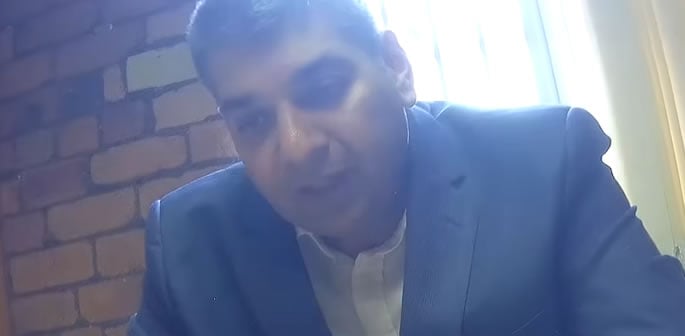
The reporter later visited Alias’s Bradford office and carrying £250 as an initial payment. Alias appeared annoyed because he had originally requested £500 and counted the cash without providing a receipt.
By this point, the reporter had told him that someone in the Kurdish Region of Iraq was prepared to declare himself the mini-mart’s owner.
The reporter called the supposed contact, a man who gave his name as Saman. He was, in fact, another UK-based undercover reporter.
For Alias to ethically argue that the fine should be transferred, Saman would need to declare that he was the real owner of the business.
However, Alias was captured repeatedly asking him to confirm ownership despite knowing there were questions about who actually owned the mini-mart.
Alias asked: “Am I right in thinking that you are the owner of the shop and I’m going to write to them explaining that you’re the owner of the shop?”
Saman replied: “I’m not the owner of the shop, but I’m ready to transfer it to my name.”
Alias reiterated: “OK, but I’m going to be writing to them [the authorities] to explain that you’re the owner of the shop.”
Saman then said: “I am happy to do that yeah but also you do know, I am not the owner of the shop? And I’ve not even seen this shop before!”
Alias responded: “If you’re saying that to me, then I can’t do that. You understand? I can only do it if you’re telling me, you are the owner of the shop.”
He subsequently attempted to reassure Saman about the potential consequences, saying:
“They might say, ‘OK, you have to pay this money’. We don’t pay the money. That’s the end of it. Case finished.”
When asked whether he had handled similar cases, Alias said he did it “all the time for people who get fines”.
Senior immigration lawyer Bryony described Alias’ conduct as amounting to “perverting the course of justice” and said he should be struck off.
However, she also observed that Alias’s manner changed towards the end of the meeting, suggesting he had become suspicious of the reporters.
“I can’t advance an untruthful or dishonest… version of events”, he was heard saying before telling the men to decide among themselves who owned the shop.
Rest noted that Alias had originally suggested what she described as “the untruthful version of events”.
Alias later sent the undercover reporter a series of messages appearing to withdraw his offer of help. During a subsequent phone call, he again said he would not pursue an untruthful claim and offered to arrange repayment of the £250.
The money has not been returned, although Alias said Liberty Solicitors had made numerous attempts to repay it.
Under UK law, employers who hire workers without the legal right to work can face financial penalties. In 2024, the maximum fine for knowingly employing illegal workers increased from £15,000 to £60,000.
Mahmood said the government’s review would aim “to ensure we are able to respond to non-compliance and non-payment through all available means”.
Alias denied advising anyone to transfer a penalty to someone who was not responsible for a business or to provide false information to the Home Office, saying he would never do so.
Alias said: “My work is to challenge penalties lawfully, through the routes Parliament has provided, usually on the basis that the person found was not an employee at all.”
He added that when the undercover reporter proposed putting the business into someone else’s name, he had stated in writing that he could not advance an untruthful or dishonest case and had not acted for him.
Watch the Full Investigation