


















































Social media has also supercharged selectivity.
Dating in 2026 has been uniquely harder for Desi men and it is contributing to a male loneliness epidemic.
Economic pressure, social media and shifting expectations are reshaping how dating works worldwide.
But for South Asian men, demographics, family and tradition add extra weight.
In the USA, about 63% of men under 30 are single, compared with 34% of women in the same age group, according to data from the Pew Research Centre.
Another study found that 70% of men under 25 are single, and half are not even looking for a girlfriend. In 2019, most young men said they wanted one.
Most studies attribute these statistics to social media and the rising expectations on men.
But here is why Desi men are facing the male loneliness epidemic harder than anybody else in the world.
A Shortage of Brides
The most fundamental challenge for Desi men is demographic. Decades of son preference and sex-selective abortion have created a huge imbalance in the marriage market.
According to India’s 2011 Census, researchers found that 11% of men aged 15 to 54 (approximately 39 million) cannot marry due to a bride shortage.
Punjab records the highest deficit at 33%. Even states seen as progressive, like Kerala (18%) and Tamil Nadu (11%), show substantial shortages and imbalances between men and women.
This “marriage squeeze” creates a brutal winner-take-all dynamic.
As fertility falls and marriage is delayed, older male-heavy cohorts cannot simply marry younger women from different generations.
The result is a growing group of “surplus” men, a phenomenon now studied as “involuntary bachelorhood” in rural India.
Economic Precarity meets Rigid Masculinity

In this competitive market, a man’s eligibility is ruthlessly measured.
The ideal Desi groom is expected to be educated, intelligent, good-looking, and in a stable, high-income career. Young men are raised to equate masculinity with providing, yet they come of age in an economy where stable jobs are increasingly out of reach.
In most South Asian cities and in the UK, one salary just isn’t enough to sustain an entire household.
For Desi men, unemployment weakens their perceived eligibility and bargaining power in the marriage market.
In Pakistan, men routinely delay marriage into their thirties while chasing financial benchmarks required for the first inspection of weddings. In some Pashtun communities, a man is expected to pay for the wedding, provide a house and cover all expenses himself.
Dowry adds to the burden. It is illegal in India, yet it still happens, and the higher a man’s education or salary, the higher the expected dowry often becomes.
The average Indian middle-class family took on Rs. 15.5 lakh in debt per wedding in 2024 and 2025.
Even refusing dowry can backfire. One wealthy groom was rejected by a bride’s father for refusing it, with the father concluding there must be “some defect in him”.
Modern Expectations vs Raja-Betas
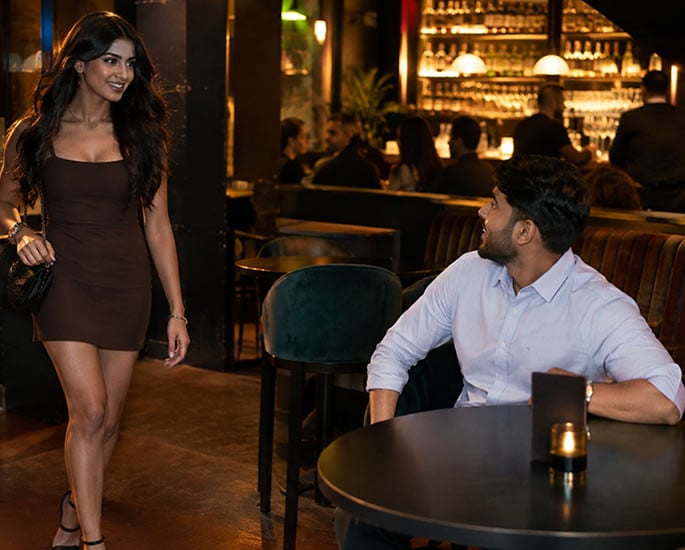
Gen Z women are more selective than any generation before them.
Out of 10 partner traits measured, young women rated height as more important than young men did. The biggest gaps were around shared ideas about children and job stability.
Researchers read this as a rational response to economic precarity, rather than pickiness.
In the UK, high-achieving South Asian women are described as seeking partners who are “ambitious but always available, independent yet traditional, exciting yet emotionally secure”.
That is a set of criteria that can trap them in an impossible search for perfection.
Men are also expected to be emotionally available, a skill many Desi men were never taught.
Boys are deeply cared for, even indulged, but rarely taught to name what they feel or handle rejection without shame. They are raised as ‘Raja Betas’.
At the same time, they are still judged by the old script.
In the UK, 37% of men aged 16 to 24 agree that a man who contributes less to household finances than his partner is “less of a man”.
Among middle-class Pakistani men, many want more equal marriages but find it hard to live out those ideals.
Joint families, the labour market and ideas of respectable gender roles make change difficult.
Family, Caste and “Izzat”
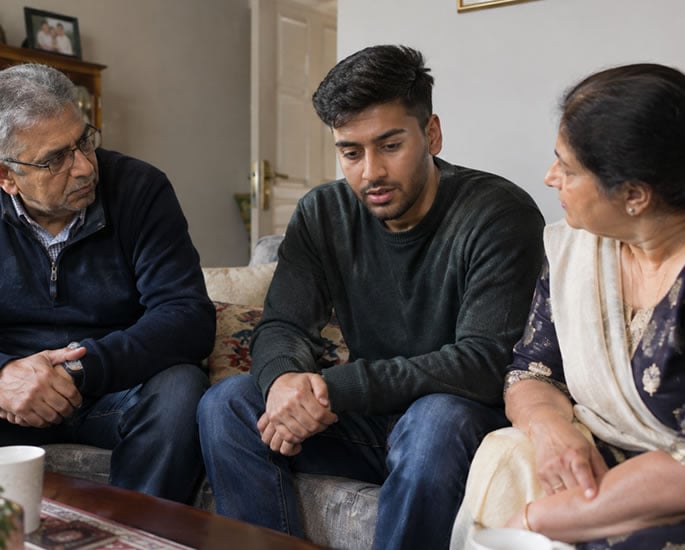
Unlike Western dating, Desi relationships are rarely just between two people.
Marriage is a deal between families, and the stakes are reputational.
One matchmaker told DESIblitz that parents resist intercaste or interfaith relationships out of fear of reputational loss. In tight-knit communities, marriage is about family standing.
With 93% of marriages in India still arranged, caste and religious norms remain powerfully enforced.
For men from lower castes, this can be especially dangerous.
Dalit men who marry or associate with women from higher castes face violence and ostracism, with “honour” violence used to enforce endogamy.
The concept of izzat (honour, respect, status) means a man’s romantic choices are never private. They reflect on his whole family, adding a layer of surveillance and judgement that Western daters rarely face.
Dating Apps, “Icks” and Approach Anxiety
In the modern dating market, the experience can be demoralising and this can cause loneliness among Desi men.
On dating apps, Indian men are said to sit at the bottom of the totem pole.
An OKCupid study found that diaspora Indian women are least likely to respond to messages from Indian men.
One Indian-American man explained that Indian men on social media often come off as thirsty and rude, posting sexual comments under women’s photos.
This can create a negative perception of Indian men.
The behaviour creates a collective punishment, reinforcing a reputation for being “creepy”.
Social media has also supercharged selectivity.
Viral “ick lists” and “red flag” content train people to reduce partners to checklists of disqualifying traits. Women are not alone in this.
Men and women alike measure each other against impossible, algorithm-driven standards.
As a result, many men are simply opting out.
A 2025 survey found that 44% of single men said fear of being labelled “creepy” makes them less likely to approach someone. The fear is of public humiliation, such as being filmed or screenshotted.
Yet 77% of women aged 18 to 30 wished men would approach them more often.
The result is a dating culture stuck in limbo.
Around 78% of under-28s wish they could meet someone more traditionally, and 83% admit they are too embarrassed to approach someone in person.
Loneliness, Mental Health and the Manosphere
The reasons for ceasing dating can have more serious consequences on Desi men.
A 2025 survey found that 29% of Indian singles feel lonely, and 31% of Gen Z singles feel it more acutely when not in a relationship.
Men now account for two-thirds of suicide victims in India.
This pain is being channelled in dangerous directions.
Since the high-profile 2024 case of Atul Subhash, a software engineer who recorded an 80-minute video blaming his wife and feminism before his death, India’s manosphere has surged.
Men’s rights activists, Andrew Tate-following influencers and groups like the Save Indian Family Foundation now dominate much online discourse.
They cast men as victims of a system rigged by feminism and false dowry and domestic violence cases.
Manipulation exists on both sides.
The manosphere promotes tactics like “negging” and “dread game”, which is meant to lower a woman’s self-esteem or cause distress to keep control.
A mirror-image ecosystem, the “Female Dating Strategy” movement tells women to “make him invest before sex” and “never split the bill”.
It is the same transactional view of relationships in different clothing.
The Desi male loneliness crisis reflects a wider conflict between inherited expectations and changing social realities.
The traditional markers of masculinity, from financial stability to marriage and family responsibility, still carry considerable weight, even as the circumstances surrounding them become less predictable.
For many men, the result is a growing uncertainty about where they fit and what is expected of them.
These pressures do not affect every Desi man in the same way, nor do they explain every experience of loneliness.
Economic insecurity, changing gender dynamics, family expectations and the difficulties of modern dating intersect differently across generations and communities.
They also exist alongside legitimate concerns about emotional availability, equality and the treatment of women in relationships.
What makes the dilemma particularly complex is that older expectations have not necessarily disappeared, while newer ones have yet to settle into a clear alternative.
Desi men can find themselves caught between competing ideas of masculinity, with financial success, emotional openness and cultural conformity carrying different, sometimes contradictory, expectations.
The result is not simply a struggle to find a partner, but a broader question of identity and belonging.
For Desi men navigating modern relationships, loneliness can emerge from the gap between the roles they have inherited and the lives they are trying to build.