













































“I just had a passion to entertain"
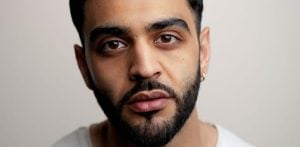
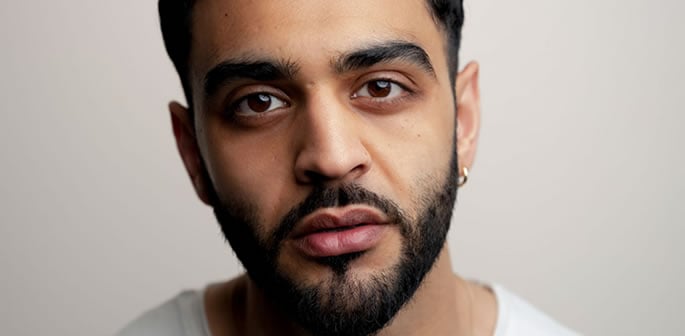
Sunjay Midda is taking his acting career beyond British television, with international film projects opening up new opportunities.
Best known for his long-running role in BBC One’s Doctors, he has spent years developing his craft on screen.
He now stars as Shadrach in Daniel and the Fiery Furnace, a biblical drama rolling out in cinemas worldwide that has already opened in more than 1,500 US theatres.
Alongside these opportunities, Midda is passionate about meaningful storytelling and expanding representation for British Asian actors.
In an interview with DESIblitz, he talks about his journey from Doctors to international cinema, the experiences shaping his career and his ambitions for the future.
First Audition to Six Years on Doctors
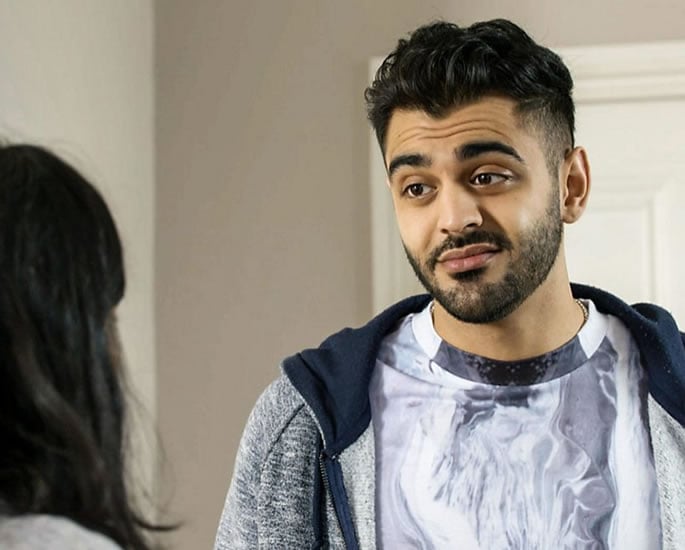
Sunjay Midda’s acting career has taken him from British television to international film productions, including A Quiet Place: Day One and Daniel and the Fiery Furnace.
His journey began with a love of performance and a determination to turn that passion into a profession, despite having few resources or industry connections.
Midda recalls: “I just had a passion to entertain, make people laugh and I was never ashamed to express myself or make a fool out of myself.
“I also was obsessed with movies growing up, and the idea of having a dream and chasing it.
“I grew up on a lot of Disney, so that had a huge part to play. I remember the day I decided to pursue this crazy dream as a career, and I had zero resources.
“All l had was a dream in my heart, and my family to support me. And lo and behold, I’m living out my dreams, travelling the world doing so.”
His first audition was for the long-running BBC drama Doctors, which has helped launch several actors.
Midda’s role as Shak Hanif was meant to be small but his stint turned into six years.
The actor says: “Doctors is the perfect training ground. So many actors who are doing excellently started on that show. To name a few, Emilia Clarke, Eddie Redmayne, Lashanna Lynch… the list goes on.
“Doctors was my first ever audition, so I had minimal screen training before this, only what I learned in my acting course in college.
“I did something right, because I was told I was to appear only in three or four episodes, which turned into six years and 93 episodes!”
On the benefits of this run, Midda continues: “I was able to grow as a young actor and learn how to act on screen with truth.
“I’m a very expressive human being, but acting for TV and film requires you to do less, and a lot of the time, to throw away the line!”
“I was very grateful to the actors who helped me along the way – Bharti Patel, Chris Walker, Owen Brenman and Matt Chambers in particular.
“They guided me and I was just a sponge around them, watching them.”
Crediting show bosses, he adds: “I was grateful to the showrunners, and they continuously gave me meaty storylines, and I wanted to repay them with my utmost respect to the story.
“I worked so hard to ensure I improved all the time.
“If you go back and watch my first episode, just like Will Smith in Fresh Prince, I did A LOT – but there was a naturalism to my acting that people adored!”
Expanding his Craft
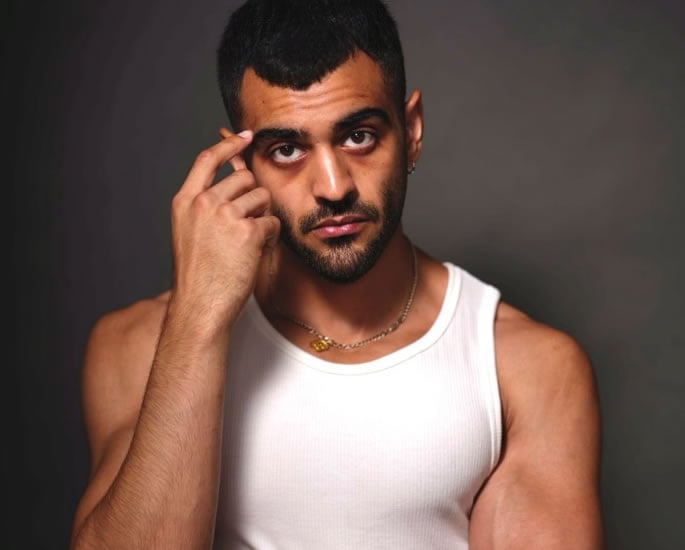
After establishing himself on British television, Sunjay Midda continued working across different mediums and creative environments.
Moving between television, film and theatre has given him opportunities to work with different directors, adapt to their methods and explore a wider range of performances.
That variety has also influenced how he chooses projects, with his decisions partly based on his experience of the roles available to South Asian actors and how those opportunities have changed during his career.
He says: “I’m very selective in what I choose to play/portray.
“Growing up, South Asian roles were less, and quite often stereotypically depicted.
“There has been a significant change, and I’m sure there is a lot more to go, but we are being seen as just characters a lot more, rather than always having to put a reason why a South Asian should be in a role.
“We are being more universally cast which is what we need more of. Our screens need to reflect society and, after all, in the UK, we make up a HUGE part of the UK, born here or not.”
His perspective reflects a broader discussion about representation in British film and television.
While South Asian actors have gained greater visibility, the range of characters they can play remains important.
Midda wants to see casting become less dependent on ethnicity as a defining feature, allowing British Asian performers to take on roles across genres and settings.
He says: “I am so thankful to actors such as Kulvinder Ghir (a friend of mine), Meera Syal, Om Puri, Dev Patel, Riz Ahmed – these guys walked so we can run.
“I owe a lot of my career to their passion, their dream, their never-give-up attitude. And by doing what I am doing, it is in homage to those who came before me.”
According to Midda, progress means seeing South Asian actors cast in roles that are not specifically written around their background, with Himesh Patel’s role in Christopher Nolan’s The Odyssey being an example.
He states: “But as I said, our screens need to reflect our society; we need more universal roles. Himesh being cast in The Odyssey is EXACTLY what we want more of.”
Alongside these ambitions, Midda values the opportunity to work with artists whose approaches differ from his own.
He says: “I love all equally. It’s been great to work across all mediums, but also to work with different directors.
“I like seeing how a director works and aligning it to my work style.”
“I love collaboration when needed for the project. I’ve learned that art is a universal language, no matter where you are.
“I’ve shot in Romania, India, Morocco, and the USA over the last year alone, and one thing remains true in all – artistic vision.
“I love working with artists, and to see how people work across different countries is a true pleasure. What a blessing it is to be an artist!”
Taking his Career International
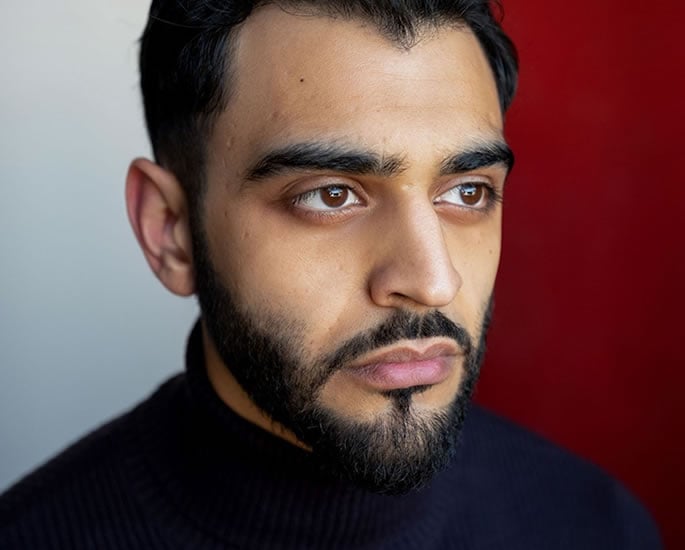
Sunjay Midda’s work has taken him beyond British productions, with two standout projects being Daniel and the Fiery Furnace, in which he plays Shadrach, and A Quiet Place: Day One, which features Lupita Nyong’o and Djimon Hounsou.
The biblical story holds particular significance for Midda because he grew up with the tale of Shadrach, Meshach and Abednego.
Midda elaborates: “I grew up on the story. It was a great guide to me when going through ‘fiery furnaces’ of my own in life to look at these boys as pillars of strength as they stood firm in what they believed in.
“I’ve been a fan of Mena [Massoud] since Aladdin, such an iconic role, so it was a wonderful pleasure to work with him closely and now call a very close friend.
“I believe faith stories are becoming more prominent now than ever, due to the quality of course, but also people are yearning for answers and hope.
“These stories may be thousands of years old but are still relatable today!”
Almost all filming took place in India, as Midda continues:
“It was an incredible experience. We shot in Rajasthan – there is so much history there. We shot almost entirely on location, and everything felt very Biblical, so it helped to create the world around us very vividly.
“As an Indian, I know this a lot more than most, but the Indian hospitality cannot be topped!
“The people in Jaisalmer were so pure, and just wonderful. I made so many friends there, and so many were actually crying when I left! I have pictures of me and the locals. We built a sweet friendship.”
Meanwhile, A Quiet Place: Day One introduced Sunjay Midda to the scale and technical demands of a major Hollywood production.
He says: “Well, one thing is for sure, when I had the opportunity to work with and watch Lupita work, I could see why she is an Oscar winner.
“The commitment to the role and dedication. It was clear to see why she is so successful. She was also very nice and personable.
“The set we worked on was Hollywood-level. They had created New York City at a studio and it blew my mind.
“We also worked with explosions. It was a great experience and gave me a taste of what’s to come in my life.”
The productions have allowed Midda to experience contrasting storytelling traditions and production methods while continuing to pursue roles that demand a strong personal investment.
They also provide a foundation for his next ambition: establishing himself as an international working actor.
What Comes Next
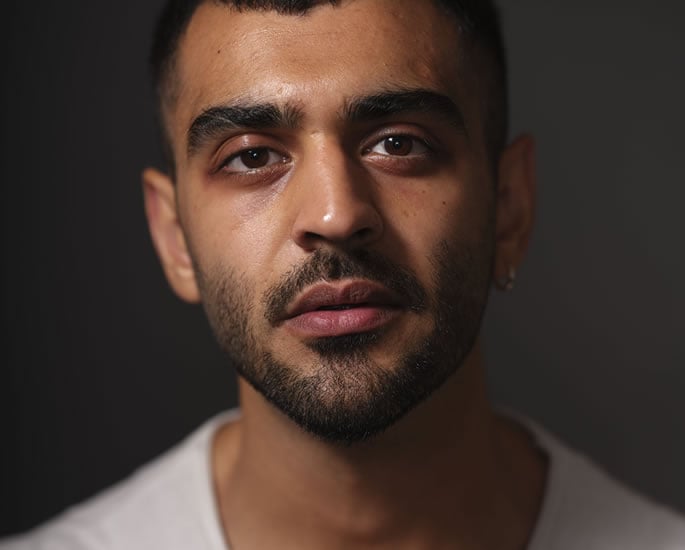
When it comes to what’s next, Sunjay Midda has ambitions for more opportunities in the United States.
Teasing the demands of an upcoming role, he reveals:
“Well, the next chapter looks like what I always originally dreamed of. It’s the American dream. I just shot a film there and have more work coming up in the States.
“I want to be an international working actor and I’m doing that right now, but I am passionate about good storytelling.
“I want to get deep into roles that require all of me.
“I just had nine months of preparation for a role I went down to 63kg for, more on that when it comes out! But this is what I love, body, soul and mind into the role.”
His ambitions build on the experience he has gained throughout his career, from learning screen technique on Doctors to working on international productions.
For aspiring British Asian actors, Midda believes the current landscape offers opportunities that previous generations did not always have. But pursuing an acting career requires resilience.
He adds: “My advice for young British Asian aspiring actors is this: there has never been a better time to be a South Asian Actor in the UK/US.
“Go for it, but understand this career is not for the faint-hearted.
“This is a marathon not a sprint, and if you are not doing this for NOTHING but the LOVE of the game, but for fame, do not do it.
“To sustain a career in this industry, you need to do it because you love acting, you love storytelling and love art.”
“Everything else that comes with it is just a bonus, but you have to remain and stay grounded to have a long career.”
With international projects expanding his experience, Sunjay Midda continues to pursue the kind of challenging roles that first inspired him to become an actor.
His journey also reflects the importance of creating opportunities for British Asian performers to tell diverse stories and take on characters beyond familiar stereotypes.
As he looks towards further work in the US, his focus remains on developing his craft and building a career driven by a genuine love of storytelling.