



















































the personal consequences extend beyond public finances.
Young people in the UK are struggling to find work but sports coaching could offer something that traditional routes into employment have failed to provide: a fresh start.
The number of young people not in education, employment or training (NEET) passed one million earlier in 2026, highlighting a growing challenge for the Government.
Behind the figures are young people facing barriers that extend beyond finding a job, including poor health, low confidence and limited opportunities.
The longer they remain disconnected from work or education, the harder it can become to find a way forward.
Sports coaching offers a potential solution, giving young people the chance to develop practical skills, gain qualifications and build a future in or beyond sport.
Why the UK’s NEET Crisis demands Action

The scale of youth disengagement has serious implications for both individuals and the wider economy.
The number of young people who are NEET has risen in recent years, with health increasingly recognised as a barrier to employment.
According to the Health Foundation, 44% of NEET young people said poor health prevented them from working in 2025, compared with 26% in 2015.
Government data also showed that 45% of NEET young people reported a disability in 2024/25, more than double the proportion recorded in 2013/14.
These figures highlight why simply expecting young people to apply for jobs is unlikely to address the problem.
Those experiencing health difficulties or struggling with confidence may need a more supportive route into employment, with opportunities to learn and gain experience at their own pace.
The economic consequences are considerable.
Impetus estimates that almost one million NEET young people could cost the state around £240 billion over their lifetimes through lost tax revenue, welfare spending and additional public service costs.
However, the personal consequences extend beyond public finances.
Spending prolonged periods outside education or employment can limit earning potential, reduce opportunities to develop workplace skills and leave young people feeling disconnected from their communities.
Addressing the crisis requires routes that recognise these barriers while giving young people a tangible reason to engage. Sport and coaching could help provide that connection.
How Sports Coaching can Create Work Routes
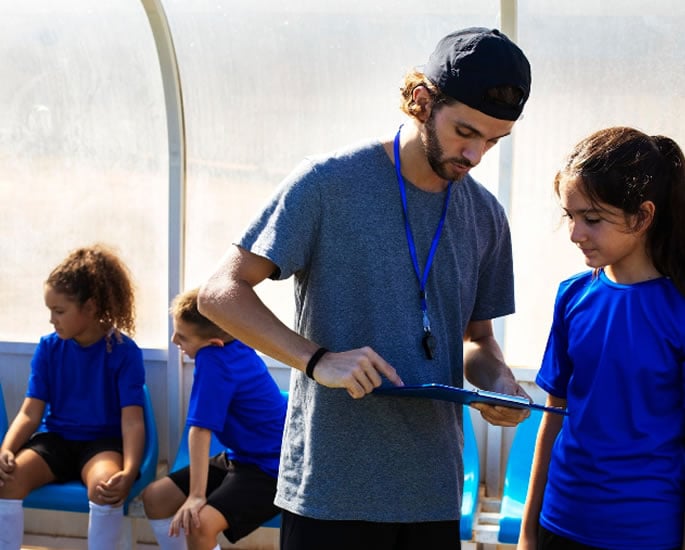
Coaching offers young people an opportunity to develop their skills in a practical, supportive environment.
Organising activities, communicating with participants and working alongside colleagues can build teamwork, resilience and problem-solving skills that employers value across different industries.
It can also provide a direct route into work through apprenticeships, recognised qualifications and volunteering.
For young people who have struggled to access conventional employment opportunities, gaining experience in a community setting can be an important first step.
Coach Core Foundation, a charity delivering sports coaching apprenticeships, is an example of how this approach can work.
At a roundtable in Liverpool attended by MPs, the charity highlighted the role coaching can play in helping young people gain qualifications, enter employment and contribute to their communities.
Its 2025 impact figures showed that 74% of participants progressed into employment, further education or additional training.
More than half came from the UK’s 30% most deprived communities, demonstrating the programme’s reach among young people who may face additional barriers to opportunity.
These outcomes also have implications for grassroots sport.
Developing more qualified coaches can strengthen community provision, help more people participate in physical activity and support the development of future sporting talent.
The approach has particular relevance as the Government considers reforms to youth employment and technical education.
At Labour’s conference in September 2026, Andy Burnham outlined proposals for technical pathways from age 14, work placements for 16 to 18-year-olds and an apprenticeship offer at 18.
A £100 million Local Apprenticeship Service was also announced to help employers create apprenticeship opportunities.
These proposals present a wider effort to connect young people with practical training and routes into work.
Sport and coaching could complement these ambitions, provided programmes are accessible and supported by employers, qualifications and appropriate health and wellbeing provision.
Coaching is not a solution for every young person, but it can give some a realistic starting point.
The challenge now is turning promising examples into opportunities that reach more young people.
If the Government wants to tackle the NEET crisis effectively, community sport and coaching deserve consideration as part of a broader employment strategy.