














































“Creativity and wellbeing are not separate."
Art is emerging as a vital tool for healing mental health challenges among ethnic minority women, offering culturally accessible ways to process emotion amid persistent stigma and unequal care access.
Nearly two-thirds of South Asian people in England experienced mental health challenges during the pandemic, yet stigma continues to prevent many from seeking support.
Across the United States, Black and African American women face similar pressures alongside structural barriers and limited access to culturally competent care.
Across both contexts, minority women continue to carry a disproportionate mental health burden, often without visibility or adequate support systems.
At the same time, representation within the art world remains uneven, with women and women of colour significantly underrepresented in major galleries and collections.
Between these realities lies a growing recognition that creativity plays a deeper role than aesthetics alone.
Professor Daisy Fancourt, a leading arts and health expert at University College London, has documented how creative activity can influence both mind and body.
Her research links creativity to increased dopamine, reduced cortisol, and improved emotional regulation through measurable neurological changes.
A 2024 study showed that creative practices activate neural pathways associated with resilience and emotional processing. This strengthens the brain’s capacity to adapt, recover, and manage stress over time.
For many South Asian, Black, and minority women, these benefits carry particular significance.
In communities where open discussion around mental health can remain difficult, creativity provides a private, non-judgmental outlet for expression and reflection.
However, access to inclusive creative spaces remains uneven.
Many women from minority backgrounds encounter environments that feel unfamiliar or lacking in representation, which can affect participation and confidence in engaging with the arts.
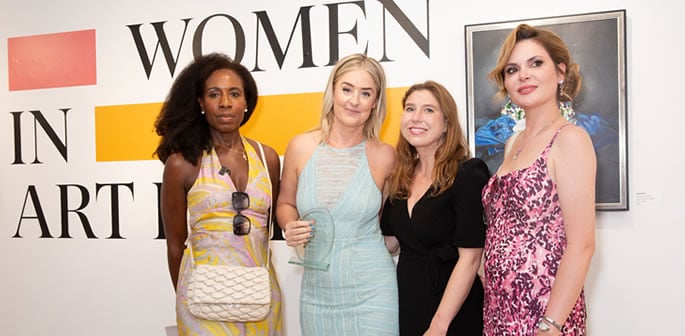
Jacqueline Harvey, Director of Women in Art Fair, explained:
“Creativity and wellbeing are not separate. The conditions in which you make your work shape the work itself.”
Her perspective reflects a broader shift in how the arts are being understood, where environment, inclusion, and representation are seen as integral to both creative output and personal wellbeing.
Taking place in London this May, the Women in Art Fair 2026 aims to reflect these principles through its programming.
The event brings together artists, researchers, and cultural leaders to examine how creativity intersects with mental health in practical and inclusive ways.
Professor Fancourt will contribute to discussions on the neuroscience of creativity, with a focus on neuroplasticity and the importance of maintaining creative practices in an increasingly fast-paced environment.
This scientific lens supports the growing view that creativity is essential rather than optional.
The fair also encourages ethnic minority women to share their own experiences of mental health and artistic expression.
The emphasis is on authenticity, allowing individuals to speak openly about their journeys without pressure to present polished narratives.
Women are increasingly sharing lived experiences in direct, accessible ways that prioritise connection over perfection, helping audiences relate on a more personal level.
Such representation matters because it shapes perception and possibility.
When women see others navigating similar challenges and expressing themselves through creativity, it can reduce isolation and encourage participation in both artistic and wellbeing spaces.
Art, in this sense, functions as both an individual and collective resource. It supports personal healing while also influencing broader conversations around identity, mental health, and inclusion within society.
As research continues to demonstrate the measurable benefits of creative engagement, its role in supporting mental and physical wellbeing becomes increasingly clear.
For communities with limited access to traditional support, creativity offers a practical and immediate form of care.