
















































Desai’s novels were a wake-up call
For centuries, Indian women in literature were portrayed as the silent sufferer, the saintly mother, or the obedient daughter whose only purpose was to hold the family together.
Today, that script has been torn up by a generation of writers who prefer their protagonists to be messy, ambitious, and unashamedly real.
In the research paper, Portrayal of Women in Indian Fiction, this fascinating transformation is explored from the Vedic ages right through to our modern, fast-paced era.
This journey mirrors a massive social revolution, proving that the pen is a powerful tool for dismantling the stereotypes that once kept women in the shadows.
By looking at how Indian female literary characters have changed over the decades, we can see a clear map of how they have reclaimed their agency and rewritten their own futures.
Breaking the ‘Sita’ Mould
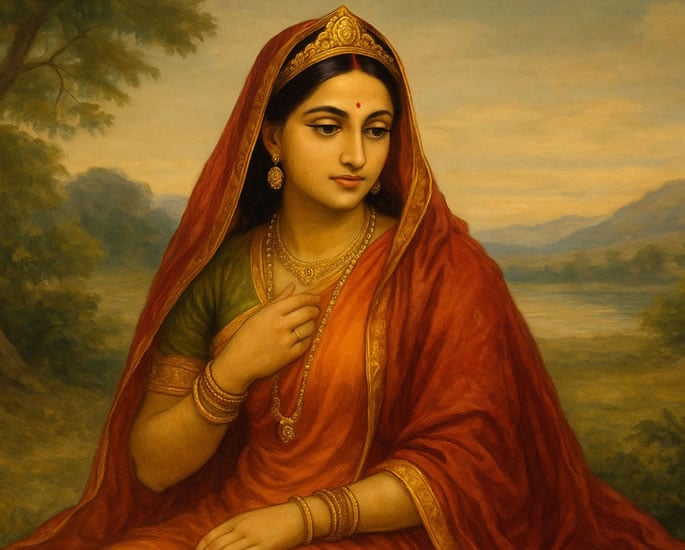
For a long time, the shadow of ancient epics dictated exactly how a woman should behave on the page.
To be a ‘heroine’ in traditional Indian fiction, a character usually had to channel the virtues of Sita or Draupadi – mythological figures synonymous with sacrifice, devotion, and an almost superhuman level of endurance.
Ishita Pundir and Alankrita Singh point out that this created a narrow corridor for female characters: you were either the good woman who followed societal rules and found a domestic happily ever after, or you were a feisty rebel destined for a tragic end.
This dichotomy didn’t just exist in stories; it reflected a society where, during the Victorian-influenced era, women were legally and socially tied to their husbands, often losing rights to their own earnings and even their own bodies upon marriage.
The early modern novel in India became a space to document the agony of this reality.
Kamala Markandaya’s 1954 classic, Nectar in a Sieve, offers a raw look at this through her protagonist, Rukmani.
While the world around her shifts from rural tradition to cold industry, Rukmani’s strength is shown through quiet suffering.
Markandaya’s work was essential in showing the anguish and affliction of women trapped in domestic circles dominated by male supremacy.
Even in her later books, like A Silence of Desire, the female characters are dealing with a world that views them as property rather than people.
These early narratives were the first cracks in the wall, documenting a life of restricted rights where a woman’s identity was entirely swallowed by her role as a wife or mother.
The Inner Revolution

The focus of Indian fiction took a sharp turn inward during the 1960s and 70s.
Writers were no longer just interested in how a woman survived poverty or family drama; they wanted to explore the inner dispute of her mind.
This era of psychological realism, led by powerhouses like Anita Desai, moved away from the decorative sex cliché that Oscar Wilde once wrote about and toward a gritty, authentic exploration of female frustration.
Desai’s novels were a wake-up call, highlighting the alienation that occurs when a woman’s intellectual and emotional needs are completely ignored within a marriage.
Take Maya, the rebellious protagonist of Desai’s 1963 novel Cry, the Peacock.
Maya isn’t fighting for food or money; she is fighting for her soul against a husband who treats her like a child and a society that expects her to be a compliant ornament.
Her mental collapse in the novel is a protest against a world that undervalues her self-worth.
Pundir and Singh highlight how this kind of writing revealed the “deep-seated sanctums” of the human heart that traditional stories usually ignored.
Similarly, in Fire on the Mountain, Desai gives us Nanda Kaul, an elderly widow who chooses to live in total isolation.
Nanda is a direct rejection of the selfless grandmother trope. Instead, she is a woman who has spent her life serving others and simply decides she is finished.
By portraying women who were fractured, exhausted, and even angry, there was proof that the Indian woman’s value wasn’t tied to how well she could cater food on the table or keep a clean house.
The New Age Woman
By the 1980s, the Indian female protagonist had undergone a total transformation.
She emerged as the ‘New Age Woman’, who was educated, financially independent, and firmly in the driver’s seat of her own life.
Authors like Shashi Deshpande, R.K. Narayan, and Bharati Mukherjee began crafting characters who refused to accept a destiny pre-packaged by their parents or the patriarchy.
These women were claiming their identity as a fundamental right.
Shashi Deshpande’s The Dark Holds No Terror is a prime example of this shift. Her protagonist, Saritha, is a successful doctor who has to navigate the messy overlap of tradition and career.
Deshpande doesn’t suggest that life is suddenly easy for the modern woman, but she does show that liberation lies in inner strength rather than suffering in silence.
R.K. Narayan also contributed to this evolution with characters like Rosie in The Guide.
Rosie leaves a stifling, dysfunctional marriage to follow her passion for dance and eventually becomes a self-sufficient star.
She is fearless and independent, proving that a woman’s worth is something she builds for herself, not something given to her by a husband.
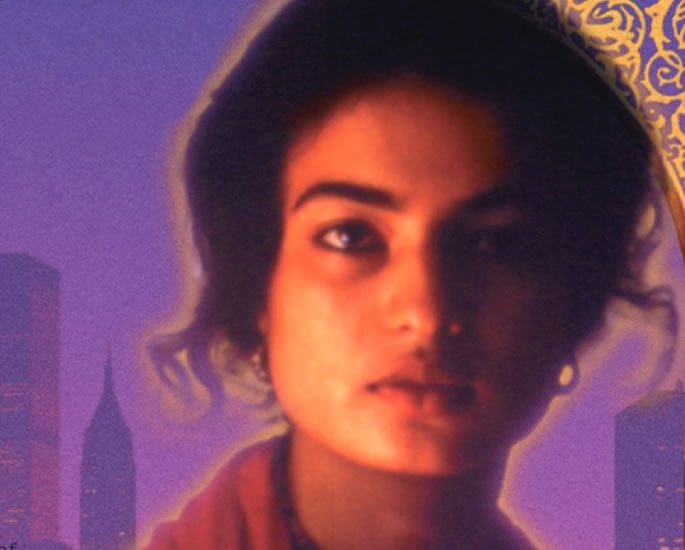
Then there is Bharati Mukherjee’s Jasmine, which takes this evolution global.
The titular character’s journey from a Punjab village to a new life in America, marked by her constant reinvention and name changes, shows a level of fluidity and agency that would have been unthinkable in the fiction of the 1950s.
She is the ultimate survivor, discarding pieces of her past to build a future that belongs entirely to her.
The evolution of Indian women in fiction is a permanent record of a gender reclaiming its own narrative.
We have moved from an era where women were depicted as submissive, sacrificial figures to a time where they are the architects of their own fate.
As Pundir and Singh argue, literature acts as the essential background to social progress, connecting the struggles of the past with the freedoms of the present.
The transition from the ‘Sita’ archetype to the self-made individual reflects a culture that is finally acknowledging that a woman’s mind is just as powerful as her heart.
Ultimately, these stories provide a roadmap for the next generation, reminding us that the ‘dawn of light’ women represent is most effective when it is fuelled by their own ambitions and desires, rather than the expectations of others.
The Indian woman in literature has found her voice, and she is using it to tell the truth about what it means to be human in a changing world.
As the times continue to change, the portrayal of women will only get bolder, further proving that the ignorant female is a myth of the past and the empowered, intellectual woman is the reality of our future.