














































"I have a lot of responsibilities towards my sisters in my country."
Jamini Sen is a trailblazer in British medicine, yet her name remained absent from mainstream historical memory for decades.
A doctor from colonial Bengal, she became the first woman admitted as a Fellow of the Royal College of Physicians and Surgeons of Glasgow, an institution founded in 1599 and long closed to women.
Her career moved across royal courts in Nepal, medical training in Britain and public health work across India during periods of unrest and epidemic.
Her journey reflects both the reach of medical expertise in the colonial era and the limits placed on women within it.
More than a century later, her life has been reconstructed in the biography Daktarin Jamini Sen, bringing renewed attention to a figure whose contributions were long overlooked.
Early Life and Entry into Medicine

Jamini Sen was born in 1871 in Barisal in the Bengal Presidency, into a progressive family of seven siblings.
She received her early education at Bethune College in Calcutta (now Kolkata), an institution that played an important role in advancing women’s education in colonial India.
In 1897, she qualified from Calcutta Medical College, entering a profession that remained overwhelmingly male and structured by racial hierarchy.
Her early academic and professional journey reflected both determination and the limited opportunities available to women at the time.
Medicine in colonial India was expanding, yet access to training and advancement remained uneven.
By completing her medical education, Sen placed herself among a small group of Indian women entering formal clinical practice at the turn of the century.
Her first major appointment followed soon after graduation.
She took up a position in Nepal as house physician to the royal household and head of the Kathmandu Zenana Hospital. The role placed her within elite medical circles while requiring her to navigate and adapt to traditional cultural environments.
During her time in Nepal, she worked closely with the royal family, including King Prithvi Bir Bikram Shah.
Over nearly a decade, she built experience in high-level clinical care and introduced modern medical practices within settings where such approaches were still developing.
Her work earned the trust of the royal household, reflected in the personal recognition she received from the king.
Her departure from Nepal unfolded against a backdrop of political uncertainty.
Rumours of unrest circulated within the palace, and the wider environment remained unstable.
The king who had honoured her would later die under circumstances that led to speculation of poisoning.
This period marked a turning point in her career, as she transitioned from court-based medicine to broader professional ambitions.
Training in Britain

In 1911, and with support from the Lady Dufferin Fund, Jamini Sen travelled to Britain to continue her medical training.
She secured a medical licence in Dublin and enrolled at the London School of Hygiene and Tropical Medicine, an institution recognised for its focus on public health and tropical medicine.
At that time, European medical institutions were only beginning to admit women into formal examinations.
Sen’s decision to pursue a fellowship at the Royal College of Physicians and Surgeons of Glasgow reflected both ambition and careful timing.
The college had only recently opened its examinations to women, offering a limited window for entry.
In 1912, she passed the fellowship examinations and became the first woman admitted as a Fellow of the institution. The achievement marked a significant moment in the history of British medical institutions, particularly one founded in the late 16th century.
The recognition, however, came with clear limitations.
The college’s records note that Sen “was unable to hold office… meaning that her privileges as a female Fellow were restricted compared to those of her male counterparts”.
This distinction points to the incomplete nature of institutional change, where access did not necessarily translate into equal participation.
Her fellowship remained unmatched for more than a decade.
A second woman, Margaret Hogg Grant, was admitted only in 1923.
Jamini Sen’s achievement, therefore, stood as a rare breakthrough within a system that continued to resist wider gender inclusion.
During this period, Sen also travelled to Berlin to deepen her clinical knowledge.
Continental Europe was leading research into tropical diseases at the time, and her decision reflects a consistent commitment to advancing her expertise.
Her movement between Dublin, London and Berlin highlights the international pathways that shaped medical training among leading practitioners of her era.
Jamini Sen is quoted as saying in the archives of the Royal College of Physicians and Surgeons of Glasgow:
“I have a lot of responsibilities towards my sisters in my country.”
Medical Practice in India

After completing her training abroad, Jamini Sen returned to India and joined the Women’s Medical Service.
She worked in several cities, including Agra, Shimla and Puri, where her role extended beyond clinical care into public health and community engagement.
In Agra, she encountered local unrest directed at British doctors.
Her position as an Indian woman physician helped ease tensions and rebuild trust between medical providers and patients.
Sen’s presence carried cultural familiarity that facilitated communication in a system often shaped by colonial distance.
Patients responded positively to her approach. Women in particular sought her care, recognising both her expertise and her cultural proximity.
She became known affectionately as the “saree-wali daktarin sahib”, a phrase that reflected her identity and visibility within the communities she served.
Her work focused significantly on maternal health.
Post-childbirth sepsis remained a major cause of illness and mortality among women, particularly in areas with limited access to trained medical support.
Sen addressed these cases directly, often in challenging conditions.
She wrote in her journal:
“The greatest improvement has taken place in maternal cases.”
Her practice combined clinical skill with an understanding of local contexts.
She worked in epidemic-prone regions such as Shimla and Puri, where conditions were often difficult and resources were limited.
Despite these challenges, she maintained a consistent presence in frontline medical care.
Her professional choices also extended to her personal presentation.
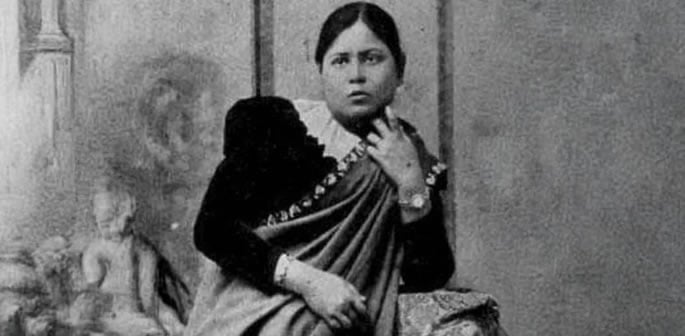
She adopted a practical working style, wearing a pinned saree with a full-sleeved blouse and lace collar. This adaptation supported mobility and function within hospital environments while remaining rooted in cultural norms.
Personal Life and Loss

The life of Jamini Sen included significant personal responsibilities alongside her professional commitments.
While in Nepal, she adopted a baby girl named Bhutu after the child’s mother died in childbirth.
As a single mother, she balanced caregiving with the demands of a medical career at a time when such independence was uncommon for women in her social context.
Later, in Calcutta, Bhutu became seriously ill and later died. The loss marked a deeply personal tragedy within Sen’s life, adding to the emotional weight of her professional journey.
Material remnants of her life remain limited.
Among preserved items are the gold watch gifted by King Prithvi Bir Bikram Shah, a Tibetan tsog spoon awarded in recognition of her service, and a blue-wing brooch purchased during her time in London.
Only two black-and-white photographs of her are known to exist, now held in institutional archives.
Her story has been reconstructed through the work of her great-niece, Deepta Roy Chakraverti, who authored the biography Daktarin Jamini Sen.
The book draws on letters, diaries, a personal journal, and family records to rebuild a detailed account of her life and career.
Chakraverti writes: “In celebrating Dr Jamini Sen today, we honour not just a doctor but a trailblazer whose courage laid the groundwork for generations of women in medicine both in India, in Britain, and beyond.”
In 2024, more than a century after her fellowship, a portrait of Sen was unveiled at the Glasgow College.
The recognition marked a symbolic restoration of her place within institutional history and acknowledged her contribution to medicine across continents.
Jamini Sen’s career unfolded at a time when both access and recognition were tightly controlled, yet her path cut across those boundaries with quiet consistency.
She moved between continents, institutions and social expectations without the visibility afforded to many of her contemporaries, even as her work directly shaped patient care in India and earned formal recognition in Britain.
Her absence from mainstream historical accounts for much of the 20th century reflects how easily contributions can be overlooked when they sit outside dominant narratives.
The recent recovery of her story has not altered what she achieved, but it has reshaped how that achievement is understood, placing her within the broader context of medical progress rather than at its margins.
Seen in full, her life offers more than a record of individual success.
It reveals how medical history has been built through a wider range of actors than traditionally acknowledged, and how figures like Jamini Sen helped define practice in environments where cultural understanding, clinical skill and persistence were equally necessary.