

















































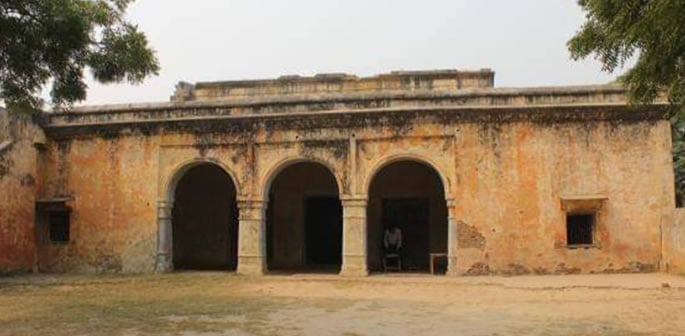
"a largely forgotten chapter of Indo-Afghan and Mughal-era history"
The history of the 1857 uprising is often told through major cities, royal courts and well-known leaders.
But beneath that surface lies a network of regional estates and village confederations that shaped resistance in quieter but significant ways.
One such case is the Khanpur Estate and the Barah Basti region in present-day western Uttar Pradesh. Their history stretches back to the Mughal era and later became closely tied to the events of 1857.
Much of this history has survived through family records and ongoing research by Musa Munir Khan, an Advocate at the Delhi High Court and a descendant of Haji Munir Khan.
His work offers detailed insight into how these settlements formed, how they resisted, and what followed after their suppression.
We explore that journey from origins to uprising and finally to legacy.
The Formation of Barah Basti
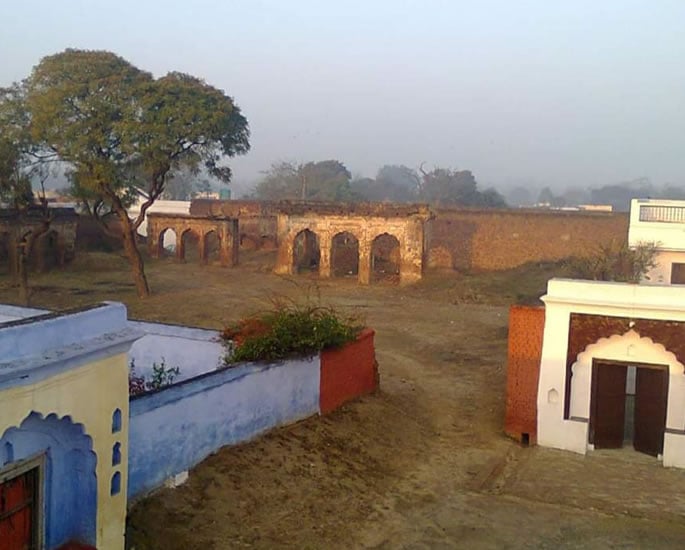
The origins of Barah Basti are deeply rooted in the Mughal administrative and military system. The region developed as a cluster of twelve settlements across present-day Bulandshahr, Ghaziabad and Amroha.
Musa Munir Khan told DESIblitz:
“Bara Basti, literally meaning ‘Twelve Settlements’, is the historic collective name for a group of twelve villages situated across the present-day districts of Bulandshahr, Ghaziabad, and Amroha.
“The origins of this remarkable confederation trace back to the reign of the Mughal Emperor Jahangir, when a son of the Daudzai Afghan chieftain, Shaikh Ruknuddin Afghan, established a settlement along the banks of the sacred Ganges.
“Recognised for his valour and military prowess, Shaikh Ruknuddin was inducted into the Mughal nobility, where his fortunes steadily rose.
“He attained the distinguished rank of Mansabdar and was honoured with the title ‘Sher Khan’ for his extraordinary bravery during a campaign against Amar Singh, the Rana of Udaipur.”
Khan added that this early military recognition shaped the estate’s long-term standing within the empire:
“His son, Shaikh Kamaluddin Afghani, also served as a Mansabdar under the Mughal administration. However, during the reign of the Mughal Emperor Shah Jahan, he later joined the rebellion of Khan Jahan Lodhi at Peshawar against the imperial authority.”
The foundations of Khanpur itself were laid by Shaikh Allu Afghan, who consolidated the estate into a central seat of power.
As Khan noted: “Another prominent figure of the family, Shaikh Allu Afghan, younger brother of Shaikh Kamaluddin, likewise entered Mughal service and was granted several estates and honours.
“It was he who founded the village of Khanpur, which gradually emerged as the principal seat of Bara Basti and the headquarters of the Daudzai Afghans in the region.”
The Role of Khanpur in 1857
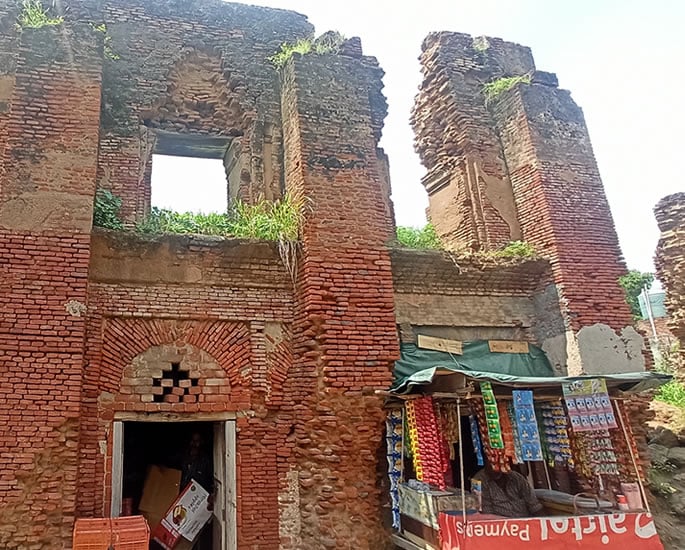
By the time of the 1857 uprising, Khanpur and the surrounding Barah Basti villages had developed strong socio-political networks and a history of military involvement. These connections became central to their role in the rebellion.
Khan describes the broader historical significance of the region in this period:
“Today, the story of Erstwhile Khanpur estate and Barah Basti stands as a largely forgotten chapter of Indo-Afghan and Mughal-era history, preserving within it the memory of military service, frontier nobility, and regional influence that once shaped the landscape of northern India.”
One notable episode involved Nawab Mustafa Khan Shefta, who was displaced during local conflict and sought support from the Khanpur leadership.
According to Musa Munir Khan:
“In search of support and protection, the Nawab turned to the influential Khanpur family.”
“Responding to his appeal, Haji Munir Khan, the only son of Azim Khan, mobilised a force of irregular cavalry composed largely of Pathan horsemen drawn from the villages of Bara Basti.
“Mounted upon an elephant and leading his contingent into action, Haji Munir Khan confronted the forces of Thakur Bheem Singh and ultimately secured victory.
“According to historical accounts and oral traditions, Thakur Bheem Singh was subsequently brought before the Khanpur fort behind Haji Munir Khan’s elephant, where he was released only after assuring that he would no longer challenge or harass Nawab Mustafa Khan Shefta.”
This episode reflects how local authority structures and armed networks operated within the broader chaos of 1857.
The Cost of Resistance
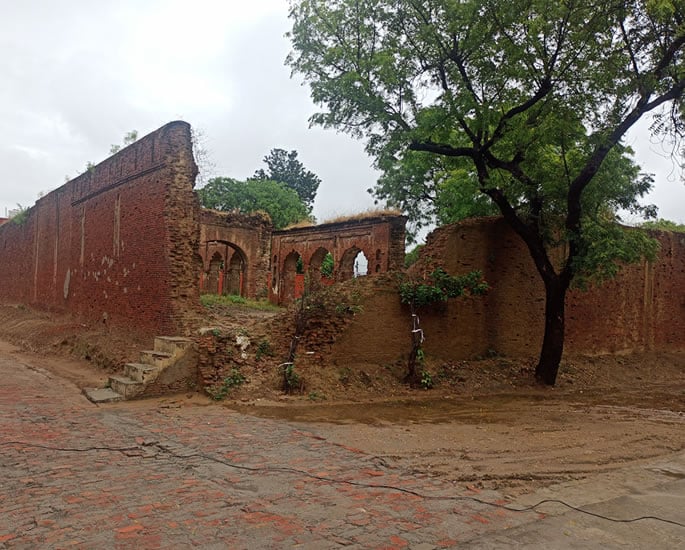
The most intense phase of the uprising saw direct military confrontation with British forces, with key figures from the Khanpur Estate playing leading roles.
Musa Munir Khan outlines the role of Azim Khan:
“Among the most prominent figures associated with the Khanpur Estate during the events of the Indian Rebellion of 1857 was Azim Khan, a distinguished taluqdari leader and close associate of Nawab Walidad Khan of Malagarh.
“During the British assault on Malagarh in October 1857, Azim Khan played a pivotal role in organising and sustaining resistance from the region of Khurja, effectively delaying British military advances for several days.
“His son, Haji Munir Khan, subsequently emerged as one of the principal military commanders of the rebels in Bulandshahr.
“During the Second Battle of Gulaothi on 29 July 1857, he, alongside Ismail Khan, established defensive positions along the canal in an effort to prevent British forces from entering the district.
“Despite sustaining severe sword injuries during the engagement, he continued to lead the resistance.
“He ultimately attained martyrdom while fighting colonial forces at Kachhla Ghat.”
Abdul Latif Khan also played a supporting but strategically important role, providing refuge and logistical support to rebel groups. For this, he was later sentenced to life imprisonment in the Andaman Islands.
Confiscation, Displacement and Enduring Legacy
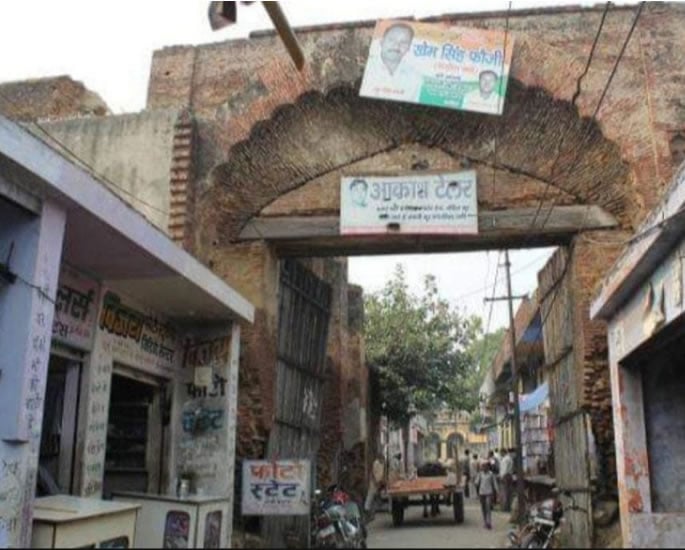
Following the suppression of the uprising, the British dismantled the estate’s power structure. Land was confiscated, redistributed and used to reward loyalty to the colonial administration.
Khan explained the long-term impact of this transformation:
“The confiscation of the Khanpur Estate following the suppression of the Indian Rebellion of 1857 marked a profound turning point in the history of the Bara Basti family.
Like many landed Muslim and Pathan families who had aligned themselves with the rebel cause, the family faced political marginalisation, economic decline, and the loss of ancestral authority.”
Khan added that this did not erase the family’s identity:
“Yet, despite displacement and dispossession, the family preserved its historical memory, local influence, and intellectual traditions.
“Over time, descendants of the estate gradually re-emerged within regional society through law, education, public service, and local leadership.”
This shift included a move from military and landed power towards legal and civic roles.
The family was ultimately forced back to Basi Bangar, where parts of their ancestral haveli were dismantled, including defensive structures that once symbolised their status.
Despite this, leadership within the region continued through later generations, including those who entered public administration and local governance.
Musa Munir Khan is part of this continuing lineage, combining legal practice with historical research.
The history of the Khanpur Estate and Barah Basti reveals a layered and often overlooked dimension of the 1857 uprising. It is a story of local power, coordinated resistance and deep political disruption.
Through both archival research and oral tradition, Musa Munir Khan’s work highlights how these events shaped not only a region but also generations that followed.
Their story remains a reminder that the history of resistance in 1857 was not confined to major centres alone, but was also built in villages, estates and families whose legacy continues to surface today.