














































In Indian memory, it is described as an “epic battle”
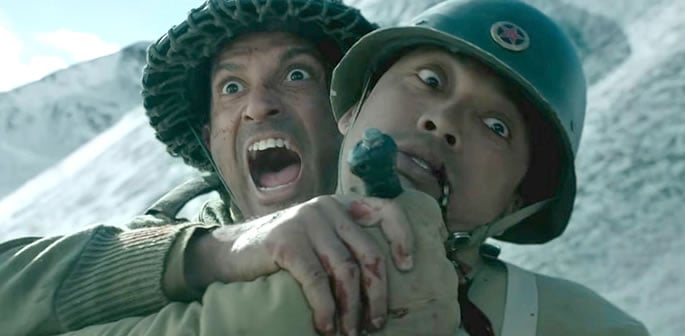
120 Bahadur tells the true but largely forgotten story of the Battle of Rezang La, one of the most extraordinary last stands in Indian military history.
The film revisits a moment from the 1962 India-China war that was long ignored, doubted, and later quietly buried beneath national defeat.
At over 16,000 feet in Ladakh, 120 Indian soldiers held off thousands of Chinese troops in a fight that lasted less than five hours and cost almost all of them their lives.
The battle did not alter the outcome of the war, but it fundamentally reshaped how courage and sacrifice were understood within it.
120 Bahadur was released in cinemas in November 2025, starring Farhan Akhtar and Raashii Khanna.
As 120 Bahadur gets ready to premiere on Prime Video, we look at the real events behind the film and how cinema has revived a story once dismissed as impossible.
One Battle India Refused to Forget
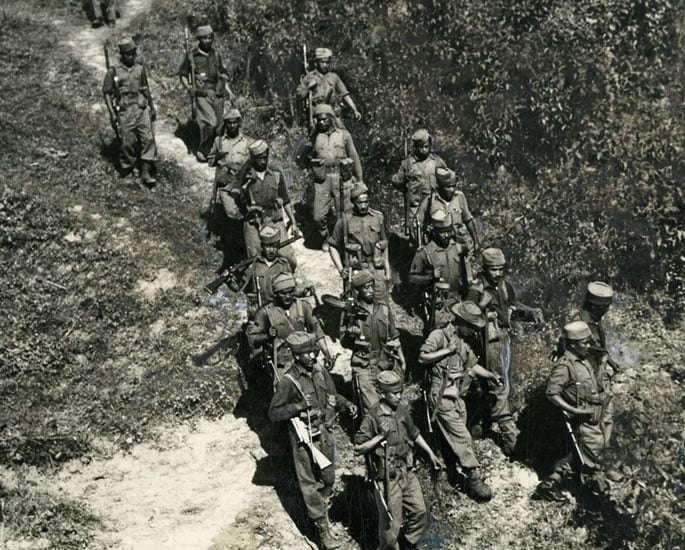
The 1962 war between India and China unfolded after years of deteriorating relations.
Border negotiations had failed, tensions had risen, and Beijing remained angry over India granting refuge to the Dalai Lama following the 1959 Tibetan uprising.
On October 20, 1962, Chinese forces launched a coordinated attack across disputed Himalayan regions.
Beijing described the offensive as a “self-defence counter-attack” and accused India of “aggressively encroaching on Chinese territory and violating Chinese airspace”. The conflict lasted a month.
When China declared a unilateral ceasefire, it withdrew troops and released prisoners of war, but the cost to India was severe.
Around 7,000 Indian soldiers were killed, and India lost roughly 38,000 square kilometres of territory.
The war ended with the creation of the Line of Actual Control, a poorly defined 3,440km boundary marked by rivers, lakes and snow-covered terrain.
China has said little officially about the war since, beyond claiming its troops eliminated all Indian positions. It has never commented on the Battle of Rezang La.
Against this backdrop, Rezang La stands apart.
Fought at more than 16,000 feet, the battle took place on the night of November 18, from 3:30 am to 8:15 am.
In Indian memory, it is described as an “epic battle” and “one of the greatest last stands”, often cited as the only moral victory in a war otherwise remembered for defeat.
Rezang La
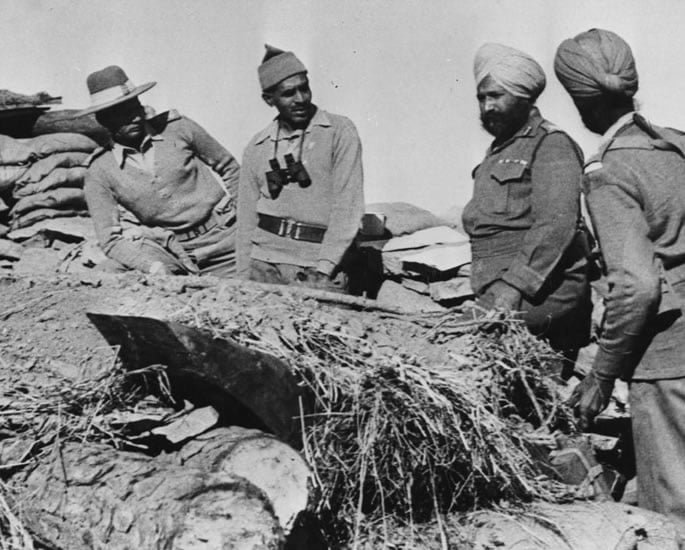
Rezang La was not an abstract outpost. The pass sat close to the Chushul airstrip, a strategic lifeline in eastern Ladakh.
Author and former navy officer Kulpreet Yadav describes it as “the primary nerve centre at a time when the road network connecting the region with the rest of India was largely absent”.
The defence of the pass was entrusted to C Company of the 13 Kumaon battalion, 120 men under the command of Major Shaitan Singh.
Indian estimates suggest at least 3,000 Chinese troops attacked the position. The imbalance was stark.
Yadav said: “They had access to superior weapons and were well kitted out, whereas Indians were poorly equipped with semi-automatic rifles and a limited supply of 600 bullets for each soldier.”
The soldiers faced not only enemy fire but extreme conditions.
Journalist Rachna Bisht notes in her 2014 book on Major Shaitan Singh that C Company came from the plains, had never seen snow, and lacked time to acclimatise.
Subedar Ram Chander, one of the five survivors, recalled the conditions with painful clarity:
“The weather was terrible; we lacked proper winter clothes and shoes.”
“The jerseys, cotton trousers and light coat we were issued could hardly keep us warm in those freezing winds.
“The soldiers would get terrible headaches and the nursing assistant would rush from post to post doling out medicines.”
On the night of the attack, temperatures fell to around -24°C as snow began to fall.
Chander later told BBC Hindi: “I told my superiors it was the day we had been waiting for.”
Fighting to the Last Moment
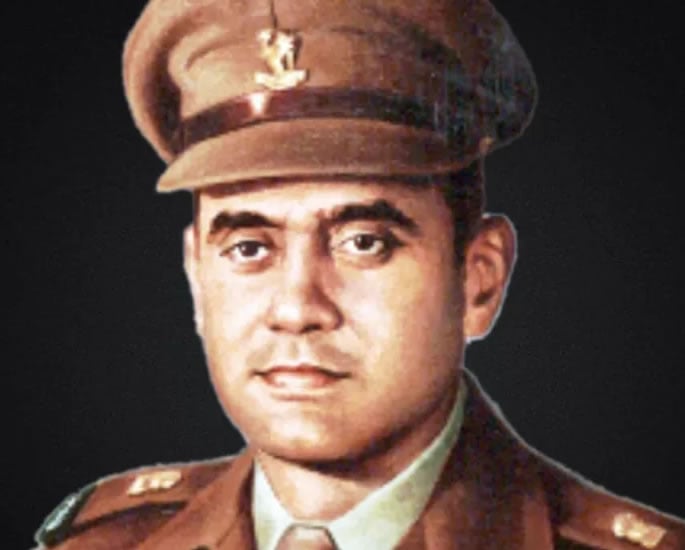
Major Shaitan Singh had been advised by his superiors to consider a tactical retreat if ammunition ran out.
When he discussed the option with his men, they responded:
“We’ll fight till last man, last bullet.”
The first Chinese assault was repelled. According to Bisht, the second wave brought intense mortar fire that destroyed bunkers and tents, inflicting heavy casualties. The third wave proved decisive.
Most of C Company was wiped out.
Chander’s account of Major Singh’s final moments captures the human cost behind the statistics:
“He had taken several bullets in his stomach. As he lay bleeding, in excruciating pain and drifting in and out of consciousness, he gave me instructions on how to carry on the fight.
“Then he told me to go and be with the battalion. I told him, I cannot leave you. ‘You have to go. It’s my order’, he said.”
Only five soldiers survived.
Major Singh was among the dead and was posthumously awarded the Param Vir Chakra, India’s highest military honour. Twelve others received gallantry medals.
Yet the story did not immediately become legend. When survivors reported the scale of the resistance, their accounts were dismissed.
Yadav explained: “Tragically, no one believed them. The morale was low, we had bitterly lost the war, thousands of our soldiers, including a brigadier, were taken by China as prisoners of war.
“So, no one believed such a heroic last stand was possible.”
It was widely assumed the soldiers at Rezang La had either fled or been captured.
Bringing a Forgotten Moment to Cinema
Three months later, a shepherd stumbled upon destroyed bunkers, empty shells and bodies frozen in snow.
For the first time, an accurate picture of what had happened emerged.
In February 1963, a senior army official escorted Red Cross personnel and journalists to the site. The battlefield was found “exactly as it had happened, frozen in snow”.
Bisht’s description of the discovery is stark: “Every single soldier they find is dead from multiple bullet wounds, shell injuries or splinters.
“Some lie dead in their bunkers, buried under boulders, others are still holding on to the butts of blown-off rifles.
“The nursing assistant has a syringe in his hand and a roll of bandage, the soldier operating the mortar holds a bomb.
“Major Shaitan Singh is lying by a rock, a blood-stained bandage on his left arm, his stomach ripped open by a machine gun burst.”
In a war “mostly remembered with shame”, Bisht writes that Major Shaitan Singh and his men achieved great glory.
C Company was later renamed Rezang La Company, and a memorial was built in Rewari, the hometown of the soldiers.
This is the history 120 Bahadur seeks to revive.
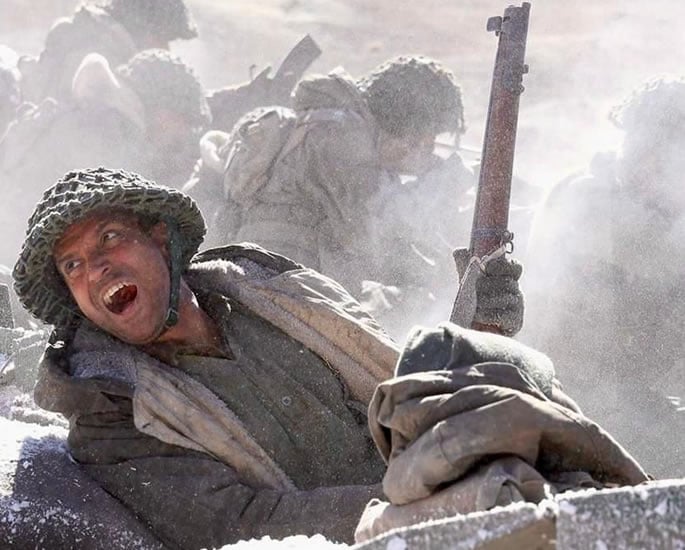
The film, which stars Farhan Akhtar as Major Shaitan Singh, failed commercially but succeeded in bringing Rezang La back into public discussion.
Dialogue writer Sumit Arora explained the intent clearly:
“We felt it was very important that this story must he told, we wanted to honour the people who lived the story.”
“We have taken some cinematic liberties, but our film stays very true to history.”
5 Facts about the Battle of Rezang La
- Only five of the 120 Indian soldiers survived the Battle of Rezang La.
- The battle was fought at over 16,000 feet in temperatures around -24°C.
- 120 Indian troops faced an estimated 3,000 Chinese troops.
- Major Shaitan Singh was posthumously awarded the Param Vir Chakra, India’s highest military honour.
- The battlefield remained undiscovered for three months.
The pass itself later became a no-man’s land after the ceasefire and remains part of disputed territory. Its political sensitivity has not diminished its symbolic value in India.
120 Bahadur arrives less as a box-office spectacle and more as a corrective to collective memory.
Revisiting Rezang La highlights a battle once doubted, then quietly buried under the weight of national defeat.
The historical record shows why that resistance mattered.
As Yadav argues: “If it was not for these soldiers, I think India would have lost half of Ladakh. China would have captured the airfield and Chushul.
“This battle was the only silver lining for India in the 1962 war.”
120 Bahadur may not have rewritten cinematic history, but it has reinforced why Rezang La still occupies a singular place in India’s understanding of courage, loss and unfinished borders.
120 Bahadur arrives on Prime Video on January 16, 2026.