

















































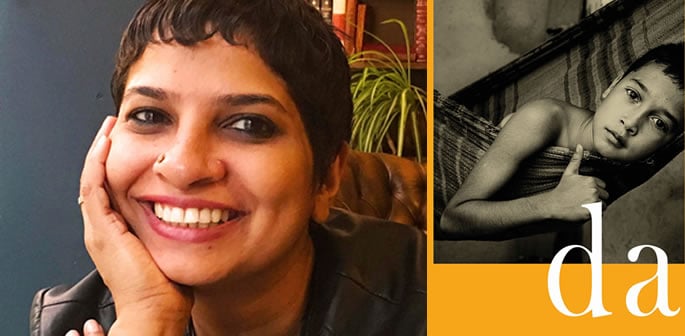
"setting it in 2013 helped me narrate it from a present reality"
Arathi Menon’s upcoming novel Da arrives as a quietly powerful exploration of love, secrecy and survival in a society shaped by prejudice.
Set in an Indian metropolis in 2013, the story revisits a time when same-sex relationships were still criminalised under Section 377, placing its characters in a world where affection must often be hidden in plain sight.
At its heart is 13-year-old Ved, an observant and emotionally open boy whose entire universe revolves around his adoptive father, Da.
Their bond is tender and deeply rooted, yet it begins to shift as Ved slowly becomes aware of the danger surrounding Da’s sexuality and the weight of societal judgment.
Through this lens, Menon examines how love endures under pressure and how silence can shape the contours of family life.
In an interview with DESIblitz, Menon reflects on the ideas, memories and experiences that informed this deeply personal story.
Bearing Witness to Injustice
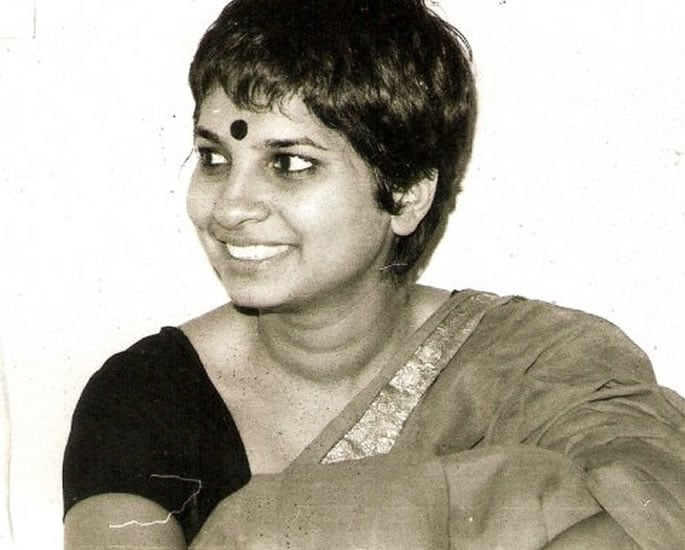
Arathi Menon’s Da is rooted in memory, protest and lived experience, drawing from a time when Section 377 shaped the realities of LGBT+ people across India.
The author recalls: “I grew up at a time when Section 377 was still in force.
“During my teenage years and early adulthood, I went on numerous marches along with allies, LGBT+ people and friends, asking the government to drop Section 377.
“One of my favourite posters during that time was, ‘Section 377, Quit India!’.”
Menon’s activism placed her close to the consequences of that law. That proximity informs the emotional urgency of the book.
“As I grew into adulthood, I saw how two friends suffered at the hands of this regressive law.
“Fighting against an oppressive state machinery and societal prejudice is one of the hardest things for a person to do.”
Menon focuses on what it meant to witness injustice at close range and carry that memory forward:
“I was very young then with no power to change anything except to listen to those friends and try to be there for them.
“The feeling of their helplessness, our helplessness, at not being allowed to do such a simple thing, love someone of choice with freedom, stayed with me.
“The truth is I am older now and still have no power except to perhaps chronicle that pain of injustice.”
Setting Da in 2013 allows her to preserve that sense of immediacy. The story unfolds in a moment when criminalisation was still active, keeping the stakes present rather than reflective.
Menon explains: “Section 377 was thankfully repealed in 2018 but I wanted the pain to feel fresh and urgent. So setting it in 2013 helped me narrate it from a present reality, rather than a retrospective one.
“I think this will take the reader through the journey of prejudice, pain, love, beauty and the courage it takes to love someone society doesn’t accept, in a way that feels like it is happening now, making it as timely and relevant today, as it was in 2013.”
The Cost of Prejudice
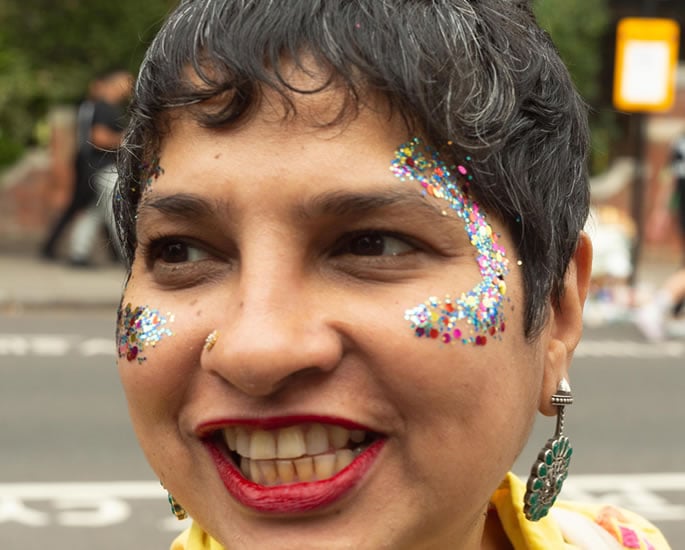
At the centre of Da is the relationship between Ved and his adoptive father.
Arathi Menon uses that bond to show how prejudice rarely affects just one person. It moves through families, reshaping relationships and emotional spaces.
She says: “When we love someone and they suffer, we suffer.
“I was drawn to this idea of showing how injustice doesn’t just affect those who are harmed by it but it also shatters those around the victim, those who care for the victim.”
By placing this story within a family, Menon grounds it in something recognisable.
She continues: “Family prejudice is one of the most hurtful things LGBT+ people go through, you hear so many of them speak about ‘chosen families’.
“They have to leave home and find support systems outside of familial units.”
“Centring the story of Da within a family structure helped me root the story in an ordinary reality while exploring an extraordinary relationship.”
That tension often leads to silence. Families may prioritise social acceptance over honesty, creating an environment where secrecy becomes necessary.
Menon captures how intolerance operates in different forms. It can be visible and aggressive, but it can also work quietly, shaping behaviour through fear and expectation.
“Intolerance can be loud and hectoring. But it can also be quiet and insidious.
“The world of Da explores both these traps created to suffocate the choice of an individual who dared to follow their authentic self.”
Seeing the World Through Ved
Writing through the eyes of a 13-year-old shapes how the story unfolds.
Arathi Menon spent years refining Ved’s voice, ensuring it remained true to his age while carrying the weight of the novel’s themes.
She admits: “It was really hard to write as a 13-year-old as I was one many, many moons ago.
“I worked five years on this novel that was handling complex adult themes from the perspective of a newly minted teenager.
“I had to be careful not to allow my ‘adult voice’ to seep in and be true to Ved’s character and thought process.”
That perspective allows the narrative to approach difficult issues without becoming heavy-handed.
She says: “The opportunity, of course, was that I got to explore and narrate a lot of things without the weight of ‘moral lecturing’ or the seriousness of an adult perspective, the teenage gaze helped me to approach it with a lightness of touch that didn’t take away the import of what was being said.”
For Menon, this approach opened space for experimentation and allowed the story’s emotional core to develop more naturally:
“Also, creatively it was very satisfying. My process felt charged, full of experimentation, finding narrative techniques that sparked and experiencing the joy of creating a world that is supercharged with love.”
Behind that voice sits extensive research.
Menon immersed herself in legal records, reportage and personal accounts to ensure the story felt grounded, even if much of that detail remains beneath the surface.
“At a personal level, I knew how Section 377 robbed certain friends of happiness.
“My research was extensive, not just of Section 377 but teenage character narrations. I went through reams and reams of the court cases, news articles, personal viewpoints and novels.
“However, all that fact-finding could not be used in the book as my narrator was a 13-year-old.
“What the research did was give the story a depth I could touch but not expand on.
“It formed the bedrock of the narrative in an invisible way, and that I hope made the story authentic and true to what happened between the central characters, unmasking the societal fractures that were present in that age of oppression.”
Tenderness as a Form of Resistance
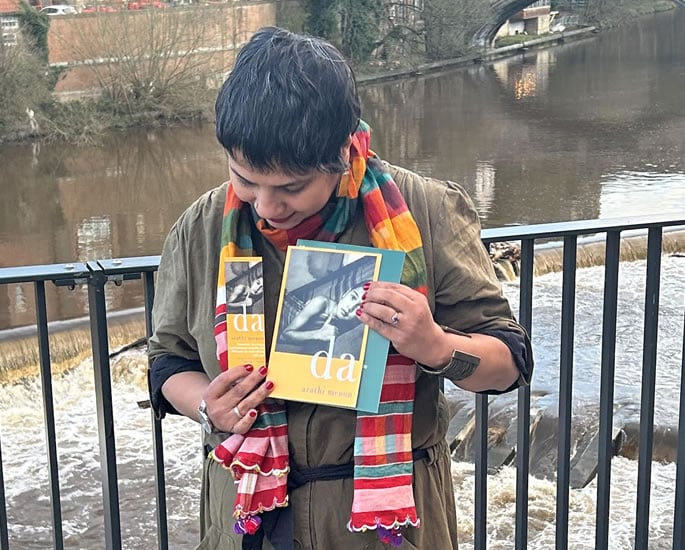
Arathi Menon does not see tenderness and radicalism as opposites. For her, they are inseparable, shaping how the story engages with injustice and love.
She says: “To be radical, you have to be human. To be human, you have to be tender. I don’t see this as a duality but as an essence of having a conscience and a heart.”
This perspective reframes the suffering in the novel. The pain faced by Da and Ved reflects a broader reality where prejudice adds to the everyday challenges people already face.
Menon explains: “People suffer for various reasons, illness, death of a loved one, loss, heartbreak, disappointment, all these are ordinary things and if we live, we will go through them.
“Do we really need to add prejudice to the mix?
“The emotional core of the story is that Da and Ved did nothing wrong, yet they were hunted in the name of ‘decency’.
“That is such a terrible thing for society to do, to punish someone for who they chose to love.”
Despite that, Da remains grounded in love. Relationships continue to develop and endure, even within a hostile environment:
“Equally, what surrounds this core is a world of love; Ved’s love for his shiny, new girlfriend, Da’s affection for Vamsi, who has stolen his heart and the unbreakable love between Da and Ved, between father and son.”
Menon frames love as something that persists, even when it is forced into secrecy. It exists within a world that often resists it, yet refuses to disappear.
“In a world that is complex with rising prejudice and consistent attacks on freedom, I felt a story like this needed to be told.”
“In an inclusive world, there would be no need for people to hide their love, their sexuality, their mistakes, secrets are a form of protection against a hostile world, and as the story of Da shows, when secrets are spilt, the world comes with a sledgehammer, to try and destroy someone who dared to step out of the boundaried confines of society.”
Menon’s focus remains on what readers might take from that experience. The novel invites engagement with both the pain and the possibility of change, without simplifying either.
She adds: “Readers of Da will witness the pain of exclusion, the injustice of oppression, the silence of suffering, the joy of life and hopefully this will inspire them to open doors in personal and political ways for those who have been shut out for no fault of theirs.
“I hope the reader will laugh with Ved and Da, find empathy for their confusion and shed tears for their powerlessness as they travel on this rollercoaster of a story about filial love.
“When they turn the final page, I hope the reader will be left with an urge to be an ally, a compulsion to reject prejudice in any form and a deep love for this father-son duo.”
Arathi Menon’s narrative lingers in the space between tenderness and disruption, capturing how families are reshaped when society refuses to accept difference.
The story does not offer an easy resolution; instead holding onto the emotional weight of what it means to love someone in a world that insists on judgment.
It is this tension that gives the novel its lasting impact, inviting readers to sit with both its beauty and its unease.
Set for a June 1 release, Da is a story that speaks to both past and present, as well as the enduring need to confront prejudice through empathy and understanding.