

















































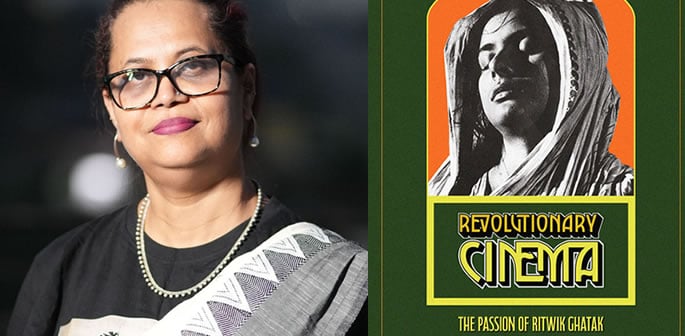
"The stories Ghatak told are highly relatable in our world"
Ritwik Kumar Ghatak’s cinema is often discussed in fragments, yet few curators have worked as consistently to reframe his legacy as Dr Sanghita Sen.
A filmmaker, author and academic, she has built her research around South Asian cinema, with a particular focus on Partition, displacement and the politics of memory.
Her work often returns to how film language can carry historical trauma without reducing it to explanation or sentiment.
That perspective shapes the upcoming BFI Southbank season Revolutionary Cinema: The Passion of Ritwik Ghatak, which brings together restored features, unfinished projects and rare shorts spanning his career.
It positions Ghatak as a filmmaker whose ideas continue to press against the present.
In an interview with DESIblitz, Sanghita Sen delves into her work on the BFI Southbank season and why Ghatak’s work now feels increasingly unavoidable.
Reintroducing Ghatak in a Fractured Global Moment
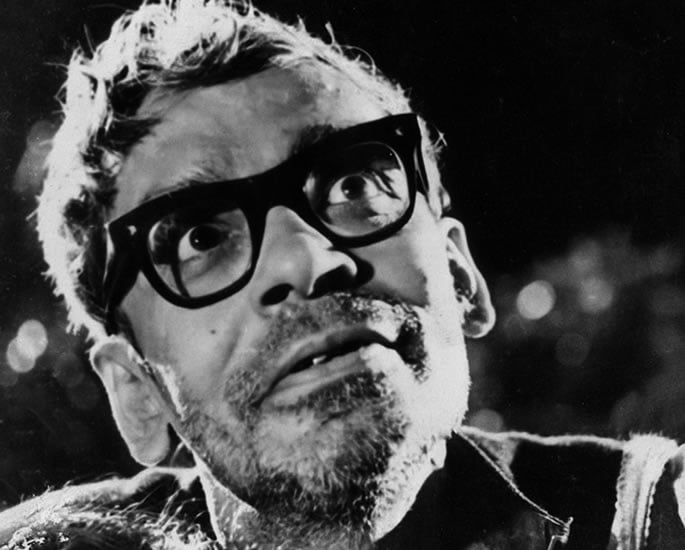
Sanghita Sen argues that Ritwik Ghatak’s return to UK screens is driven by a world that now mirrors his concerns.
She situates his work against widening inequality, conflict, climate breakdown, and rising displacement across borders.
His cinema, she suggests, feels more like the present tense:
“In a world fraught with poverty, inequality, wars, genocide, climate crisis, the resultant rising refugee crisis and anti-immigrant sentiments on the rise, Ritwik Ghatak not just appears highly relevant but also uncannily contemporary and crucial.”
She points to how Ghatak’s films initially struggled commercially, partly because they were ahead of their time. Yet he himself anticipated this delayed recognition, suggesting audiences would only fully grasp his work decades later.
That prediction, she notes, feels increasingly accurate in his centenary year.
Sen explains: “His films didn’t do well in the box office when they were initially released, probably because his cinema was way ahead of its time.
“In an interview in the early 1970s, he commented that his films would take about three more decades for people to start appreciating them fully.
“50 years since his untimely passing and on the year of his birth centenary celebration, it seems like we are beginning to catch up with what he wanted to communicate to his audiences.
“The stories Ghatak told are highly relatable in our world and time.
“This is why I thought it is the best time to reintroduce Ghatak to audiences in the UK at BFI Southbank and in Europe (I’m also curating a Ghatak season as part of this year’s Il Cinema Ritrovato in Bologna) with a hope that his cinema will finally get the long-pending recognition it deserves.”
That framing also connects the UK programme with a wider European reassessment of his work.
It is positioned not as revivalism, but as delayed cultural alignment with a filmmaker whose themes now feel structurally familiar.
Partition as Lived Trauma
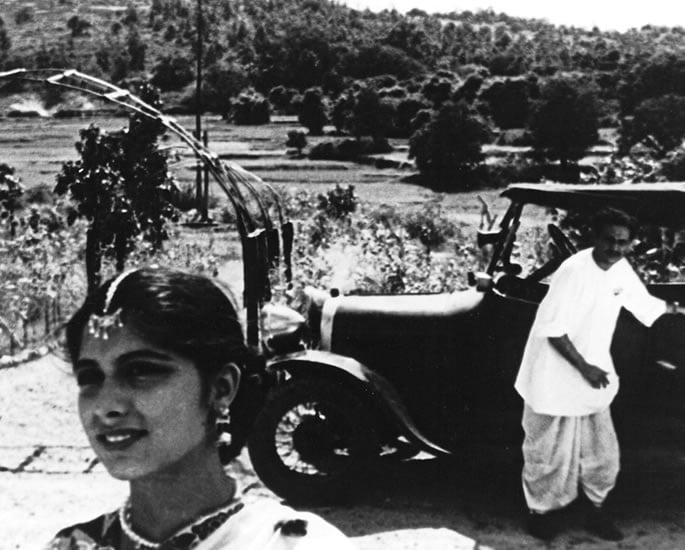
Sen is explicit about why Ghatak stands apart from his contemporaries in post-Independence South Asian cinema.
She says: “I describe Ghatak as ‘the most original, radical and uncompromising’ filmmaker of post-Independence South Asia because his cinematic language and concerns were so fundamentally unique and very different from his contemporaries.”
Sen argues that Partition is not the background context in Ghatak’s work but an active force shaping identity and collapse.
It defines character psychology as much as narrative structure, producing figures who are not simply struggling but fundamentally displaced in existence.
“Several things set him apart, the most crucial of which, for me as someone from a Partition refugee family in Bengal, is the centrality of Partition as lived trauma in his works.
“While many filmmakers addressed social change, Ghatak made the Partition and its impact on people the emotional and historical core of his work.”
On Partition’s lasting effects, she continues: “It is an ongoing wound shaping identity, displacement and everyday life, not just of the uprooted people but also the people around them who are not refugees.
“His characters aren’t just poor or struggling; they’re existentially uprooted.
“Secondly, while several of his noted contemporaries adopted restrained realism, Ghatak embraced melodrama, myth and folk culture with both hands.
“He brilliantly used extraordinary framing, extradiegetic sounds, unconventional editing and symbolism in the architecture of his weaponised melodrama to convey a sense of political urgency without being didactic.”
That formal strategy becomes central to how Sen reads his politics. Rather than presenting ideology directly, Ghatak embeds it in tone, rhythm and sensory disruption.
The effect is cumulative rather than explanatory.
Displacement, Climate, and the Persistence of Rupture
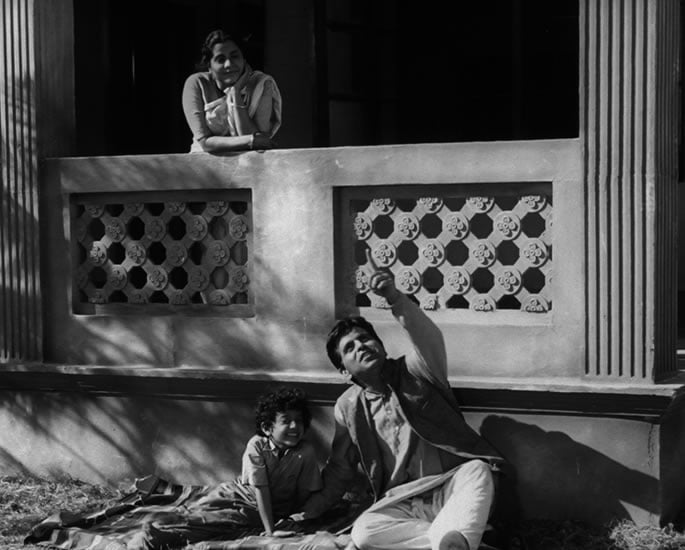
For Sen, Ghatak’s continued relevance lies in how closely his portrayal of displacement matches contemporary global conditions.
She draws a direct line between the Partition-era rupture and today’s layered crises of migration, climate instability and cultural fragmentation.
“Unlike overtly ideological cinema, Ghatak’s politics are embedded in form and feeling.
“One can, of course, sense the influence of Marxist thoughts, but he avoids turning films into simple messages. Instead, the tragedy of his characters embodies systemic failure.
“The persistence of Ghatak’s themes has less to do with nostalgia for a specific historical moment and more to do with how accurately he captured a structure of experience that keeps repeating.
“Displacement hasn’t gone away in today’s world; it has been intensified. What Ghatak depicted in the aftermath of Partition, i.e. uprooted families, fragile identities, precarious belonging and loss of culture, now exists on a global scale.
“Refugee crises, climate migration and conflict-driven exile mean millions still live in the emotional condition and the threat of loss of culture his characters inhabit – physically somewhere, but psychologically someplace else, with the idea of ‘home’ becoming more unstable.
“In Ghatak’s films, home is not just a space; it is memory, language, culture, and relationships, all of which can fracture.
“That feels especially contemporary in a world shaped by globalisation and neoliberalism, diaspora, and rapid urban change.
“Ghatak depicted how historical violence lingers beyond those who directly experience it.
“Today, there is far greater awareness of how trauma passes through generations, whether from colonisation, genocide, war, or migration.
“The grief his characters personify can now be read as psychologically precise.
“So, Ghatak wasn’t just documenting a past tragedy; he was articulating what it feels like to lose one’s place in the world.
“That condition, whether caused by borders, economics, wars or culture, is still very much with us.”
Sanghita Sen extends this reading into environmental collapse through A River Called Titas, where ecological breakdown becomes inseparable from social disintegration.
The river functions as both material and emotional infrastructure, shaping identity until its erosion signals communal unravelling.
She says: “Ritwik Ghatak was strikingly ahead of his time in the way he understood the relationship between people, place, and environment.
“In A River Called Titas, the river is not just a backdrop but a living presence that shapes the entire Malo identity (the fishing community the film depicts), economy and emotional world.
“When the river begins to disappear, it is not simply an ecological event; it becomes a profound social and cultural catastrophe.”
“I need to point out here that this film is based on a 1956 novel by the same name by Advaita Malla Burman, a Dalit writer and journalist who was the first from the Malo community of Brahmanbaria (now in Bangladesh) to receive formal education and his education was partially funded by the community.
“He died of tuberculosis at the age of 37, soon after he completed this novel, which is considered to be one of the finest in Indian literature and the earliest novel on ecology, environmental loss and its human cost.
“Ghatak admired Malla Burman and his work. It feels like a déjà vu that Ghatak too died prematurely and of tuberculosis.
“Coming back to the film, what feels especially contemporary in it is how Ghatak refuses to separate environmental loss from human experience and how brilliantly he depicted it.
“The erosion of the river mirrors the fragmentation of the community: livelihoods vanish, relationships strain, and a shared sense of belonging begins to dissolve.
“Today, as we confront climate change and ecological collapse, this interconnectedness feels urgently familiar.
“Ghatak doesn’t frame this in abstract or scientific terms; instead, he renders environmental fragility through memory, myth and the quotidian.
“The result is a deeply embodied understanding of ecological crisis, one that anticipates current thinking about climate as not just environmental, but existential. In that sense, this film feels uncannily modern, even prophetic.”
Rethinking Ritwik Ghatak’s Legacy
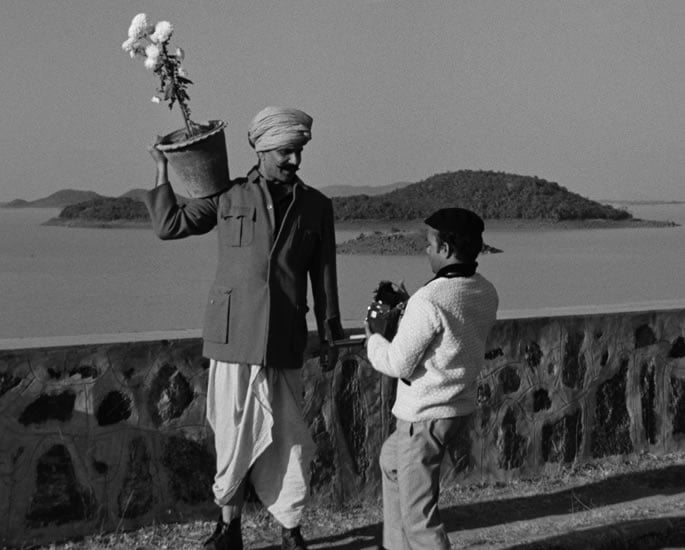
The BFI Southbank programme, alongside screenings in Europe, aims to restore Ritwik Ghatak beyond a handful of recognised titles.
Sanghita Sen stresses that focusing only on canonical films risks simplifying a far more complex and experimental body of work.
She elaborates: “I wanted to include the full range of Ghatak’s works in this historic season to liberate Ghatak from the confinement of a few canonical films of cinematic excellence because it risks flattening what makes him so unique.
“Ghatak was a prolific artist, despite the enormous odds he had to battle, because of his uncompromising and principled attitude towards the idea of art committed to truth and people.
“Showing the full range, features, shorts, documentaries, unfinished projects, films based on his scripts and even films he acted in, reveals the extent of his commitment and his lifelong engagement with displacement, cultural loss, trauma, and memory.
“Hopefully, this BFI Southbank programme will allow the audiences to see not just the classics, but also his process, how his ideas evolved, the risks he took, and how uncompromising his vision remained across different formats.”
That sense of process also helps explain why Ghatak struggled to find institutional or commercial support during his lifetime.
Sen traces this to his refusal to conform to mainstream production systems and his insistence on cinema as a form of political engagement rather than entertainment, adding:
“Like old wine, Ghatak’s real influence took some time to settle in.
“Except for The Pathetic Fallacy (1958) and The Runaway (1959), no other Ghatak film was screened at an international festival.
“The Pathetic Fallacy screened in Venice without subtitles and attracted the attention of George Sadoul, but did not get the attention that could have established Ghatak as the upcoming revolutionary filmmaker that he was.
“Ghatak remained under-recognised for so long due to a combination of industrial, political and even aesthetic reasons.
“Firstly, he actively resisted working in the mainstream production systems.
“His idea of cinema as a vehicle to communicate meaningful messages to inspire the audience into taking action to rectify systemic injustice was at odds with mainstream cinema as a product of the culture industry to entertain people.
“This is why Ghatak quit his job as a script and story writer in Filmistan Studio, Bombay in 1957, despite the resounding success of Madhumati, a paranormal romance based on his script and directed by his mentor, Bimal Roy.
“The film wasn’t just one of the highest-grossing in Indian film history; it also started off the Bombay film industry’s affinity for reincarnation stories such as Karz and Om Shanti Om.
“Ghatak wrote some other scripts later on for mainstream Bengali films made by other directors. So, he returned to Kolkata to make films he wanted to make.
“From 1958 to 1963, he made 5 films: The Pathetic Fallacy, The Runaway, Cloud Capped Star, E-Flat and The Golden Line.
“Except Cloud Capped Star, none were met with box office success and this so-called failure made it hard for Ghatak to secure funding and distribution, which meant many of his films were poorly circulated, released late or abandoned altogether.
“Secondly, his content and style also played a role. At a time when audiences and critics often favoured the humanist realism associated with Satyajit Ray, Ghatak’s use of politicised melodrama, radical sound, and unconventional editing could have appeared difficult for the palette of contemporary audiences.
“Besides this, his engagement with the trauma, systemic injustice and a strong critical commentary may also have appeared uncomfortable to the audiences, which resist easy consumption.
“Added to this was the betrayal from his old comrades who ran a slander campaign against E-Flat, which was autobiographical and critical of factionalism in the communist theatre scene of Bengal.
“The failure of this personally high-stakes film deeply impacted Ghatak.
“Lastly, a series of failures and hardships took a toll on Ghatak’s physical and mental health and his personal life, which led to alcoholism and institutionalisation.
“His struggle and untimely death in 1976 also restricted him from building a sustained public presence.
“Only later retrospectives and then restorations slowly started to reveal the scale of his influence, such as the retrospective of his films at the Edinburgh Film Festival, Nasreen Munni Kabir’s programme of Ghatak’s films for Channel 4, and the BFI who kept screening his films as part of their programme.
“Ghatak’s 1973 masterpiece Titas was screened in 2010 in the Cannes Classics section at the 63rd Cannes Film Festival, marking a significant recognition of his work in the world.
“I also curated a season with 6 of his completed features for Dundee Contemporary Arts in 2017.”
For younger filmmakers, Sen suggests Ghatak’s most lasting lesson lies in persistence under constraint. His career becomes a study in how artistic practice can continue even when formal structures collapse.
“Ghatak was a prolific creative practitioner and thinker who, despite very hard working conditions, kept experimenting with forms of cinema throughout his life.
“I think this is the greatest inspiration that younger filmmakers with a dream of making films can draw from.
“Ghatak bypassed his insurmountable barriers by finding alternative ways of engagement with cinema.”
“When he couldn’t make a film, he taught filmmaking and worked with students who later went on to become unique cinematic voices. When he couldn’t teach, he planned and published a theatre magazine despite failing mental and physical health.
“During this time, he wrote scripts, made documentaries and shorts. Whatever the challenge was, Ghatak found a way to remain active.
“I think Ghatak’s resolve to never give up can inspire younger filmmakers and audiences a great deal.”
For audiences encountering his work for the first time, Sen points towards his early films as entry points into his evolving cinematic language:
“In the BFI Southbank season, I would recommend either The Pathetic Fallacy or The Runaway.
“These are still hidden gems and yet they both display a unique vision and style of filmmaking that Ghatak continued to deliver on throughout his career.”
The BFI Southbank season brings together the full range of Ritwik Ghatak’s work, from completed films to unfinished projects and shorts.
It shows a filmmaker who rarely received recognition in his lifetime, but whose influence has grown over time through restorations and retrospectives.
Sanghita Sen’s curation highlights how his films deal with displacement, memory and political struggle in ways that still speak to present-day issues like migration and cultural loss.
It also makes his work more accessible to new audiences by showing the breadth of his creative output, not just his most well-known films.
Revolutionary Cinema: The Passion of Ritwik Ghatak is at BFI Southbank from June 1-30.