


















































"I wanted to hone in on that."
South Asian representation in video games is no longer confined to the margins of indie development.
Over the past decade, a small but growing number of studios and diaspora creators have pushed their way into global visibility.
From narrative-led indie titles like Venba to ambitious releases such as Dosa Divas, the scope of storytelling is widening.
Now, with PlayStation’s Saros featuring British actor Rahul Kohli, South Asian talent is also entering mainstream AAA production.
Together, these projects reflect a shifting industry where identity, migration and culture are becoming part of the global gaming language.
Emergence in Indie Games
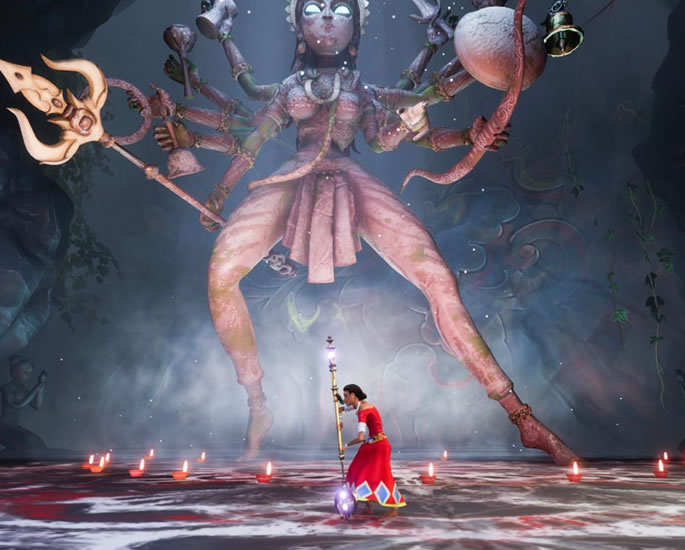
For years, South Asian presence in gaming largely emerged through independent studios rather than major publishers.
Titles from India-based developers such as Raji: An Ancient Epic and Asura helped establish early visibility, even if commercial reach remained limited.
That foundation has since evolved into more narrative-driven, emotionally grounded experiences shaped by diaspora perspectives.
Venba, developed by Toronto-based Visai Games, centres on an Indian family building a life in Canada.
The game uses cooking as its core mechanic, with players reconstructing recipes from damaged or incomplete instructions. It becomes a way of exploring memory, language and cultural loss.
As Kavin grows up in Canada, his relationship with his Tamil heritage becomes more distant, before resurfacing in adulthood.
One moment shows him unable to read Tamil, relying instead on visual cues to prepare food passed down by his mother.
Abhi Swaminathan, the game’s director, said: “When growing up in Canada, what I saw was that a lot of the struggles that [immigrant] kids face growing up [were] echoed in the media.
“It makes sense, because the media is made by those kids, right?
“But sometimes immigrant parents were caricaturised. Sometimes their accents are played up.”
“A lot of the media… focuses on immigrant pain or parents really pushing for their culture, and they want you to speak the language.
“I wanted to hone in on that. Why, though? What have they given up? What have they sacrificed?
“I thought that was left untold, and that’s what always bothered me when I watched this media. That’s where I think the effort to capture that came from.”
For Swaminathan, food becomes central to communication between generations:
“Food is a love language, right? But in this case, it’s pretty much the only language they have.”
Culture in Game Design
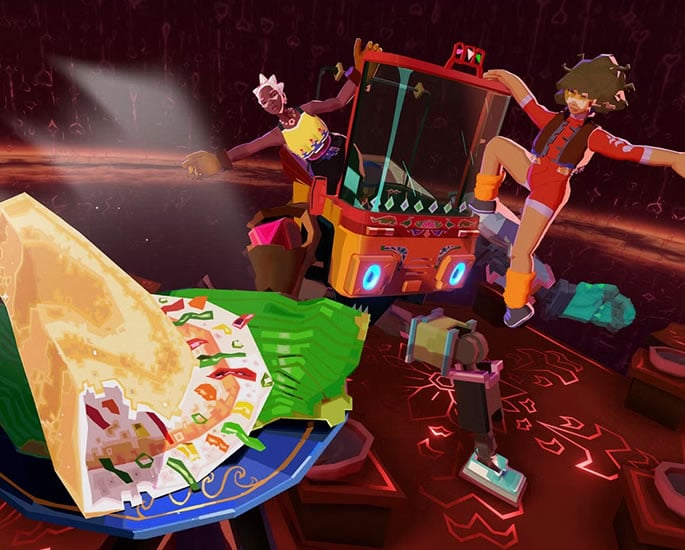
Outerloop Games, a minority-led studio based in Seattle, has taken a different but related approach to South Asian storytelling.
Its earlier projects, including Falcon Age and Thirsty Suitors, explore themes of colonial legacy, family tension and diaspora identity through varied gameplay styles.
Their new release, Dosa Divas, continues that thread, blending South Asian cultural references with sci-fi and role-playing influences inspired by games like Super Mario RPG and Octopath Traveler.
Set in the fictional world of Meyndish, the game follows sisters Amani and Samara as they return to their family restaurant.
They discover it has been transformed into a corporate operation under their older sister Lina, who now produces mass-market “meal slop” in tubes.
The conflict becomes a commentary on how culture, particularly food, can be commercialised and stripped of meaning.
Game director Chandana Ekanayake said: “The mech has its own personality, charm, and history.
“So I was thinking about the scale of these sisters riding this mech, ‘What are the spaces they navigate? How do we make that interesting?'”
Food plays a functional role in gameplay, but not in combat.
“The battle system went through a bunch of changes to figure out the right balance, because we were initially fighting with food, and that didn’t feel right.
“So we decided to use food for healing and recovery, also as a way to connect people within the towns together and keep that out of the battle system.”
He adds that food operates as a broader design philosophy.
Ekanayake added: “So I think of food as a unifier.
“Our approach to games is: We’re welcoming you into our home, giving you a good meal, hope you enjoy it, and then send you on your way.
“Food is a sort of metaphor for that and a lens to try something new.”
Mainstream Games
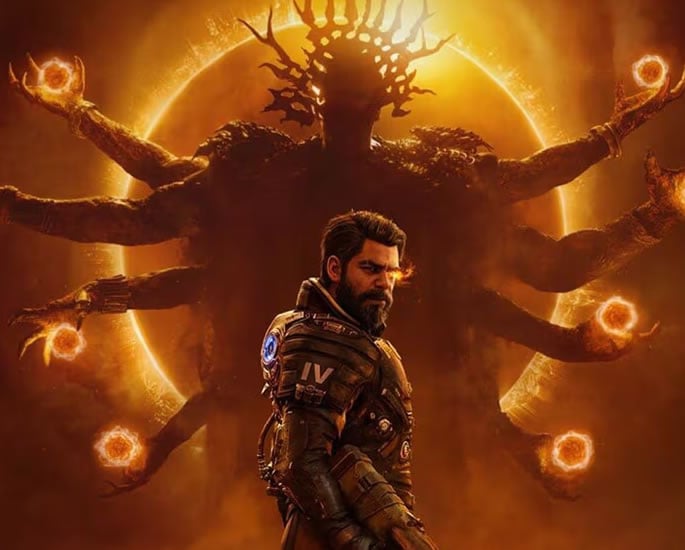
While indie studios have driven much of the narrative exploration, South Asian presence is now extending into larger commercial releases.
Saros moves away from grounded cultural storytelling into sci-fi action.
The game follows Arjun Devraj, a space enforcer investigating the disappearance of his crew on the hostile planet Carcosa. He is also searching for a mysterious figure named Nitya.
The game uses a roguelike structure, with repeated death and rebirth forming part of progression.
Rahul Kohli plays Arjun, marking a notable crossover between South Asian talent and AAA gaming production.
Kohli, known for roles in Midnight Mass, The Haunting of Bly Manor and The Fall of the House of Usher, describes how the collaboration began unexpectedly.
He said: “Someone at Housemarque was already aware of one show in particular, which was Midnight Mass. So I was used in their concept art.”
Despite its horror-inspired design, Saros includes subtle cultural references.
The protagonist’s imagery and certain visual motifs draw lightly on mythological symbolism associated with Hindu iconography.
Kohli is clear that the game is not culturally specific in a restrictive sense:
“It’s not like you have to be of a certain culture or be of a certain place in order to enjoy Saros. It’s referential in a very light way.”
“I’m appreciative that Housemarque had created something that anyone could play and anyone could be in, but it happened to be me.”
South Asian representation in gaming is expanding across multiple layers of the industry.
Indie studios continue to lead on intimate, culturally specific storytelling rooted in migration, identity and family.
At the same time, larger studios are beginning to include South Asian talent and references within mainstream global releases.
The result is not a single narrative, but a widening spectrum of visibility that reflects how the industry itself is evolving.