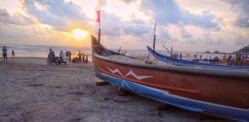


















































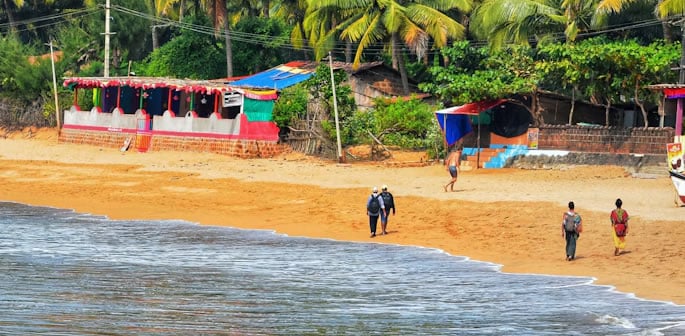
Its gentle swells offer an alternative to Goa’s busier beaches
Ask most travellers to name an Indian beach holiday, and the answer will probably be Goa.
With its palm-fringed beaches, fresh seafood, Portuguese-era churches and parties that continue after dark, it has become synonymous with coastal escapes in India.
But this familiar picture represents only a fraction of what the country has to offer.
Stretching for nearly 7,000 miles along the Arabian Sea, the Bay of Bengal and the Indian Ocean, India’s coastline encompasses remarkably varied beaches and marine landscapes.
From Karnataka’s surf breaks to Lakshadweep’s coral reefs and Odisha’s turtle-nesting beaches, there are plenty of alternatives for travellers seeking something different.
These destinations deserve a place on the map for anyone planning an Indian beach holiday beyond Goa.
Mulki, Karnataka
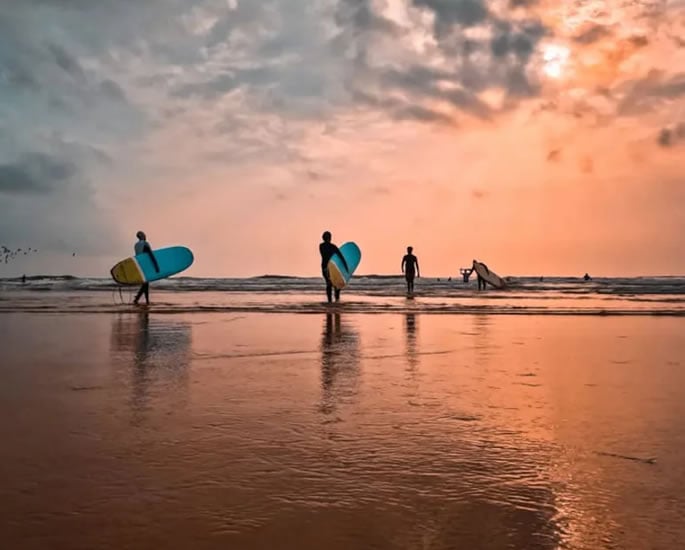
India’s surfing scene began taking shape in the early 2000s, with Karnataka’s west coast becoming an unlikely centre for the sport.
The small fishing village of Mulki became a pioneering destination when American surfer Jack Hebner opened India’s first surf school there in 2004.
The waves are found a short boat ride downriver at Sasihithlu, where the Shambhavi River meets the Arabian Sea.
Its gentle swells offer an alternative to Goa’s busier beaches, particularly for travellers looking to spend their holiday learning to surf.
Mulki’s appeal lies in its connection to India’s growing surf culture and its relatively low-key coastal setting.
Puducherry
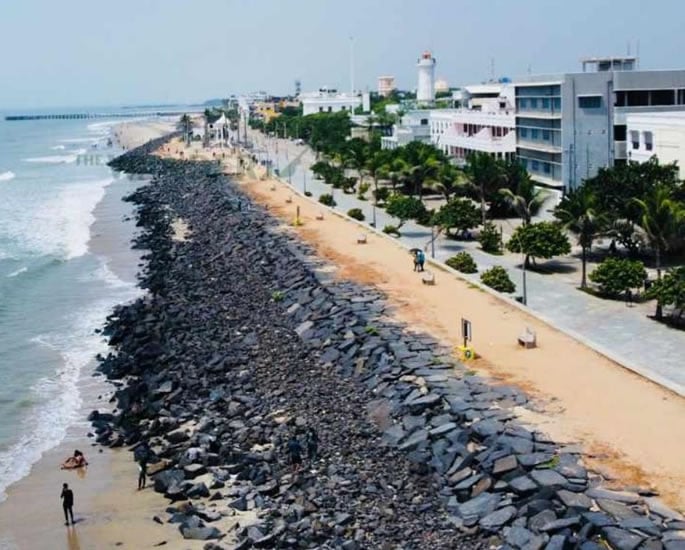
Puducherry is another destination for travellers who want to combine beach time with surfing.
Serenity Beach, north of the town centre, has waves suited to beginners and improving surfers, making it an accessible introduction to the sport.
The surf break was shaped partly by two piers constructed as tsunami defences following the 2004 Indian Ocean tsunami.
Despite its surf potential, Puducherry has not developed the same profile as established international surfing destinations, helping it retain a quieter atmosphere in the water.
Away from the beach, the distinctive French colonial architecture and café culture are additional reasons to stay, giving visitors a mix of coastal relaxation and cultural exploration.
Kovalam, Tamil Nadu
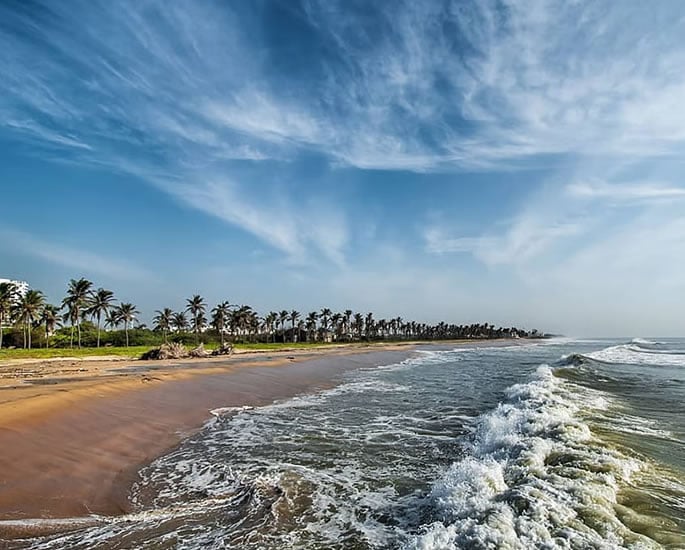
Tamil Nadu has established its own place on India’s surfing map, with Kovalam around an hour south of Chennai.
Its coastline caters to different abilities, from mellow cove waves for beginners to more demanding point breaks for experienced surfers. August to March is generally the best period to visit for surfing.
The surrounding coast also offers a striking combination of sport and history.
Around 12 miles south, Mamallapuram brings surfers close to the eighth-century Shore Temple, built under the Pallava rulers when the town flourished as a centre of art and architecture.
Here, right-hand waves break near one of India’s most recognisable coastal monuments, making the area particularly appealing to travellers who want more than a conventional beach holiday.
The Andaman Islands
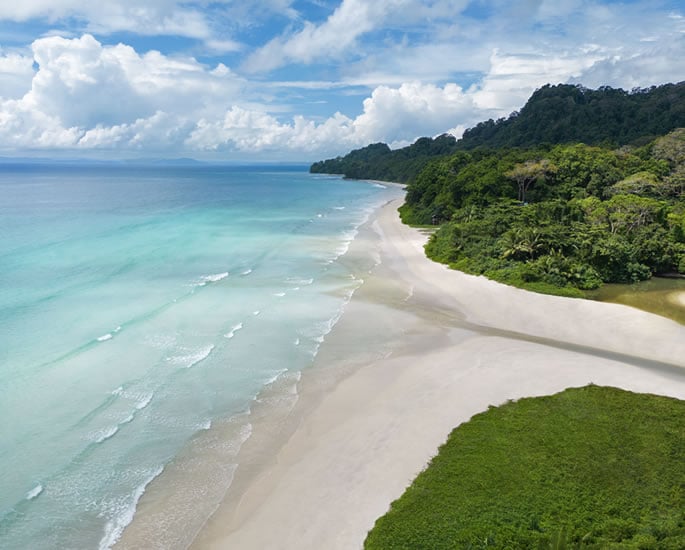
India’s diving scene remains less established than those of Thailand, Indonesia and the Philippines, but the Andaman Islands offer a compelling alternative for underwater exploration.
Their clear waters, coral reefs and mangrove-lined coast provide a rich marine environment, with Swaraj Dweep, formerly Havelock Island, serving as the main base for diving trips.
The island has more than 25 dive sites, catering to different experience levels.
Minerva Ledge is known for its coral gardens, deeper waters and schools of tuna and barracuda, while stronger currents make it suitable for drift diving.
More experienced divers can explore Dixon’s Pinnacle, where three coral-covered ridges descend from 18 to 35 metres and attract giant groupers and reef sharks. Mantas and whale sharks are occasional visitors.
A ferry connects Swaraj Dweep with the quieter Shaheed Dweep, formerly Neil Island.
Its Fish Slate dive site offers a shallow reef at around four metres, where dugongs graze on seagrass between February and May.
The islands are a great alternative to Goa for travellers seeking a holiday built around marine life rather than beach clubs and nightlife.
Lakshadweep
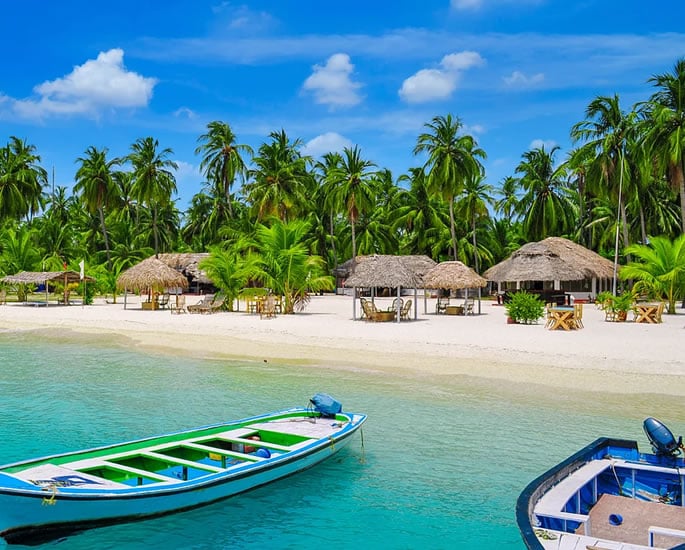
For those wanting to make the additional journey, Lakshadweep offers a more remote diving experience.
This collection of coral atolls off Kerala has exceptionally clear water, with visibility sometimes reaching 50 metres, alongside reefs frequented by sea turtles.
Diving trips are based around islands including Kavaratti, Kadmat and Agatti.
One of the best-known sites is Wall of Wonder, off Kavaratti’s north-west coast. Its sheer reef face descends to around 20-30 metres, with underwater formations offering opportunities for experienced divers to explore the reef environment.
The site is also associated with cave diving, although conditions and access depend on local operators and diver experience.
Lakshadweep’s relative isolation is central to its appeal, offering a different pace from Goa’s developed tourist areas.
Travellers should plan carefully, however, as access to the islands is regulated and permits may be required. Checking current travel arrangements and diving conditions before departure is essential.
Odisha
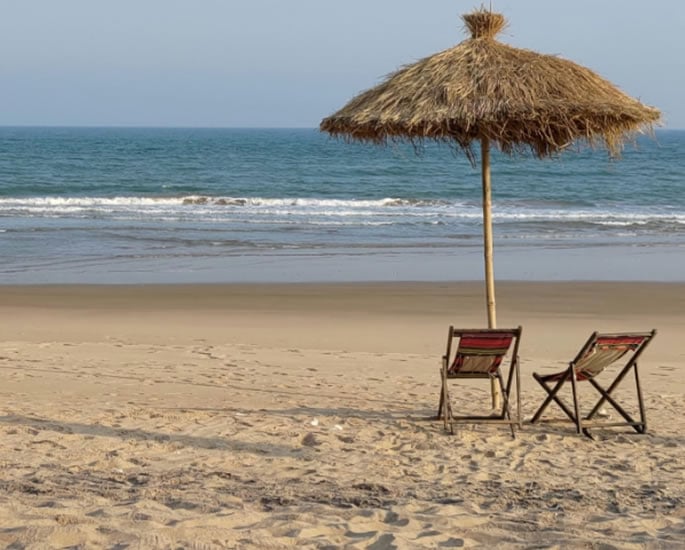
On Odisha’s eastern coast, the beach becomes the setting for one of the world’s most remarkable wildlife spectacles.
Each year, thousands of female olive ridley turtles gather to nest, with mass arrivals known as arribadas, meaning “arrival”, sometimes bringing hundreds of thousands ashore over a few nights.
Gahirmatha, near the mouth of the Brahmani-Baitarani river, was the first such nesting site recorded in the area in 1974.
It became a protected marine sanctuary in 1997, although access to the main nesting beach is now heavily restricted to safeguard the turtles.
Further south, Rushikulya near Chilika Lake offers another important nesting site and is generally more accessible to visitors. However, turtle numbers can vary dramatically between seasons.
Nearly 900,000 turtles nested there across two phases in 2025, compared with around 205,000 over four days in 2026.
These fluctuations make sightings difficult to guarantee, so visitors should check current conservation guidance and follow local restrictions.
For wildlife enthusiasts, the experience offers a powerful reason to explore Odisha’s coastline beyond its better-known tourist attractions.
Mattu Beach, Karnataka
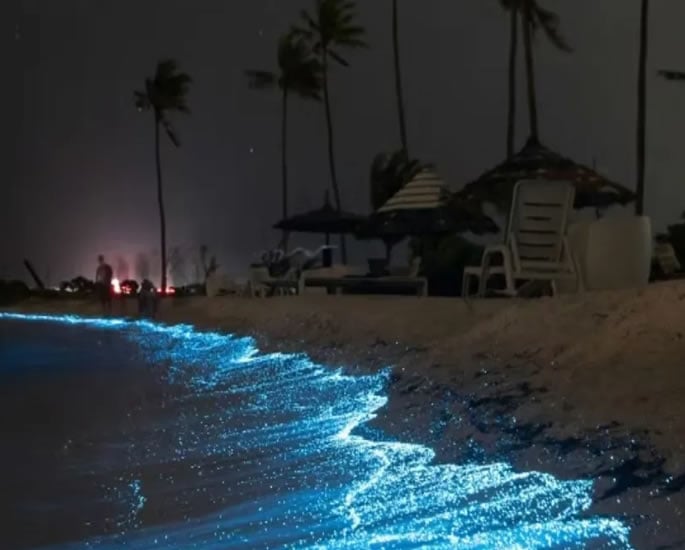
Mattu Beach, near Udupi in Karnataka, present another opportunity to witness bioluminescence without going to the Andaman Islands.
At this beach destination, marine plankton can illuminate breaking waves, producing flashes of blue light along the shoreline after dark.
The phenomenon is associated with blooms of bioluminescent organisms in the coastal water, although its intensity and frequency depend on local conditions.
Sightings are often reported during the weeks following the monsoon, particularly on dark nights when there is little moonlight. As with other bioluminescent beaches, visitors should not expect the glow to appear on every visit.
Mattu’s quieter setting makes it an appealing option for holidaymakers exploring Karnataka’s coastline around Udupi.
The experience centres on the natural environment instead of relying on large resorts or organised nightlife.
Visitors should check recent local reports before travelling specifically for bioluminescence, as the display is unpredictable.
India’s coastline has much more variety than Goa alone, from surf breaks and remote coral islands to extraordinary wildlife encounters.
Each destination brings something different, whether it is learning to surf in Karnataka or witnessing bioluminescence in the Andamans.
With the right planning, travellers can enjoy a beach holiday that matches their interests while exploring a less familiar side of India.