




















































"the expectation I see questioned most is marriage"
Shivani Agarwal explores a difficult question facing many South Asians: why can choosing your own path feel like disappointing your family?
Expectations around marriage, careers, relationships and success can carry the weight of generations, making it difficult to distinguish personal ambitions from the lives people have been taught to pursue.
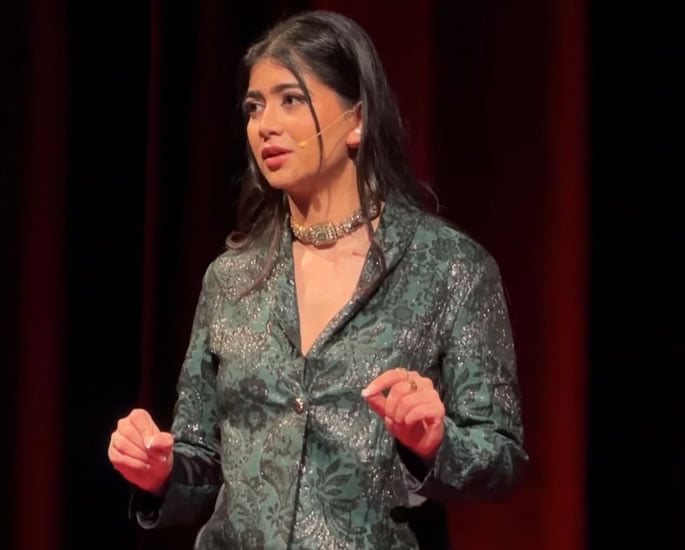
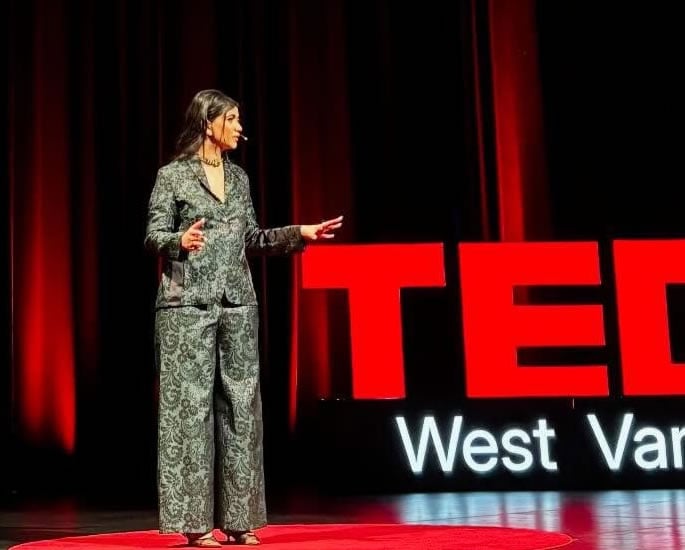
An Indian-Canadian counsellor, educator and TEDx speaker, Shivani Agarwal works with South Asians navigating life across different countries, generations and cultures.
Through the Centre for Self-Discovery, which she founded, she has built a community of more than 35,000 people across 10 countries and nine languages.
Her work examines how people can challenge inherited beliefs, establish boundaries and develop their own identities without feeling they must sacrifice their cultural roots.
These questions can become particularly pressing during Navratri, Diwali and wedding season, when family gatherings can bring personal choices under scrutiny.
Shivani Agarwal talks to DESIblitz about why South Asians are rethinking traditional family expectations, how these pressures affect mental health and what it takes to break familiar patterns without losing a sense of belonging.
Questioning Traditional Family Expectations

Marriage remains one of the most deeply rooted expectations in many South Asian families, often accompanied by assumptions about when people should settle down, have children and build a future.
However, more people across generations are questioning whether these milestones reflect their own ambitions or simply the lives they have been taught to pursue.
Shivani Agarwal observed this shift: “In my work with South Asians across different countries and generations, the expectation I see questioned most is marriage, both its timeline and its template.
“There’s long been this unspoken script that by a certain age, you marry, you have children, you don’t ask too many questions. That’s shifting, and across generations.
“Younger people are asking what they actually want from a partner and a future, even whether marriage has to mean children at all. But it isn’t only them.
“I see older couples quietly reassessing the marriages they’re already in, and choosing not to hand the same expectations down to their kids.
“It’s happening on both sides and across both generations: people are questioning whether the script was ever really theirs to begin with.”
These expectations can also shape how people perceive their own worth.
When family approval is tied to marriage, career progression, gender roles or conventional ideas of success, choosing a different path can trigger feelings of inadequacy, even when that choice reflects a person’s genuine wishes.
Agarwal explains that these beliefs often take hold during childhood:
“Family expectations sit closest to our formative years, and in those years our immediate environment is the whole world.
“What our parents, siblings, and schools expect doesn’t register as one opinion among many; it registers as reality itself.
“Most of us don’t step outside that frame until our early twenties, so it quietly shapes who we understand ourselves to be.”
“The trouble is that identity becomes enmeshed with expectation and we attach morality to it. If I’m meeting what was expected around marriage, career, gender, success, I’m good, I’m on track; if not, something’s wrong with me.
“The real difficulty comes when we finally step into wider worlds and ask, often for the first time, ‘What do I actually want?’ That’s the fork.
“Some people use it to separate who they are from what was expected, and build something of their own. Others drown under the weight of it.
“And that’s where the mental health toll comes in: anxiety, a shaky sense of identity, guilt that masquerades as failure.
“Clinically, the work is often helping someone see that their identity was never the same thing as their obedience to those expectations, and that it’s safe to tell the two apart.”
How Cultural Differences influence Family Relationships
For South Asians growing up between cultures, balancing family expectations with outside influences can create tension around independence, relationships and belonging.
However, Agarwal argues that cultural differences are not necessarily the problem. What matters is whether families can accommodate change without seeing it as a threat to their identity.
She says: “More than the pull between cultures, what matters most is flexibility, though we wrongly assume South Asian culture is inflexible by default.
“Often what looks like rigidity is actually grief.
“A family that left home, whether that’s Lucknow to London or one generation to the next, often carries a loss they never got to mourn. They hold on tightly, afraid that if their child picks up something new, the culture itself slips away.
“So log kya kahenge, duty, the joint-family expectation to stay one unit: these harden, not out of cruelty, but out of unmourned fear.
“Where a family can soften that, a person gets to hold more than one part of themselves, keeping the rituals, the language, the values that genuinely resonate, while folding in what they learn elsewhere.
“You don’t stop being South Asian by growing; you get to choose which parts you carry forward. Where outside influence is treated as a threat, though, the person gets stuck believing they can only be one thing, and their identity becomes rooted in fear rather than choice.
“So the way growing up between cultures shapes how South Asians relate to their families comes back to the foundation the family has built.
“If the bond is secure enough to allow change, the core (the values, the belonging) survives, and parents and children can grow at different paces without rupturing.
“Barring real harm, that security will always matter more than the changes moving through it.”
This flexibility also affects how families respond when individuals establish boundaries, as Shivani Agarwal explains:
“Boundaries are so much of what we work on in South Asian families. The hard truth is that boundary-setting is almost foreign to our culture, and yet it’s often the one thing that can actually save our relationships.
“The reason it triggers such guilt is that we’re raised to see the self not as an individual but as the whole family.
“Add to that something we call ’emotional enmeshment’, where everyone is held responsible for everyone else’s feelings, where one person’s mood sets the temperature of the entire home, and you have a setup where standing up for yourself doesn’t read as healthy. It reads as betrayal.
“A lot of this is because we’ve never seen love modelled any other way.
“Our films, our stories, tell us a person is loyal only if they sacrifice every part of themselves. So the moment someone says ‘I want this, I need this,’ it feels like a threat to everyone else, and the person asking can suddenly be cast as the disrespectful villain.
“The guilt, shame, and disloyalty make complete sense in that light.
“But not having been done before doesn’t make it wrong.
“What I remind clients is that boundaries in South Asian families don’t have to look like Western ones: a direct, open conversation where your individuality is simply respected.
“I call it setting incognito boundaries: you stay kind, you speak the emotional language of the other person, and you slowly, carefully begin to carve out space for yourself.
“It can feel enormous, especially if you’ve never done it. But it’s not disloyal. It’s often the most loving thing you can do.”
Challenging Inherited Beliefs

Shivani Agarwal believes South Asians can question inherited expectations while maintaining meaningful connections to their families and heritage.
Detailing her approach, Agarwal says:
“For me, it comes down to embracing the concept of duality: the understanding that two opposing things can be true at once.
“You can love someone deeply and disagree with them. You can honour where you come from and still choose to do things differently. These aren’t contradictions.
“And this isn’t only work for the younger generation.
“Duality has to start at the top of a family’s hierarchy too, because you can challenge an inherited belief at any age. Just because you’ve done something for a long time doesn’t make it right.
“At eighty, you can still decide you don’t have to be either-or; you can be both.
“So much of the fear in South Asian families is the belief that disagreement equals rupture, that choosing to be your own person breaks up the family, that it’s all black or white.
“Duality dissolves that. When someone can hold it, challenging a belief stops being betrayal and becomes care: you keep the parts of your culture that genuinely resonate and gently change the parts that no longer serve you.
“That’s what makes a cycle-breaker. You stop passing culture down out of fear, and start carrying it forward as a strength, the foundation you build your future on.”
Breaking these patterns requires more than simply doing the opposite of what relatives expect, as Agarwal elaborates:
“What does healthy change look like for South Asians who want to break away from certain family expectations without feeling that they are rejecting their family or heritage?
“First, give yourself permission to even try.
“That permission is the very thing you’re reaching for, because what you’re breaking away from is inflexibility and fear, things that no longer fit your life.
“If your body wants this change, it’s there for a reason. So stop fighting it, and give yourself space to examine it honestly.
“Healthy change isn’t just doing the opposite of what your family expects; that’s still trauma-coping, just in reverse.
“It’s quieter and more considered: going to therapy, asking for support, gently challenging an expectation, or simply deciding not to pass on what was passed to you.
“You don’t have to be loud about it if that’s not you. What matters is that you’re choosing consciously. There’s no one right way to bring about change.
“Hold onto duality through all of it: wanting to change certain things doesn’t mean betraying your culture.”
“Being South Asian is ingrained; no one can revoke it because you live differently. And remember how much variation already exists within our culture. We cluster so tightly around the familiar that we forget other kinds of ‘normal’ exist, so go out and find them.
“There’s a line from the Maha Upanishad, Vasudhaiva Kutumbakam: ‘the world is one family’. That verse contrasts the small mind, which says ‘this is mine and that’s a stranger’s’, with the expansive heart, for whom the whole earth is kin.
“So exploring widely, holding many worlds within you, isn’t a departure from being South Asian; it’s the oldest expression of it. The more open you become, the more you’re living out the essence of this culture. And that belonging can never be taken from you.”
Agarwal links the difficulty of changing these expectations to the way they are learned in childhood.
From a trauma-informed perspective, obedience, emotional suppression and concern about reputation can become survival responses when children learn that compliance is the surest route to acceptance and safety.
Difficult Family Conversations during the Festive Season
With Navratri, Diwali and wedding season bringing family together, conversations about marriage, relationships, careers and personal choices can be particularly challenging for those who anticipate family pressure.
Agarwal advises: “First, if you’ve decided to have these conversations, know it’s a brave thing to do.
“Even your willingness to communicate, especially where there’s been conflict before, is a huge step. It tells your own body: I am safe with me, regardless of how others respond.
“A few things to hold onto:
“Go in as the adult you are today, not a child seeking permission. You’re sharing your life, maybe asking for support, but not waiting for approval.
“Use ‘I’ language, not blame. Instead of ‘you’re pressuring me,’ try ‘I feel stuck, and I’d value your support.’ Owning your feelings invites people in rather than putting them on the defensive.
“Build your corner first. Go to one safe person, then another, so you’re not walking in alone.
“Don’t take responsibility for their reaction. They may respond with hurt, and that may stir guilt in you. Here’s the duality: you can feel sad about causing distress to someone you love and still hold your ground.
“And remember, we can only try to have the conversation. What comes after isn’t ours to control. They’re allowed their reaction; they may not agree.
“That becomes your grief to move through, but grieving it doesn’t mean abandoning yourself. The relationship might look a little different afterwards, and that’s the bargain you make for coming home to yourself.
“Finally, go in with hope, not braced for a fight. People who love you can surprise you. There might be a big reaction at first, but families who’ve never done this before sometimes rise to it.
“And even if the generations before you can’t fully meet you there, the ones after you will.”
Challenging family expectations does not mean rejecting South Asian culture or the people who matter most.
As Shivani Agarwal highlights, individuals can honour their heritage while making choices that reflect their own values, needs and ambitions.
By questioning inherited beliefs and setting healthy boundaries, they can build stronger relationships and prevent expectations that no longer serve them from being passed down to future generations.