




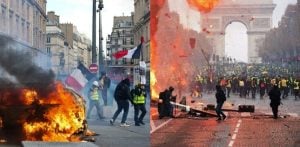












































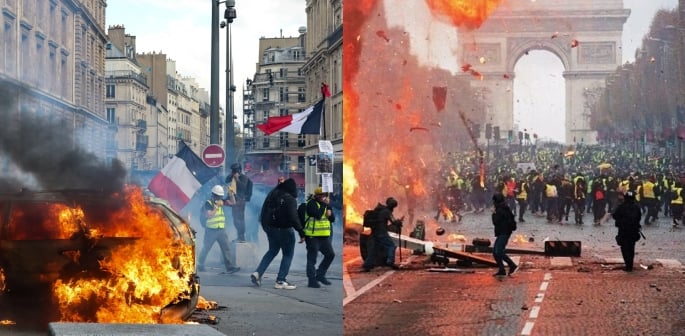
Around 110 marches took place across France.
Paris has become a focal point for unrest as student protests over school conditions develop into a wider movement against rising living costs and strained public services.
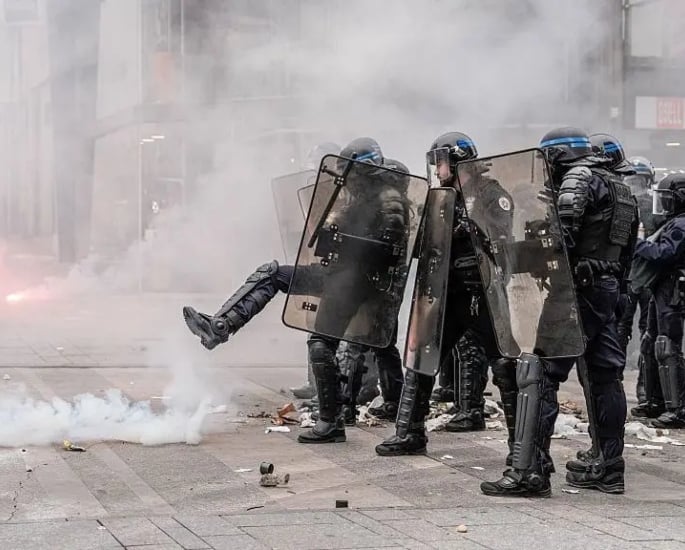
Demonstrations have spread across France, with clashes, fires, looting and property damage reported in several cities.
Students, trade unions and Yellow Vest supporters have joined the protests, bringing different grievances into one national dispute.
The unrest intensified on October 17, increasing pressure on President Emmanuel Macron’s government to restore order and address public dissatisfaction.
The demonstrations have also raised questions about educational inequality, police tactics, and the government’s ability to respond to growing economic pressures.
How the Paris Riots Escalated
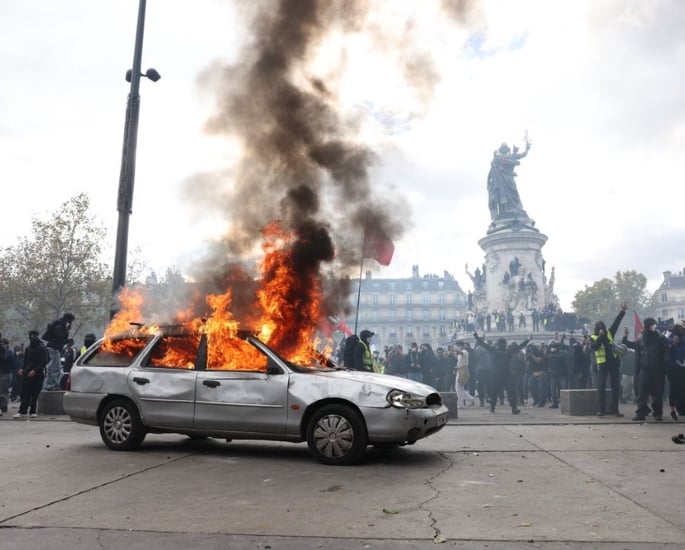
The unrest began with student demonstrations in September 2026, as pupils protested against poor school conditions, teacher shortages, and inadequate education funding.
According to Reuters, protests initially gained momentum around high schools in the Paris region before spreading elsewhere. Students organised school blockades and demanded better educational facilities.
Their concerns include overcrowded classrooms, inadequate facilities and missing teachers. Students have also criticised Parcoursup, France’s university application platform, over uncertainty surrounding higher education admissions.
For many young people, these issues represent wider concerns about their future opportunities. Students argue that inadequate resources and unequal access to education can affect their academic progress and career prospects.
Teachers, parents and university students subsequently joined the demonstrations. The movement developed from an education campaign into a broader challenge to government spending priorities.
The government announced plans to deploy 3,000 qualified educators to struggling schools. However, protesters continued demanding improvements to educational equality and public services.
On October 17, student groups joined wider demonstrations involving trade unions and supporters of France’s Yellow Vest movement.
The Associated Press reported that approximately 550,000 people participated in demonstrations nationwide, while organisers estimated attendance at 800,000. Around 110 marches took place across France.
The unrest demonstrated how student grievances had become connected to wider economic and political frustrations.
The demonstrations have placed education funding at the centre of a wider national debate. Protesters want the government to address immediate problems while ensuring schools can provide better opportunities for future generations.
Cost-of-Living Pressures, the Yellow Vests and Violence Across France
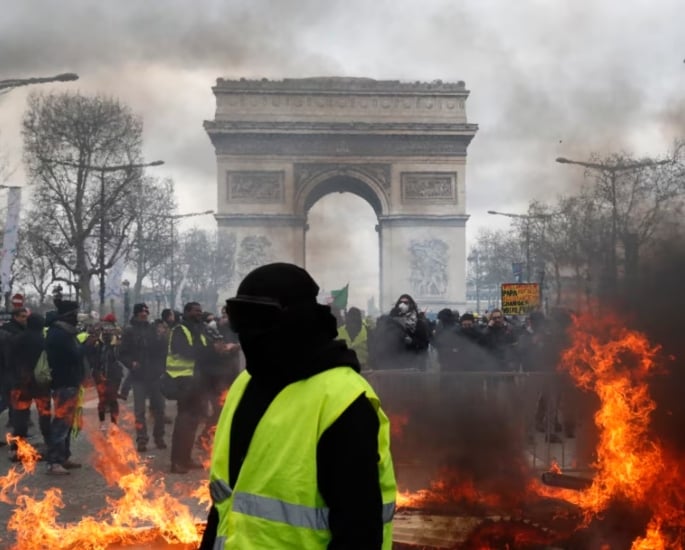
Rising living costs have become another major factor behind the Paris riots and wider unrest.
Demonstrators have raised concerns about the affordability of food, housing, energy and transport. Workers and families have also demanded better wages, pensions and protection for public services.
These grievances have brought students together with France’s Yellow Vest movement, known as the Gilets Jaunes.
The movement began in 2018, initially opposing fuel taxation and rising living costs. It subsequently became a wider expression of anger about economic inequality and the perceived distance between political leaders and people.
Reuters reported that Yellow Vest groups sought to unite their supporters with students and trade union members during the October 17 demonstrations.
The CGT, one of France’s major trade unions, has supported demands for improved wages and public services.
For some participants, the demonstrations provide an opportunity to challenge policies they believe place disproportionate pressure on lower-income households. Others are primarily concerned about the future of education and public investment.
This combination of grievances has increased the scale of the protests. However, the movement’s diversity also makes it difficult to identify a single demand that could bring the unrest to an end.
Authorities blamed violent individuals for exploiting demonstrations to attack police and damage property. However, such incidents do not represent every participant in the protests.
The police response has also attracted criticism following reports of serious injuries involving young demonstrators. These incidents have renewed questions about the use of riot-control weapons.
Reuters reported on October 19 that hundreds of shared electric bikes had been destroyed or badly damaged.
Operator Dott estimated damage to its bikes and scooters across Paris, Bordeaux and Lyon at approximately €400,000.
Businesses have also faced disruption from damaged premises, looting and restrictions on movement. Residents have experienced disruption to transport and everyday activities as authorities respond to the unrest.
The violence risks overshadowing the original demands for better education and improved living standards. It has also intensified debate about how France should balance public safety with the right to demonstrate.
Government Measures and What Happens Next
The unrest has placed growing pressure on Prime Minister Sébastien Lecornu and President Emmanuel Macron as authorities attempt to restore order.
The government has condemned the violence and said those responsible for arson, looting and attacks on police should face legal consequences.
Following the October 17 demonstrations, authorities introduced nightly curfews in some affected areas. The Associated Press reported restrictions around parts of central Paris and in areas of Lyon.
However, critics question whether tougher policing can resolve the underlying grievances driving students and workers onto the streets.
France’s public debt and political divisions over spending could also complicate efforts to fund improvements to education and public services.
The government therefore faces pressure to demonstrate that its response extends beyond policing. Improvements to staffing, school facilities and essential services could help address some of the concerns raised by demonstrators.
However, delivering these changes requires funding and political agreement. The government must also respond to wider demands concerning wages, pensions and household affordability.
The unrest comes as France approaches its 2027 presidential election. Debates over economic inequality, policing and government spending are likely to remain politically significant.
The Yellow Vests and Student groups are planning further protests demanding greater investment in education.
The prime minister was due to meet union leaders as the government sought to reduce tensions.
The government’s next steps will be crucial. Additional teachers could address immediate shortages, but protesters are also demanding broader changes to public services and economic policy.
For France, the challenge is no longer simply restoring order on the streets. Addressing the concerns driving the demonstrations will be essential to rebuilding public confidence and preventing further escalation.