
















































“Spiced grew from this idea."
Spices can transform a dish, but their significance extends far beyond the flavours they bring to the kitchen.
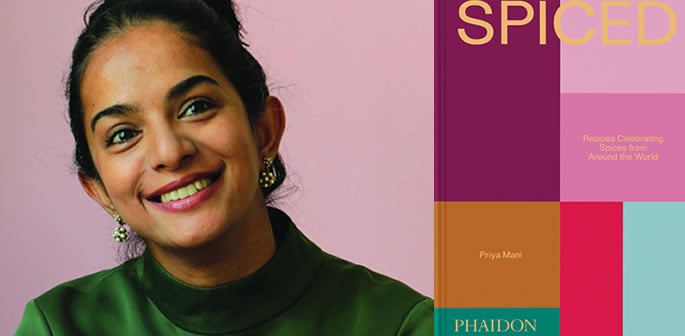
In Spiced: Recipes Celebrating Spices from Around the World, author and food historian Priya Mani explores 50 spices through more than 300 recipes, tracing their origins, cultural significance and influence on cuisines across the globe.
From cardamom and turmeric to grains of paradise and nutmeg, the book combines practical cooking inspiration with the histories behind familiar and lesser-known ingredients.
It also features 20 spice blend recipes, alongside historical essays and personal reflections from chefs and food writers.
Drawing on her own research and travels, Priya examines how ingredients have moved between communities and shaped culinary traditions over generations.
In an interview with DESIblitz, she discusses the research behind Spiced and how the book has changed her approach to everyday cooking, ahead of its release on November 5, 2026.
The Stories behind 50 Spices
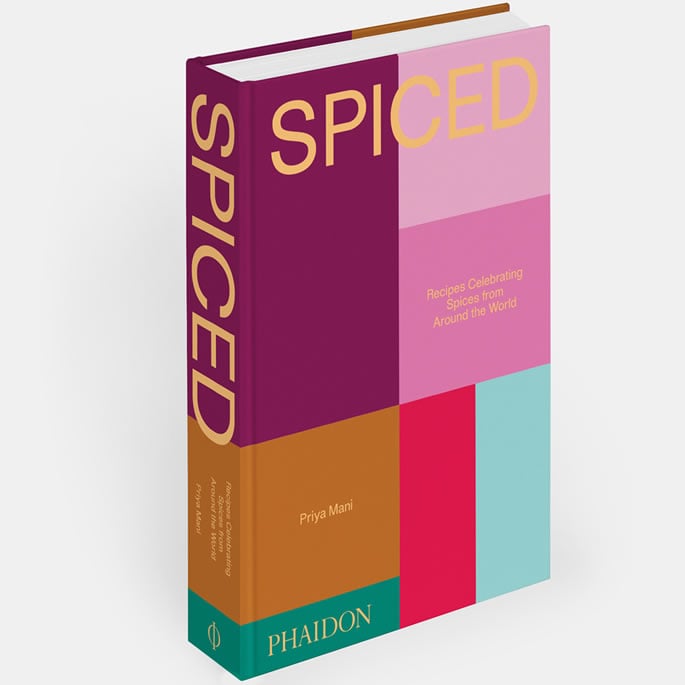
The book brings together more than 300 recipes and the histories of 50 spices, exploring how these ingredients have shaped culinary traditions across the globe.
Combining food, botanical research and cultural history, the book examines the connections between ingredients and the people, places and experiences that have influenced how they are used.
The project developed from Priya Mani’s earlier work, The Visual Encyclopedia of Indian Foods, which involved travelling across the Indian subcontinent to explore its ingredients and culinary philosophies through cooking and original image-making.
Priya Mani explains: “Cooking all the food for the Encyclopedia made me realise how much culinary technique is shaped by where people live, their ecology, histories and cultural roots.
“The same ingredient can produce radically different flavours and techniques in different parts of the country.
“Spiced grew from this idea. I began to think of each spice almost as a traveller in its own right.
“Every spice has its own ecology and culinary identity, but also its own global journey through trade, migration, cultivation and cultural exchange.
“I wanted to look at spices not simply as ingredients, but as plants with histories and to understand how those histories have shaped the way we cook with them.”
On the variety of spices featured in her new book, Priya says:
“The 50 spices include many that are globally well known and commercially important, but I also wanted to make space for ingredients that may be little known outside the communities that use them.”
For example, sand ginger, or kencur, is widely used in Indonesia and has a particular place in the food traditions of Straits Chinese communities in southern Malaysia and China.
Stone flower, a lichen Priya has studied for many years, features in a handful of regional Indian kitchens and more sparingly in some North African cooking.
She details: “My work takes me to quite remote places, giving me the opportunity to encounter and document culinary traditions at close range.
“Many of the stories in Spiced come from oral histories, conversations and observations gathered during this travel, alongside botanical and historical research.”
Bringing all this together required an approach that could accommodate both documented history and knowledge shared through cooking and conversation.
“The process was anything but linear.
“It was a constant accumulation of artefacts, a conversation in a kitchen, something encountered in a market, a botanical detail, a historical reference, a recipe, all of which gradually begin to form connections.
“There is always some chaos in writing a book like this; the challenge is bringing that richness into a coherent form without losing it.”
Showcasing the Character of Spices
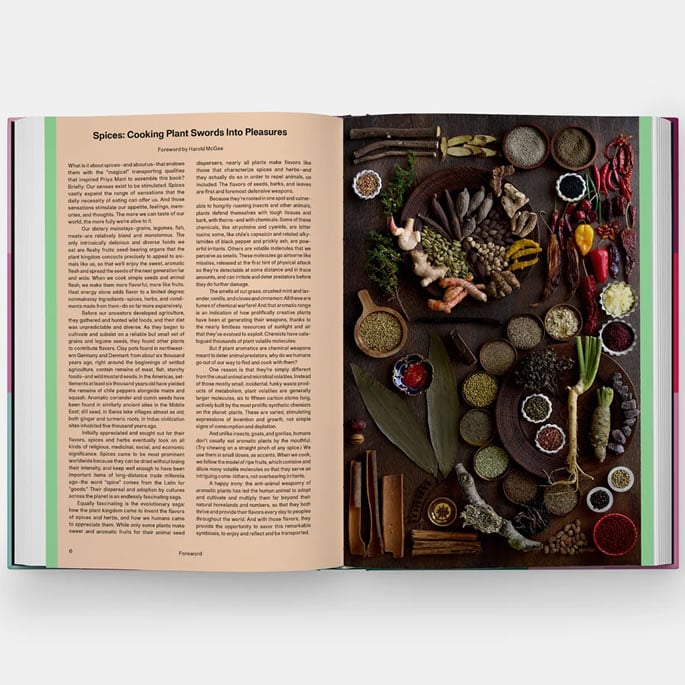
The recipes are central to Spiced, giving readers an opportunity to explore the ingredients through dishes drawn from different culinary traditions.
Priya had a specific principle when approaching their selection, as she elaborates:
“This was probably the most important principle in the book.
“Particularly with spice-forward cuisines such as those of South Asia, it can be difficult to isolate the role of a single spice because so many ingredients work together.
“I had a simple golden rule: the dish had to allow the spice to take the lead. Without that particular spice, the dish should somehow lose its soul.
“Take kaanji, for example, in the mustard chapter. It is essentially mustard, salt and water, yet it demonstrates mustard’s role in both flavour and fermentation.
“Or hinger kochuri from Bengal, where the name itself tells you how central asafoetida is to the dish.
“I also wanted to show how differently this can manifest across cultures: a striking black Palestinian cake in which nigella seeds are the defining flavour, or the Swedish kardemummabullar, where cardamom is inseparable from the identity of the bun.
“In each case, the spice isn’t simply seasoning; it is what gives the dish its character.”
The book reflects how different communities have developed distinctive ways of cooking with spices and illustrates the variety.
Instead of limiting the recipes to one region or style of cooking, Priya Mani uses them to explore the different ways spices become integral to dishes, offering a practical counterpart to the book’s historical research.
The History of Trade, Migration and Cultural Exchange
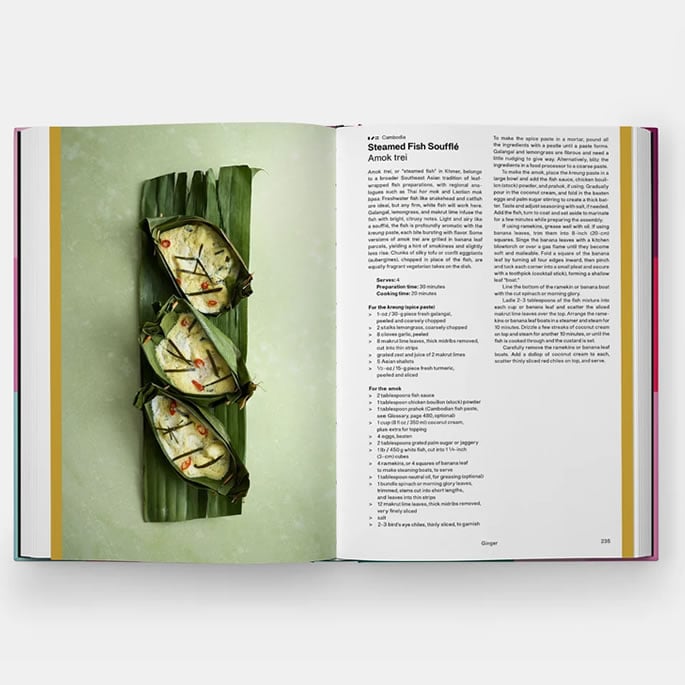
The movement of spices across borders is closely connected to the histories of international trade, colonialism and migration.
In Spiced, these themes are central, as Priya says:
“This was central to the book because the politics of spice are deeply intertwined with histories of trade, extraction and colonialism.
“I also wanted the recipes themselves to tell some of these stories, rather than separating history from food.”
One example is sobolo, a roselle drink found across West Africa. Often prepared with cloves and Grains of Selim, a distinctive West African spice, it illustrates how ingredients and food traditions have travelled through migration and displacement.
Priya explains: “What fascinates me is what happens to the ingredients along the way.
“Grains of Selim did not travel with roselle in the same way and are largely absent from later versions of the drink.
“Yet trees have been found in northern Brazil, and the seeds continue to have ritual uses among some Afro-Brazilian communities. So I became interested not only in what spices move, but also in what gets left behind, forgotten or transformed.
“Those absences can be just as revealing as the things that survive.”
Alongside these historical accounts, Priya invited food writers to contribute personal essays:
“Spices are deeply connected to emotion and memory. The perfume of a simmering stew can take you back to a particular time and place almost instantly.
“I invited food writers whose work I have long admired to contribute personal essays about what particular spices mean to them.
“Their stories bring a very human dimension to the book.
“They are different from one another, but I think there is something in them that most readers will recognise: that feeling of encountering a particular aroma or flavour and suddenly being transported somewhere.”
Spiced features contributions from food historian Andrew Dalby and scientist and historian Dr Annamma Spudich.
The author continues: “I also wanted the historical research to have the depth it deserved.
“Food historian Andrew Dalby and Indian-origin scientist and historian Dr Annamma Spudich contributed perspectives on spices and their trade in Antiquity and the early modern period.
“Having these different voices was important to me. Spiced is my research and interpretation, but also honours diverse ways of seeing the subject.”
Diwali Cooking and a New Appreciation
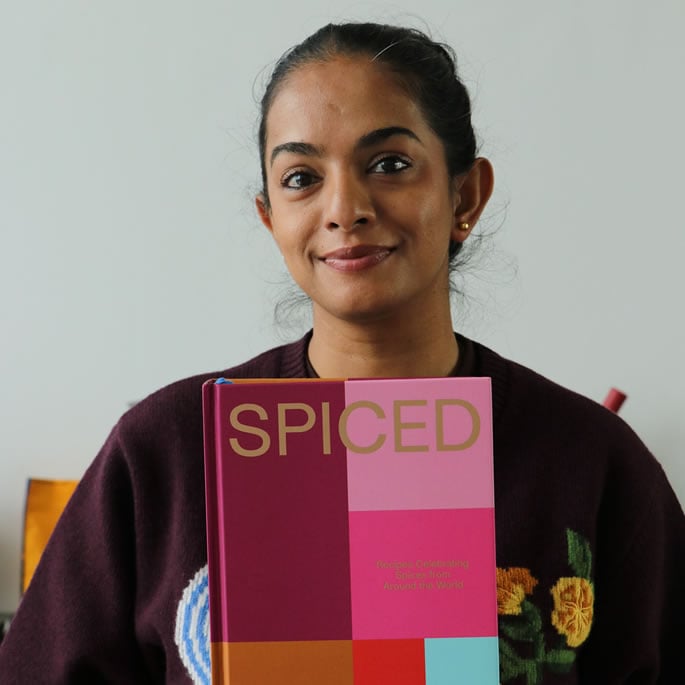
With Spiced releasing in November, the book arrives in time for Diwali.
Priya says: “Spiced is such a perfect Diwali gift, and I’m thrilled that I managed to meet every editorial deadline so it could actually be on the shelves in time for the festival.
“For many North Indians, kaanji vada is a Diwali speciality, and there is also a festive version of the South Indian classic kadamba sambar.
“For a little diasporic charm, there is geera pork from the Trinidadian Indian community, as well as Amritsari macchi, that quintessential Punjabi bar snack.
“And then there are recipes made for sharing: pani puri, biryani or a platter of Uzbek plov.
“If the weather is chilly, an Afghan haleem would be wonderful. What I love about Diwali is that food is so much about generosity and sharing.
“I would probably choose a few dishes rather than a single recipe and put them all in the middle of the table.”
Working on the book has also influenced Priya Mani’s own relationship with the spices she uses regularly:
“Writing Spiced has been life-changing. I have a renewed respect for everyday staples like cumin and coriander seeds.
“We take these spices for granted because they are so familiar, but researching and cooking with them repeatedly has made me much more conscious of their individual character.
“I also became much more aware of the power of spicing. It doesn’t necessarily take a lot.”
“Sometimes the tiniest amount of the right spice can completely change a dish – its aroma, warmth or sense of place.”
That influence does not always depend on a prominent or overpowering flavour, as Priya adds:
“That is probably my biggest takeaway from Spiced: spices don’t have to dominate a dish to transform it.
“They can be subtle, but they have the ability to make food feel deeply distinctive. I hope readers come away with a renewed curiosity about the spices already sitting in their kitchens.”
Through Spiced, Priya Mani brings together culinary history, cultural knowledge and practical recipes to explore the significance of ingredients that are often taken for granted.
She highlights how spices connect different regions and communities, while demonstrating the variety of ways they can influence cooking.
By combining familiar dishes with less widely known ingredients and traditions, the book offers home cooks an opportunity to explore new flavours while reconsidering the spices already in their kitchens.