





































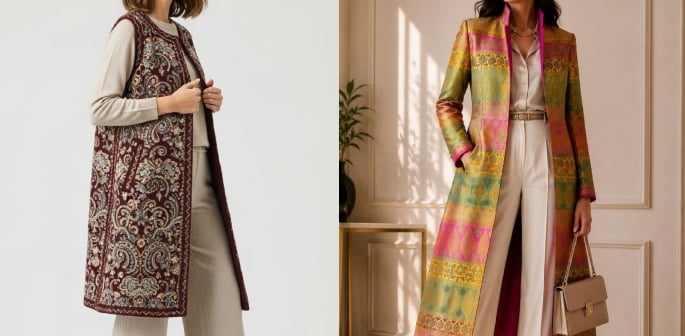
It looks expensive even when it was bought years ago.
Some outfits need a lot of effort, and others just need one very good winter coat.
A plain black dress, a pair of jeans, a simple kurta, or even a basic white shirt can suddenly look more put-together the moment you add a brocade jacket or an embroidered coat.
This winter, the statement coat is less about buying something loud for its own sake and more about making the clothes you already own work harder.
For many British Asians, that also means looking again at the brocade pieces, embroidered kurtas, dupattas and festive jackets sitting at the back of the wardrobe, items that may only come out for special occasions.
The good news is that they do not have to stay there.
Why the Winter Coat is the Outfit
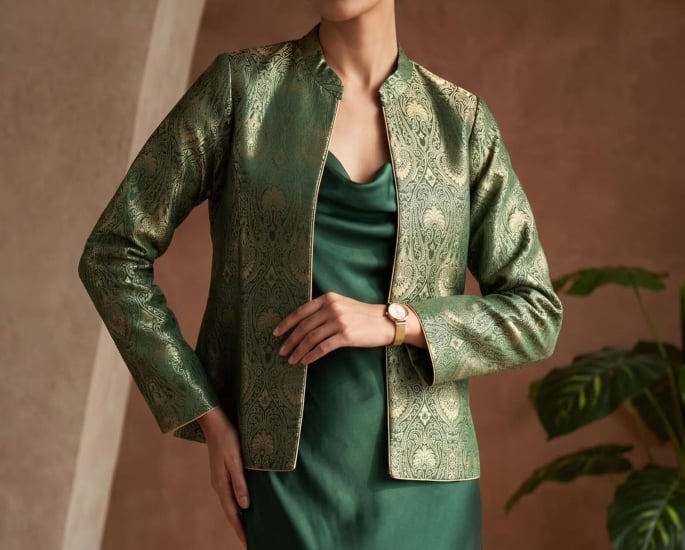
A statement winter coat works because it does the styling for you.
You can wear the simplest base underneath, black trousers, straight-leg jeans, a plain kurta, a slip dress, and the outer layer immediately gives the look shape, colour and personality.
Fashion editors have increasingly framed the statement coat as the piece that brings personality back to cold-weather dressing.
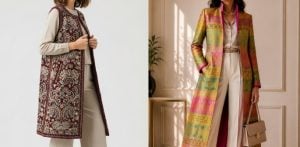
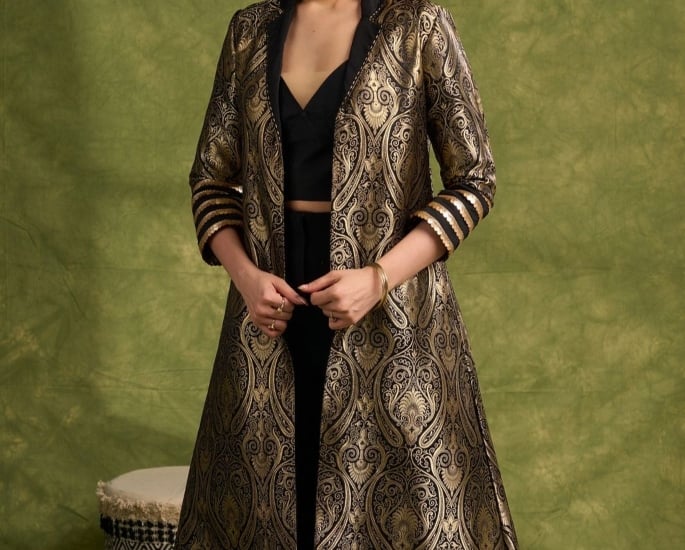
Marie Claire describes brocade as a fabric once reserved for grand occasions that is now being styled far more casually, with intricate florals, metallic finishes and tapestry-like textures adding a sense of occasion to everyday outfits.
That is exactly why it works so well with South Asian wardrobe staples.
Brocade already has that sense of occasion. It catches the light. It has history in its pattern.
It looks expensive even when it was bought years ago from a market stall, inherited from an older relative or picked up on a trip to India, Pakistan or Bangladesh.
The trick is not to compete with it. Let the coat be the main event, then keep everything else relatively calm.
Start With What You Own
Before buying anything new, look through your wardrobe with fresh eyes.
That embroidered kurta you only wear with matching trousers? Try it open over a fitted black top and jeans.
That brocade waistcoat from a wedding outfit? Wear it as a jacket with a white shirt and tailored trousers.
That heavy dupatta with gold threadwork? It may work better as a scarf-style layer over a plain coat than as part of a full traditional outfit.
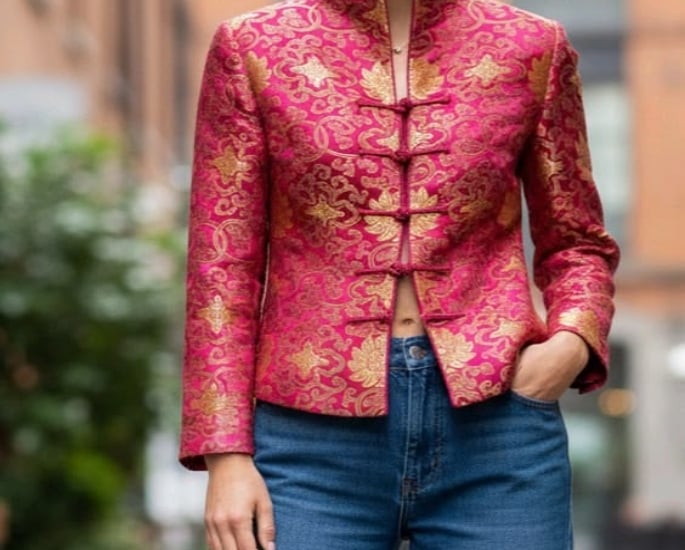
A brocade jacket over jeans, for example, immediately makes a casual outfit feel deliberate.
Fashion coverage of the current trend has highlighted exactly this combination: a frog-closure brocade jacket with dark-wash jeans and heeled boots, or a shimmering gold tapestry coat styled with a simple dress and drop earrings.
The Brocade Jacket Formula
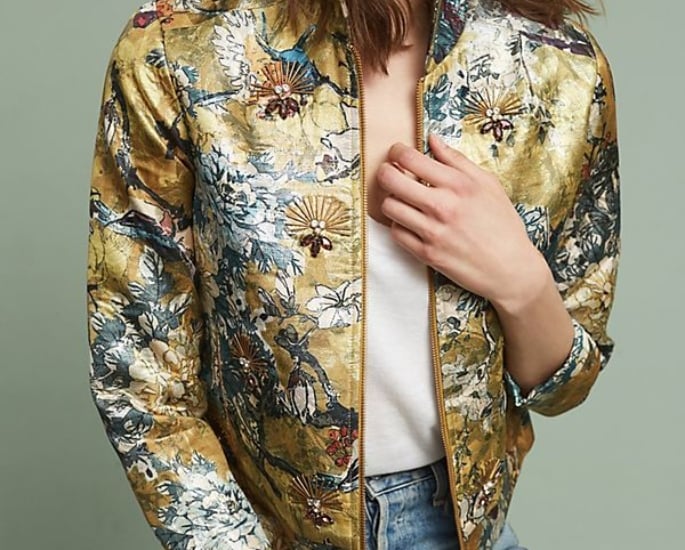
If you own one brocade piece, start with a jacket.
A cropped brocade jacket works especially well with high-waisted jeans, a plain top and boots. The contrast is what makes it interesting: the jacket feels ornate and celebratory, while the rest of the outfit stays grounded.
Try one of these easy formulas:
- Brocade jacket + white T-shirt + straight-leg jeans + trainers: ideal for a weekend brunch or a casual day out.
- Brocade jacket + black roll-neck + tailored trousers + ankle boots: polished enough for work drinks or a dinner.
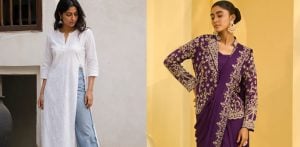
- Brocade jacket + plain kurta + cigarette trousers + loafers: a neat way to make South Asian pieces feel office-friendly.
- Brocade jacket + slip dress + knee-high boots: a simple evening option that does not require a full festive outfit.
The key is balance. If the jacket is heavily embroidered, metallic or brightly coloured, keep the rest of the outfit simple. A black base is often the easiest choice because it lets the texture and pattern stand out.
If your jacket is more subdued, perhaps a deep navy, maroon or forest green brocade, you can afford to add colour elsewhere.
A burgundy lip, a pair of patterned earrings or a coloured bag can tie the look together without overwhelming it.
Bring back the Embroidered Kurta
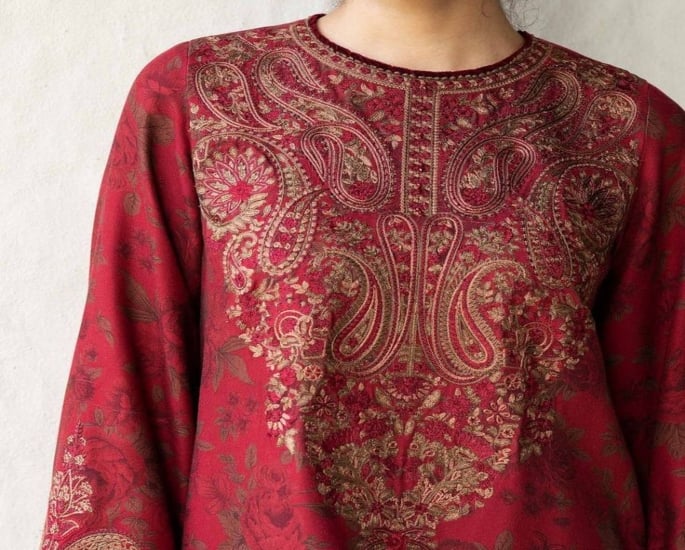
Most of us own at least one embroidered kurta that has not been worn in years. It may feel too formal for everyday life, or too associated with a particular family event to wear casually.
But an embroidered kurta can be surprisingly versatile when it is treated as a layer rather than a complete outfit.
Try wearing it open over a fitted vest top, a plain T-shirt or a simple shirt.
Add straight-leg jeans, wide-leg trousers or even leather-look trousers, depending on how dressed up you want to feel.
The embroidery becomes a detail rather than the whole outfit.
A longer kurta can work like a lightweight coat in autumn. Wear it over a black turtleneck and trousers, then add boots and a crossbody bag.
If the kurta is very sheer or delicate, layer a camisole underneath and keep the silhouette clean.
For a more traditional look with a modern edge, pair a shorter embroidered kurta with high-waisted trousers and a belt. This gives the outfit structure while still allowing the embroidery to be the focal point.
The aim is not to make the kurta look less South Asian. It is to make it feel more wearable in your actual life.
The Dupatta is Not Just a Dupatta
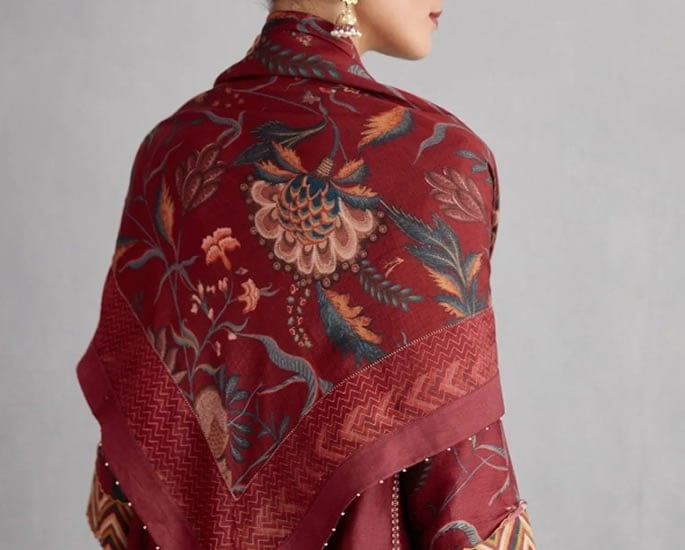
A good dupatta may be the most underrated styling tool in a South Asian wardrobe.
Instead of saving it for a matching suit, drape a heavily embroidered or brocade dupatta over a plain coat. Fold it lengthways and wear it like a scarf, letting one end fall down the front.
Or wrap it around your shoulders like a shawl over a simple dress or jumpsuit.
This works particularly well with neutral outerwear. A black wool coat, a beige trench, or a camel-coloured coat gives a patterned dupatta space to shine.
It also makes a wedding outfit feel less ‘locked away’ and more part of your everyday wardrobe.
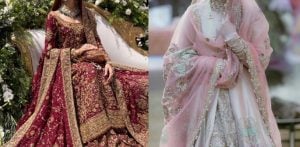
For a more subtle look, choose a dupatta with tonal embroidery rather than heavy sequins. A deep green, navy, maroon or black dupatta with gold thread can look expensive against a simple outfit without feeling too festive.
If you are worried about it looking too formal, add something deliberately casual: white trainers, a denim jacket, a crossbody bag or a simple pair of hoops. That contrast keeps the outfit feeling current rather than costume-like.
Make Old Pieces feel New
There is something satisfying about wearing a piece that already has a story.
A brocade jacket from an old Eid outfit, a kurta bought for a family wedding or a dupatta inherited from an older relative can feel more personal than anything bought new.
You do not need to alter it dramatically to make it work. Sometimes, simply changing what you pair it with is enough.
A heavily embroidered kurta that once felt too traditional, paired with matching shalwar, may look completely different with jeans and ankle boots.
A brocade waistcoat that was originally part of a three-piece suit can become a standalone layer over a shirt dress. An old dupatta can become a scarf, belt or bag accessory.
If you do want to alter something, keep it simple. Taking in a kurta at the waist, shortening sleeves, adding a lining to a sheer layer or turning a long dupatta into a cropped jacket can make an old piece feel far more wearable.
The goal is not to turn every traditional garment into a trend piece. It is to stop treating beautiful clothes as single-use items.
The statement coat is not about having the most expensive outerwear or copying a look straight from the runway. It is about using texture, colour and detail to make an outfit feel finished.
And for many of us, the best pieces are already in the wardrobe: the brocade jacket from an old wedding outfit, the embroidered kurta that only comes out once a year, the dupatta with gold thread that still looks as good as it did when it was bought.
Wear the coat with trainers if you want. Wear it with heels if that feels better. Wear it over a kurta, jeans, a dress or a plain black outfit. The point is not to follow a formula; it is to let the pieces you already own have another moment.
Because sometimes, the whole outfit really is the coat.



