


















































Social media has transformed how independent craftspeople market and sell.
In light-filled studios across Southall, Birmingham, and East London, young British South Asian artisans are unrolling handloom cotton and mixing natural mineral pigments.
They are breathing new life into centuries-old visual traditions once threatened by industrial mass production.
Heritage crafts such as miniature painting, Madhubani line art, kantha stitching, and hand block printing are finding a fresh foothold in modern Britain.
A new wave of diaspora makers is choosing slow, tactile handwork over high-speed digital design.
This resurgence is not simply an exercise in ethnic nostalgia or historical preservation. Instead, it represents an active cultural reclamation tailored directly for contemporary urban living.
Younger artisans are actively turning to digital platforms to share their laborious creative methods with global audiences.
Visual platforms like TikTok and Instagram are allowing these traditional skills to move beyond closed rooms into profitable independent micro-enterprises.
By pairing historical technique with modern e-commerce tools, these makers build direct links with international craft buyers. Their work challenges how heritage art is valued within western creative economies.
Ultimately, this movement demonstrates that ancient South Asian techniques can adapt to digital spaces without losing their cultural soul. It proves that ancestral handcrafts possess a dynamic future within the UK diaspora.
Restoring Traditions in UK Studios
Mastering South Asian handicraft requires long hours of practice, specific tools, and deep physical patience.
British Asian artisans are investing in specialised workshops to learn these demanding technical skills thoroughly.
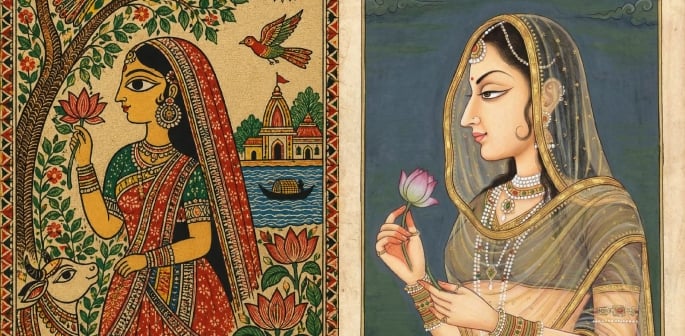
Indian miniature painting demands extraordinary precision, relying on single-hair squirrel brushes and fine stone pigments.
Artists grind lapis lazuli and malachite into smooth paste before applying tiny, delicate strokes onto treated paper.
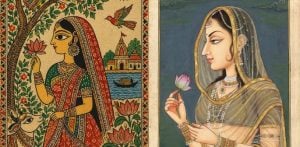
Madhubani painting uses bold geometric patterns and intricate line work to depict folk narratives. Originally executed on mud walls in Bihar, UK makers now adapt these motifs onto archival rag paper and organic linens.
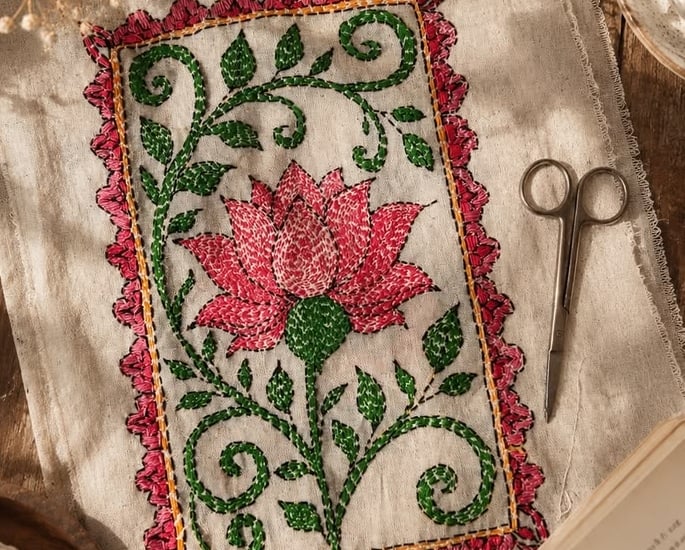
Kantha embroidery relies on basic running stitches to transform old fabrics into durable textured artwork. West Bengal and Bangladeshi heritage embroiderers layer vintage saris to stitch complex personal memories into cloth.
Woodblock printing requires hand-eye coordination to align carved teak blocks with natural vegetable dyes. Artisans stamp repetitive floral patterns across long bolts of cotton, embracing minor human imperfections as authentic character marks.
Engaging in these physical processes allows diaspora artists to forge tangible connections with their ancestral roots.
The tactile routine offers relief from digital fatigue common in fast-paced British cities.
Dedicated short courses and community mentorships are making these niche techniques accessible to UK-born creatives. As a result, technical knowledge previously confined to rural South Asian artisan families is gaining root in the UK.
Monetising Heritage Craft via Instagram and Etsy
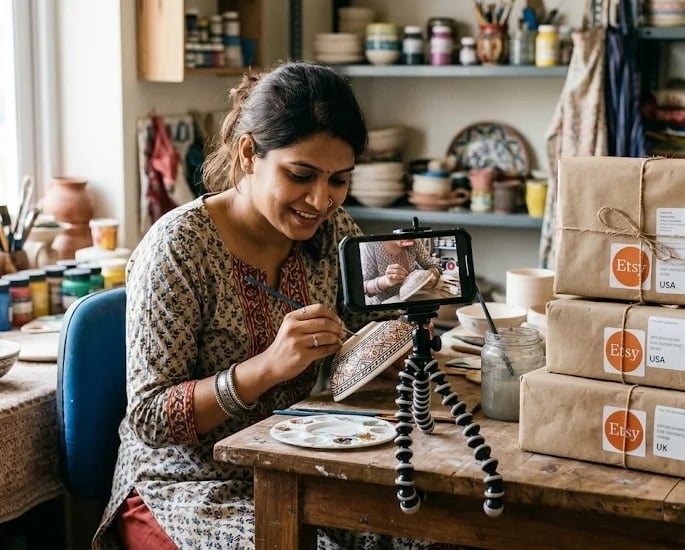
Modern social media platforms have transformed how independent craftspeople market and sell their handmade goods.
Short-form videos detailing paint preparation or needlework routinely gain tens of thousands of views online.
Platforms like Instagram allow makers to highlight the extensive labor behind every handmade piece. Viewers develop a deeper appreciation for slow craft when watching silent, satisfying process videos.
E-commerce sites like Etsy give South Asian artisans direct access to global buyers interested in ethical products. Independent makers bypass traditional art galleries that historically excluded non-Western decorative arts.
Digital storefronts allow artists to set prices reflecting their actual labor time and material costs. A block-printed scarf produced in a Leicester workshop can quickly sell to buyers in North America or Europe.
Live online workshops offer another profitable revenue stream for experienced diaspora craftspeople. Enthusiasts around the world pay to learn basic kantha embroidery or Madhubani line art directly from their living rooms.
Social algorithms help niche makers connect with micro-communities that share specific cultural or artistic values. These online spaces foster peer support and business knowledge sharing among UK diaspora artists.
Transparent digital sales models help educate buyers on why authentic handcraft commands higher prices than mass production. Direct digital monetisation provides British Asian artisans with financial sustainability and creative freedom.
Revival or Reinvention: The Diaspora Creative Shift
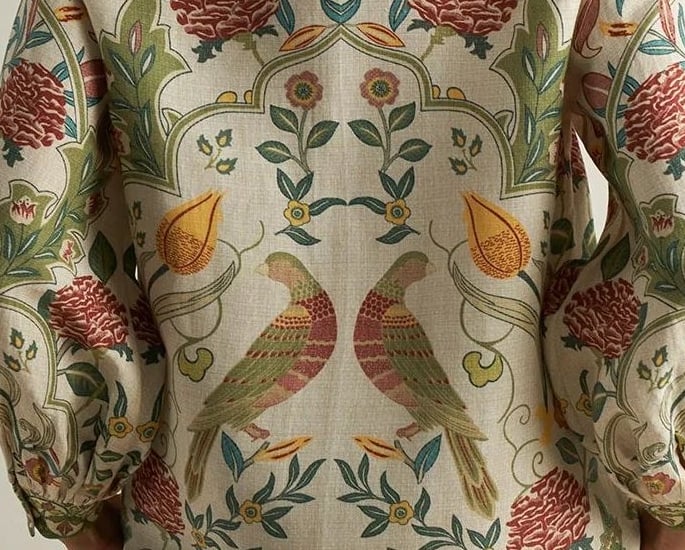
Younger British South Asian artists are not merely copying historical patterns without revision.
Instead, they are actively updating classical iconography to reflect their lived experiences in modern Britain.
Contemporary miniature paintings frequently show young British Asians wearing casual streetwear inside classical Mughal architecture.
This visual irony creates a commentary on dual identity and belonging in post-industrial UK towns.
Madhubani line art is being adapted to tackle current global topics like climate change and social inequality. Artists maintain traditional black outlines while introducing modern, politically engaged storylines into the canvas.
Kantha stitching is increasingly used to repair and embellish thrifted denim jackets and second-hand coats.
This upcycling practice links traditional South Asian textile conservation with contemporary eco-conscious fashion trends.
Queer South Asian artists are utilising classical miniature symbolism to explore hidden gender narratives and personal freedom. Reclaiming heritage visual tools allows marginalised voices to tell authentic stories within traditional mediums.
This continuous aesthetic evolution prevents ancient techniques from becoming static museum curiosities. It ensures that traditional South Asian crafts remain vibrant and meaningful to younger generations.
By fusing historical skills with current storytelling, diaspora artists redefine what British Asian art can achieve. They prove that cultural traditions grow stronger when open to creative reinvention.
Structural Obstacles and Sustainable Craft Futures
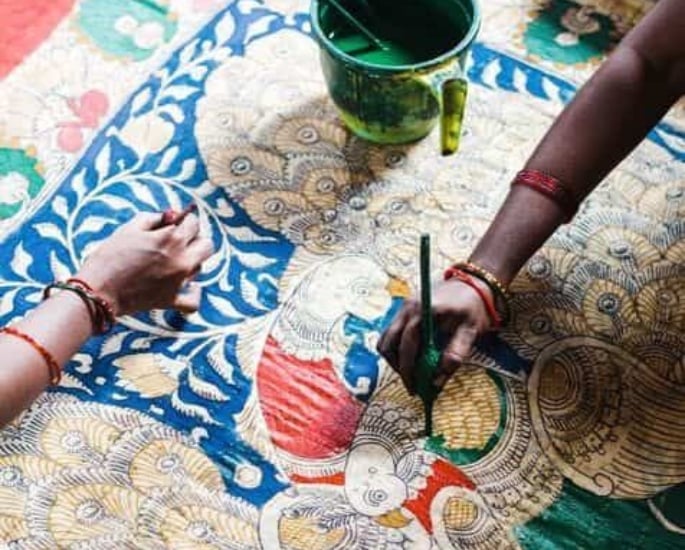
Despite digital popularity, independent South Asian craftspeople face substantial economic hurdles across the UK.
High studio rents and rising raw material prices create continuous financial pressure on self-employed makers.
Institutional grant funding from UK art councils still heavily favors western fine arts over non-western traditional crafts.
Emerging diaspora artisans often struggle to secure research funding for specialised heritage projects.
Competing against cheap, factory-made imitations sold online presents another persistent economic challenge.
Artisans must spend considerable energy educating customers on why authentic handcraft requires fair compensation.
To overcome these barriers, makers are establishing informal craft collectives and shared studio spaces in major cities. Pooling equipment and studio space lowers individual overheads while fostering collaborative creative networks.
Campaigners are urging UK art schools to include South Asian craft traditions within formal higher education modules. Introducing heritage craft into mainstream arts education will help preserve endangered techniques for future student cohorts.
Mentorship schemes linking elder master craftspeople with young British Asian apprentices are critical for skill transmission. Passing down unwritten, physical hand movements ensures technical knowledge survives across generational shifts.
With structured public investment and continued digital engagement, South Asian crafts will secure a permanent home in Britain.
The blend between historical technique and modern digital tools guarantees a resilient future for UK artisans.
The digital revolution has given historic South Asian handicrafts a new lease of life within the UK landscape.
Creative makers are proving that traditional heritage skills can flourish in digital e-commerce ecosystems.
Supporting diaspora artisans ensures that diverse cultural narratives remain prominent across the contemporary British art world.
Their steady commitment transforms ancient techniques into active tools for community identity and economic independence.
As younger artists continue to learn, adapt, and reinvent these crafts, the diaspora’s creative future looks brighter than ever. Heritage skills are no longer fading remnants of the past; they are dynamic expressions of modern identity.
The digital age has not destroyed traditional craftsmanship; it has provided these historic practices with a global platform. Through dedication and innovation, British South Asian makers ensure these ancient arts will endure for generations to come.