


















































Urban living can offer space for women to navigate relationships
Discussions around multiple sexual partners is perhaps the final frontier of silence in the modern Indian home, a topic that sits uncomfortably between an ancient heritage of carnal art and a modern-day reality of strict moral policing.
It remains one of the most sensitive subjects in contemporary discourse, often avoided even as social behaviours continue to shift.
While the public image of the nation is still anchored in lifelong monogamy and so-called family values, private realities are increasingly more complex.
Behind closed doors, a quiet transformation is unfolding, shaped by urbanisation, financial independence, and the influence of the digital age.
A report finds tradition is increasingly colliding with individual autonomy, exposing a growing gap between perception and lived experience.
This is a broader social shift with implications for health, relationships, and psychological well-being.
To understand the true state of intimacy in India today, it is necessary to look beyond stigma and examine how Indian lives are actually being lived.
Why Men and Women tread Different Lives

The most striking revelation from recent national data is the sheer chasm between the sexual lives of Indian men and women.
In a society where “boys will be boys” often operates as an unspoken mantra, 14.41% of men report having more than one sexual partner in a year, compared with just 3.06% of women.
This is a reflection of deeply embedded patriarchal structures that have long linked male promiscuity with virility and social standing.
For many men, multiple partners are still framed through authority or a distorted sense of masculinity, while for women, the same behaviour is treated as a “scarlet letter”, inviting immediate social exclusion.
This double standard creates a distinct psychological burden.
For women, the fear of judgment is so pervasive that under-reporting is likely common, driven by the risk of shame and social labelling.
Although the legal landscape has shifted since the 2018 decriminalisation of adultery in India, the social reality remains far more rigid.
That change has slowly opened space for more honest reporting of sexual behaviour, but cultural pressure to project absolute fidelity continues to weigh heavily on women, even as men navigate a comparatively permissive environment.
The biological consequences of this divide are equally uneven.
While men are statistically more likely to engage in multiple sexual partnerships, women often bear the greater health burden.
Female anatomy makes them more vulnerable to long-term complications from untreated sexually transmitted infections, including infertility and chronic pelvic pain.
The link between multiple partners and Human Papillomavirus (HPV), a leading cause of cervical cancer, makes the issue especially severe.
In India, where cervical cancer remains one of the leading causes of death among women, the silence around sexual health is not just cultural stigma but a pressing public health concern.
An Urban Shift

One of the report’s most revealing insights into the modern Indian woman’s life is how financial independence is reshaping choices in the bedroom.
Data shows that employed women have 1.27 times higher odds of engaging in multiple partnerships compared with those who are unemployed.
This points to a broader shift, where entry into the workforce brings not only income but a degree of social autonomy previously out of reach.
A job is no longer just financial security; it becomes a gateway to wider social networks and a life beyond the confines of the family home.
Urban anonymity further accelerates this change.
In cities such as Delhi, Mumbai, and Bengaluru, community scrutiny is replaced by the relative anonymity of the crowd.
Urban living can offer space for women to navigate relationships with a freedom that is far harder to access in traditional rural settings.
But while employment and city life are linked to higher odds of multiple partners, higher education and greater wealth appear to act as protective factors, with women in the wealthiest quintiles significantly less likely to report such relationships.
This pattern suggests that for more privileged groups, sexual health literacy plays a key role.
Wealthier, more educated women are often better informed about the risks linked to multiple partnerships and may also have the social capital to negotiate safer, more stable relationships on their own terms.
At the other end of the spectrum, the findings point to a more difficult reality.
For some economically vulnerable women, multiple partnerships may not reflect choice at all, but rather coercion or survival within unstable conditions.
It underscores how sexual behaviour is often shaped less by individual preference and more by position within the economic hierarchy.
Alcohol, Tobacco and Violence

Sexual behaviour in India cannot be separated from the “vices” that often accompany it. There is a clear link between risky sexual habits and the consumption of alcohol and tobacco.
Across both genders, those who drink or use tobacco are significantly more likely to report multiple partners.
Among men, alcohol consumption increases the odds of multiple sexual partnerships by 1.52 times. It reflects a familiar pattern of lowered inhibitions, where social drinking environments often double as spaces for meeting new partners and engaging in impulsive encounters.
More concerning is the correlation between multiple partnerships and domestic violence.
The research suggests that individuals living in households affected by physical or sexual violence are far more likely to seek intimacy elsewhere.
For some, multiple sexual partners may function as a coping mechanism, offering an escape from abusive or emotionally fractured marriages.
For others, it may mirror the same impulsive or aggressive behavioural patterns that contribute to violence within the home.
This connection paints a troubling picture of the Indian household, where sexual health and domestic safety are closely intertwined.
The human reality behind these figures points to a cycle of instability and trauma.
These are individuals navigating environments marked by stress, conflict, and emotional strain, where sexual risk becomes one of many vulnerabilities.
The pattern extends further, with chronic health conditions such as diabetes and hypertension also showing a positive association with multiple partnerships.
This suggests that high-risk sexual behaviour often exists alongside broader health challenges, reflecting lifestyles shaped by long-term stress and neglect.
It is a wider public health issue that extends beyond medicine, demanding a more holistic approach to mental, social, and emotional well-being.
The Regional Reality
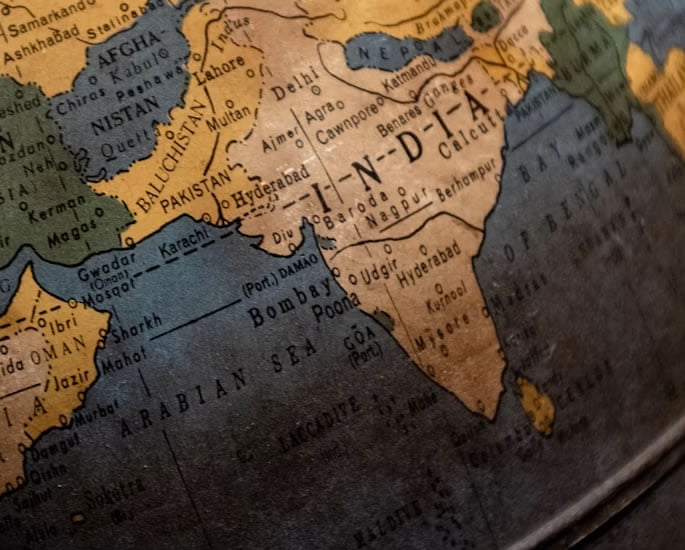
India is far from a monolith, and the way sex is navigated varies significantly depending on the state in question.
The research highlights marked regional heterogeneity that challenges many long-held assumptions about sexual behaviour in the country.
In the Northeast, states such as Meghalaya, Mizoram, and Nagaland record significantly higher rates of multiple sexual partnerships among both men and women.
In Meghalaya, for example, the prevalence among women reaches 16.28%, a stark contrast to the national average of 3.06%.
This regional spike is often linked to distinct cultural frameworks, where matrilineal traditions and tribal social structures shape more liberal attitudes towards intimacy compared with the conservative “Heartland”.
In contrast, states like Kerala and Tamil Nadu, despite higher literacy levels and stronger healthcare indicators, report considerably lower rates of multiple partnerships.
This suggests that social conservatism can persist even alongside development, often producing environments where secrecy replaces openness, and individuals may still engage in such behaviours but are less willing to disclose them in surveys.
Ultimately, the data acts as a stark mirror to a nation often reluctant to confront its own reflection.
These figures represent a billion individual experiences shaped by tradition, secrecy, desire, and survival.
While the official narrative continues to emphasise rigid monogamy and “family values”, the reality in places as diverse as the Northeast hills or Mumbai’s urban high-rises points to a society undergoing quiet but sustained internal change.
The grip of taboo is gradually being loosened by the pressures and possibilities of modern life, reshaping expectations around intimacy and adulthood in contemporary India.
As the gap between social expectation and lived experience continues to narrow, silence is increasingly becoming less of a shield and more of a fading veil.
India’s sexual landscape is shifting, and while echoes of the past remain present, the realities of the present are becoming harder to ignore.