

















































"they have been part of my imagination my whole life.”
Set in London in 1905, The Great Game marks the debut novel from award-winning TV, film and theatre producer Arvind Ethan David, bringing classic detective fiction into collision with the politics of empire.
At its centre is Balvinder ‘Bunny’ dev Singh, a Sikh trainee lawyer newly arrived in the capital who is pulled into an unexpected murder investigation after becoming entangled with gentleman thief AJ Raffles.
What begins as a case of intrigue in a Mayfair mansion quickly escalates into a wider conspiracy involving Scotland Yard, a young Winston Churchill and Sherlock Holmes, where state power and personal survival become increasingly difficult to separate.
As Balvinder is forced to navigate accusations, alliances and shifting loyalties, the story positions him inside a Britain defined as much by its imperial legacy as by its literary mythology.
In an interview with DESIblitz, Arvind Ethan David reflects on the influences, research and political tensions that shaped The Great Game, which is released on July 14, 2026.
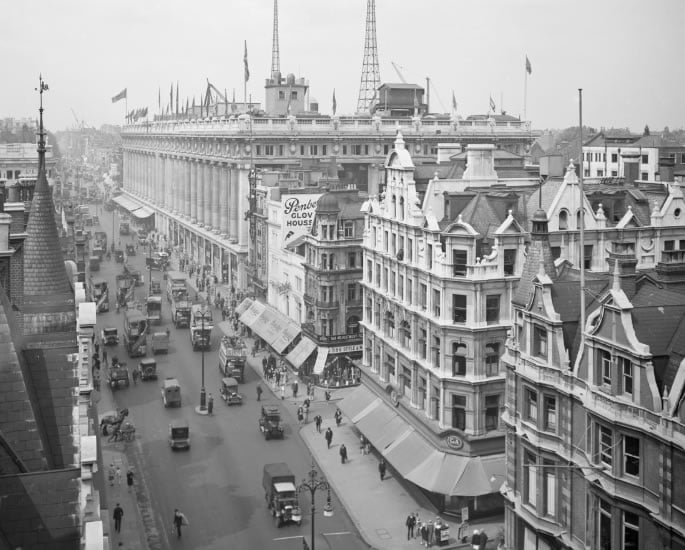
Setting the Story in Edwardian London
The Great Game begins with Arvind Ethan David’s long-standing engagement with a specific literary tradition, one that shaped both his reading life and his creative instincts.
The decision to situate the novel in 1905 London is rooted in that immersion in Victorian and Edwardian storytelling.
He explains: “The genesis of the novel was my deep love of the whole canon of Victorian and Edwardian adventure literature, from Sherlock Holmes to Raffles to Rudyard Kipling and H.G. Wells.
“I inhaled all these authors as a child, and they have been part of my imagination my whole life.”
As the project developed, questions of identity became inseparable from the act of writing within that genre framework.
Arvind says: “I wanted to play in that universe, but as I started to write, I realised that entering that world as someone who had grown up in the colonies, as someone of Indian heritage, as a serial immigrant, the child of a refugee, and as a creator of colour, I had to find my own way in.”
London in 1905 becomes, in that sense, both setting and constraint – a recognisable literary world that must also be reinterpreted through a different lens of belonging and authorship.
Creating Balvinder ‘Bunny’ dev Singh
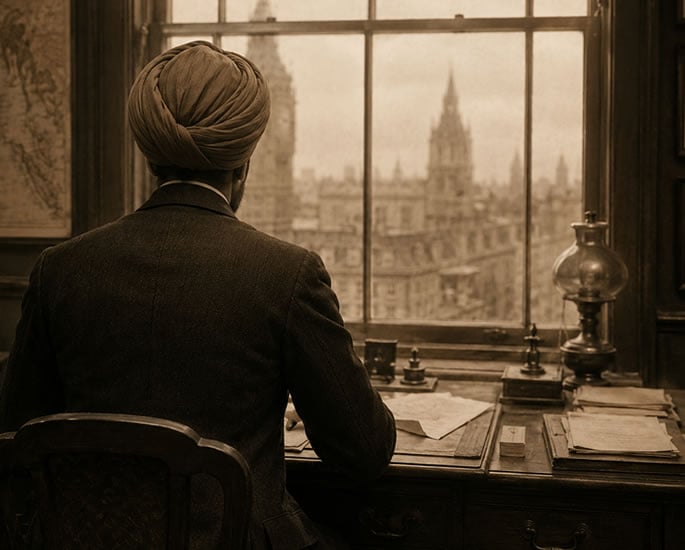
At the centre of the novel sits Balvinder ‘Bunny’ dev Singh, a Sikh trainee lawyer drawn into detective work, whose presence is used to interrogate dominant narratives around British history and migration.
His character is deliberately placed within a wider historical argument about who has been included, and excluded, from Britain’s story.
The author says: “One of the great myths of current UK political discourse is the idea that immigration is a new phenomenon diluting some previously imagined Albion White Paradise.
“That pre-Windrush Britain had no immigrants and no outside cultural influences is, of course, nonsense.”
“Britain had open borders until the middle of the 20th century and, as a great Empire and colonial power, was actively importing not just the food, spices, cultures, and wealth of its far-flung colonies but also the people.”
That argument is reinforced through specific historical markers, grounding Bunny’s existence within documented presence rather than symbolic invention.
“The first Indian restaurant in London, the Hindoostane Coffee House, opened in 1810. The first non-white, Indian Member of Parliament, Dadabhai Naoroji, was elected in 1892.”
From this perspective, Bunny is deliberately positioned within an already multicultural historical reality.
“To put it simply, we have always been here.
“Bal is a fictional verification of that truth, putting an Indian war veteran and trainee barrister into the heart of an Edwardian mystery.”
That positioning also responds directly to the way genre fiction has historically framed South Asian and Black characters, often limiting them to narrow roles within detective narratives.
“It is worse than being absent. When we are present, we are invariably either the villains or the lackeys.
“There are several Sherlock Holmes cases, most notably The Sign of the Four, which feature Indian and Black characters, but the perspective flattens them into caricatures and criminals.
“I wanted to show a character in this story who was a whole man, who was in fact the hero, albeit a far-from-straightforward one.”
Fact, Fiction and the Making of a Legend

The Great Game deliberately places historical and fictional figures within the same narrative space to expose how both are shaped by cultural repetition and myth-making.
Characters such as Sherlock Holmes, AJ Raffles and Winston Churchill are treated “with equal respect and equal specificity”.
Arvind Ethan David adds: “In the popular imagination, there isn’t that great a distinction between Sherlock Holmes and Winston Churchill.
“Yes, one is fictional and one is historical, but they have both become creatures of legend, blurring the distinction.”
That blurring is reinforced by how cultural memory often outweighs historical record, as Arvind says:
“More people have an impression of Churchill because of John Lithgow’s or Gary Oldman’s portrayals of him than because of the details of the historical record.
“Sherlock Holmes gets thousands of letters sent to 221B Baker Street every year. At this stage, which of them is more real and which of them is more fictional?”
Within that framework, detective fiction itself becomes a vehicle for examining state power and institutional alignment.
“The two genres often sit next to each other and intermingle.
“There are multiple Sherlock Holmes cases in which he is explicitly the agent of the British state or of another European royal family, such as The Naval Treaty (where he recovers a missing state document), The Bruce-Partington Plans (involving government secrets), The Second Stain (saving the government from a European scandal), or the espionage-heavy His Last Bow.”
However, The Great Game shifts that dynamic by complicating Bunny’s relationship with authority.
Arvind elaborates: “In all of these, however, he is acting explicitly in the interests of the Empire and, as a good imperial citizen, does so without question or conflict.
“The fun of The Great Game is that Bal is given a similar assignment, but he is a much more conflicted agent of the state, not least because he is as much a suspect as the investigator of these crimes.”
Empire, Identity and Narrative Tension

Rather than offering a singular reading of empire, the novel is structured around contradiction and coexistence, resisting simplified interpretations of Britain’s past and present.
That approach is framed through a refusal to reduce complex histories into definitive arguments.
Arvind explains: “I am reminded of the famous story Salman Rushdie told about his first reading of Midnight’s Children, when a woman in the audience asked him, ‘What was the point of the book?’
“To which Salman reasonably responded, ‘The book is the point’.”
That idea informs how Britain itself is represented within the narrative.
“I don’t think I had one singular argument about the Britain of 1905, still less about the Britain of today.
“Britain doesn’t reduce to a headline, which is part of the problem of contemporary politics.
“Then and now, Britain is a wonderful, complex, multifaceted place, full of beauty, culture, extraordinary educational institutions, and the greatest literary and dramatic tradition of the modern era.
“Britain is also, now and then, profoundly influenced, to its deepest roots and furthest tendrils, by its long history of empire, slavery, colonialism, and imperial pillage. I suppose the book explores that tension, though it does it through a genre lens.”
Within that tension, personal relationships become a mechanism through which ideological awareness develops, particularly in Bal’s interactions with Maud Adler.
Arvind details: “When we meet Bal, like many immigrants, he is too busy just living his life and trying to thrive and survive in his adopted city.
“For a while, he doesn’t give much thought to existential questions. Then he meets and falls in love with the fiery Irish musician, Maud Adler and everything changes.
“Maud, who has the privileges of money and some status, has more time to consider questions of feminism, imperialism, and identity. Her relentless questioning of Bal lights a spark that becomes a fire.”
Research, History and Creative Responsibility
The Great Game‘s historical grounding is shaped by detailed engagement with political history, colonial administration and documented multicultural presence in Edwardian Britain.
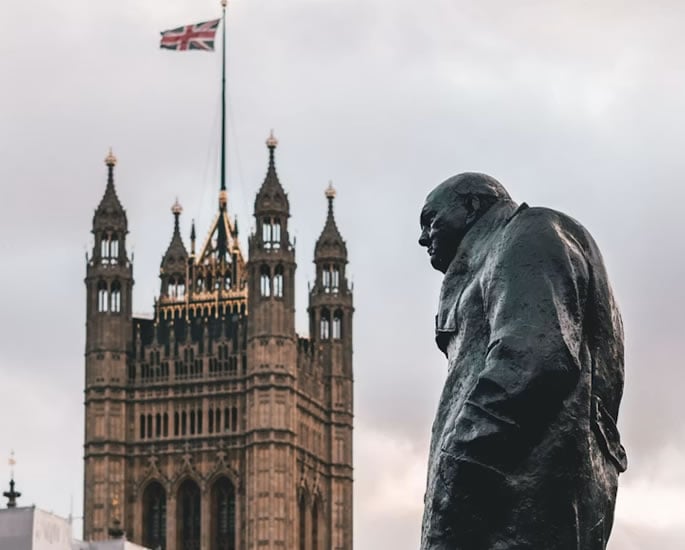
Winston Churchill’s early political career provides one of the structural anchors for the story.
Arvind reveals: “I’ve long been obsessed with Winston Churchill, and so the details of his career I took as fixed points.
“The story largely revolves around his first Cabinet position as Under-Secretary for Colonial Affairs, when at the tender age of 30 he presided over a huge swath of the world’s population and landmass, making decisions that affected millions upon millions of lives.
“I was also rigorous in portraying multicultural London as it then was. Bal would have been far from the only colonial pupil barrister at his time.
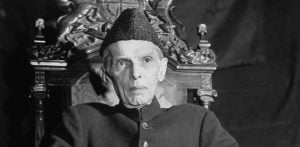
“Gandhi and Muhammad Ali Jinnah were both called to the bar in the 1890s and Sylvester Williams, father of pan-Africanism, who makes a brief cameo in the book, would have been a near contemporary of Bal’s.”
Even fictional characters are grounded in real-world inspiration, as he continues:
“And for those who think Maud Adler is a product of the male imagination and is too sexually and politically adventurous for a woman of her time and class,
“I refer you to her real-life inspiration, virtuoso violinist, champion of Indian classical music, and Theosophist Maud McCarthy.”
The research draws on established historians and writers while maintaining narrative autonomy.
Arvind says: “I acknowledge my debt to historians such as William Dalrymple and Caroline Elkins in the bibliography, and also to Sathnam Sanghera’s wonderful and angry polemics about empire.
“Ultimately, though, my priority was telling a good story, and like Churchill before me, I didn’t let too many facts get in my way.”
At the same time, the novel’s engagement with South Asian representation in genre fiction remains open-ended, framed not as instruction but as possibility.
Arvind concludes:
“I don’t think authors get to tell their readers what to take from their work.”
“All we get to do is hope that we will be read. But if the book helps break open a little space (alongside the work of authors like Abir Mukherjee, Vaseem Khan, Imran Mahmoud and A.J. Chowdhury), so that South Asian readers who love crime and historical fiction no longer see themselves absent from those narratives, then that will be something to be happy about.”
The Great Game closes by returning to the central instability it builds throughout, where genre fiction becomes a way of examining history rather than escaping it.
Through Balvinder’s shifting role as both investigator and suspect, the novel unsettles familiar assumptions about empire, authority and who occupies the centre of classic storytelling.
Historical figures and fictional icons are placed side by side as a reflection, exposing how narratives of power are constructed and repeated.
Rather than resolving its tensions into certainty, the novel leaves them deliberately open, shaped by conflict, contradiction and perspective.
The Great Game by Arvind Ethan David is out on July 14, 2026, by Thomas and Mercer.