

















































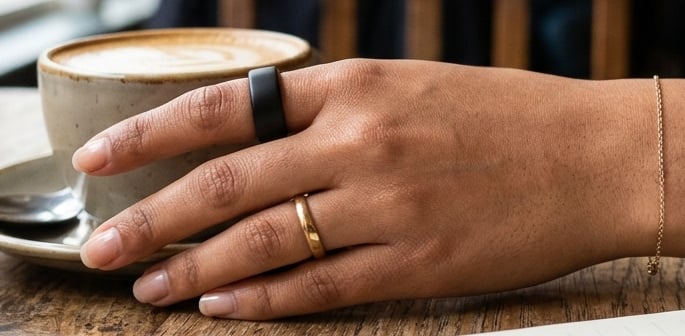
The solicitor described checking her data as an “obsession."
A West Midlands woman discovered she may have been pregnant after her Oura ring detected changes in her body before a pregnancy test confirmed it.
Ravika, a 34-year-old solicitor, was celebrating her birthday on holiday with her husband when her fitness tracker showed her health score was poor.
The device recorded an increased heart rate, elevated body temperature and reduced heart rate variability (HRV).
However, Ravika said she felt completely fine despite the unusual readings.
When the results had not improved a week later, she searched online and found other women sharing similar experiences with their fitness trackers.
Many women said their wearable devices had detected possible pregnancy signs by tracking changes in their body temperature and other health data.
A week later, Ravika took a pregnancy test, which came back positive.
However, after experiencing cramping and receiving a notification that her body appeared to be under significant strain, she visited her doctor.
She was asked to return after 10 days for tests to check whether the pregnancy was developing normally.
During this period, Ravika became increasingly focused on her fitness tracker readings.
She said she woke up early every morning to check whether her temperature remained elevated and whether her health statistics had changed.
The solicitor described checking her data as an “obsession” while hoping her pregnancy would continue.
Fitness trackers, including smart rings and watches, have become increasingly popular in the UK.
These devices allow users to monitor health information, including sleep patterns, heart rate, body temperature and recovery levels.
Changes in body temperature can be linked to pregnancy.
During a typical menstrual cycle, temperatures rise after ovulation and usually drop before a period begins.
In early pregnancy, temperatures often remain higher due to hormonal changes in the body.
Other women have also shared experiences online about their fitness trackers detecting pregnancy and miscarriage-related changes.
Some users claimed their devices showed unusual patterns before they were aware of a pregnancy loss.
However, medical experts have warned that wearable technology should not replace professional healthcare advice.
Ravika later suffered a miscarriage. She said the experience changed the way she views wearable technology during pregnancy.
She added: “I didn’t really see myself as being an anxious person, but… I think going forward if it came to a point where I had an inkling that I was pregnant and my stats were low, as soon as that positive pregnancy test was there, I do think it would be the best thing for me to take the ring off.”