











































It does not present queer identity solely through the lens of discrimination
South Asian television has traditionally offered limited space for queer South Asian identity, with queer characters often relegated to supporting roles, comic relief or stereotypical portrayals.
However, the growth of streaming platforms has gradually changed the landscape, allowing filmmakers and showrunners to explore identities, relationships and experiences that were previously pushed to the margins.
From complicated same-sex relationships and the pressures of coming out to transgender visibility and the search for acceptance, a new generation of South Asian television is beginning to challenge conventional ideas about love, gender and belonging.
These stories are particularly significant in a region where conversations around sexuality and gender identity remain complicated by cultural expectations, religious beliefs, family structures and social attitudes.
For South Asian audiences, particularly those living between different cultural environments, these stories can offer opportunities for recognition, discussion and understanding.
Here are five South Asian shows that explore queer identity, each offering a different perspective on visibility, acceptance and representation.
Made in Heaven

Few Indian streaming dramas have explored queer identity as prominently as Made in Heaven.
Created by Zoya Akhtar and Reema Kagti, the series follows wedding planners Tara Khanna and Karan Mehra as they organise extravagant weddings for wealthy clients in Delhi.
Behind the celebrations, however, the show examines class divisions, gender expectations, marital pressures and the contradictions of modern Indian society.
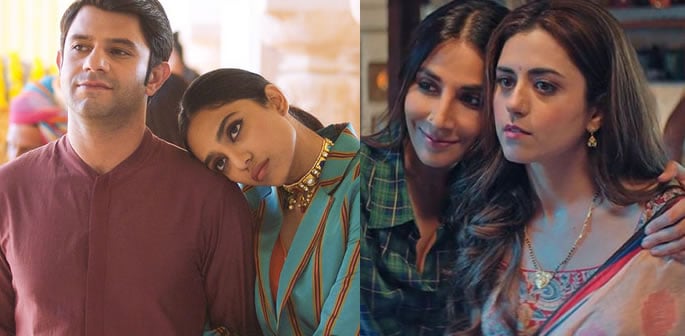
Karan, played by Arjun Mathur, is an openly gay man navigating a society where his sexuality affects his relationships, family life and professional experiences.
Rather than making his identity a minor character detail, the series gives considerable attention to his personal struggles. His relationship with Nawab, played by Vikrant Massey, explores the difficulties of loving someone who is not equally comfortable being open about their sexuality.
Karan’s experiences also demonstrate how social acceptance can be conditional. While wealthy and influential clients may present themselves as progressive, their attitudes towards queer relationships can reveal deeply entrenched prejudices.
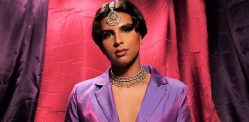
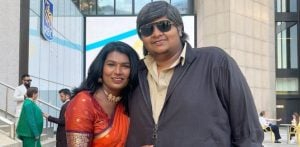
The second season expands the show’s representation through Meher Chaudhry, a transgender woman played by transgender actor and activist Trinetra Haldar Gummaraju.
Meher works in the wedding industry and navigates professional relationships, dating and the everyday challenges of being a transgender woman in contemporary Delhi.
Her character is particularly important because she is not simply introduced as a symbol of diversity.
She has professional ambitions, personal relationships and vulnerabilities that make her experiences part of the wider narrative.
However, Made in Heaven also invites questions about whose stories receive the most attention. Its wealthy setting provides a particular perspective on queer experiences, one that may not reflect the realities of people dealing with poverty, limited access to resources or greater social exclusion.
Nevertheless, the series remains an important example of how mainstream Indian streaming television can incorporate queer characters into complex, ambitious storytelling.
Rainbow Rishta

While scripted dramas offer imagined representations of queer relationships, Rainbow Rishta takes a different approach by documenting the experiences of real LGBTQ+ people across India.
Directed by Jaydeep Sarkar, alongside Shubhra Chatterji and Hridaye A Nagpal, the six-part documentary series explores love, relationships, family expectations and the everyday challenges faced by queer individuals.
Its stories include lesbian couples searching for accommodation, transgender women navigating relationships and gay couples considering their futures together.
One of its strengths is that it does not present queer identity solely through the lens of discrimination.
Instead, it allows participants to discuss ordinary experiences such as dating, falling in love, planning weddings, finding a home and building lasting relationships.
This distinction matters because LGBTQ+ representation has often focused heavily on trauma, rejection and social conflict. While these experiences are important, they do not represent the entirety of queer life.
Rainbow Rishta also highlights the different challenges faced by people within the LGBTQIA+ community.
A lesbian couple struggling to find a landlord willing to rent them a property faces a different set of circumstances from a transgender woman seeking romantic acceptance or a gay couple hoping to build a family.
The documentary format gives participants an opportunity to share their experiences in their own words, reducing the distance between the audience and the people whose lives are being represented.
It also raises an important question about visibility: what happens when queer people are finally allowed to tell their stories without having their identities reduced to fictional plot devices?
Although no single documentary can represent the full diversity of South Asian queer experiences, Rainbow Rishta makes an important contribution by presenting LGBTQIA+ people as individuals with different personalities, ambitions and relationships.
The Married Woman

Based on Manju Kapur’s novel of the same name, The Married Woman explores female desire, sexuality and the pressures of living within traditional expectations.
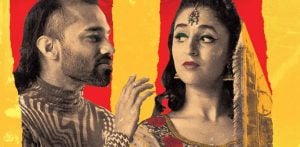
The series follows Astha, played by Ridhi Dogra, a married woman whose seemingly settled domestic life begins to change after she meets another woman, Peeplika, played by Monica Dogra.
Their relationship challenges Astha’s understanding of herself, her marriage and the life she has built around social expectations.
What makes the series particularly interesting is its exploration of female identity within the South Asian family structure.
Astha is not presented as someone whose entire personality revolves around her sexuality. She is also a wife, mother, artist and individual attempting to understand what she wants from life.
Her growing connection with Peeplika forces her to confront the difference between fulfilling expectations and pursuing personal happiness.
The series also examines how women are often expected to prioritise family stability over their own emotional needs. Marriage, motherhood and respectability become social roles that can leave little room for personal exploration.
However, the relationship between Astha and Peeplika is not without complications. Their experiences demonstrate that discovering one’s sexuality does not automatically resolve the pressures created by family, society or existing relationships.
The Married Woman is also significant because it places a relationship between two women at the centre of a mainstream Indian streaming drama.
Nevertheless, its treatment of female desire can be discussed critically. Representation is not simply about including a same-sex relationship; it is also about allowing queer women to have agency, complexity and stories that extend beyond romance.
For viewers interested in how sexuality intersects with marriage, motherhood and social expectations, the series offers plenty to consider.
His Storyy

His Storyy explores the consequences of a same-sex relationship within the seemingly stable world of marriage and family life.
The series follows Kunal, played by Satyadeep Mishra, a married man whose relationship with another man, Preet, played by Mrinal Dutt, brings his sexuality and personal life into the open.
His wife, Sakshi, played by Priyamani, must then confront the reality of a marriage that is not what she believed it to be.
The premise allows the series to explore a complicated aspect of queer South Asian identity: the pressure to conform to heterosexual expectations.
In many traditional family environments, marriage is treated as an essential milestone, particularly for individuals who face pressure from parents and wider communities.
For some LGBTQ+ people, this can result in years of concealing their identities or entering relationships that do not reflect their romantic and sexual preferences.
His Storyy examines the emotional consequences of such circumstances, including the impact on partners and children.
Importantly, it also raises questions about honesty, responsibility and the right to live openly.
Kunal’s experiences are not presented in isolation. His wife is also affected by the decisions surrounding their marriage, creating a narrative in which different characters have legitimate emotional concerns.
This makes the series more complicated than a straightforward story about coming out.
However, it also raises an important representational question: how can television explore the pressures that lead people into heterosexual marriages without making queer identity itself appear responsible for the resulting family conflict?
The distinction is significant. The problem is not someone’s sexuality but the social expectations that can prevent people from living honestly.
His Storyy is therefore worth examining for its portrayal of the complicated relationship between sexuality, marriage and family acceptance.
Paatal Lok

Unlike the other shows on this list, Paatal Lok is primarily a crime thriller rather than a drama centred on queer relationships. However, its portrayal of marginalised gender identities and its later exploration of queer identity make it an interesting addition.
The first season introduces Cheeni, a transgender character whose experiences are connected to the wider investigation at the centre of the story.
Her presence raises questions about vulnerability, exploitation and the ways marginalised communities are treated within wider social structures.
The series does not present a particularly uncomplicated picture of representation. Cheeni’s storyline has attracted critical discussion about whether transgender characters are given sufficient agency or are primarily used to contribute to the experiences of other characters.
This is an important distinction because simply including a transgender character does not guarantee meaningful representation.
The second season also develops the personal life of police officer Imran Ansari, played by Ishwak Singh, with his sexuality becoming part of the character’s wider story.
Ansari’s experiences add another dimension to a series already concerned with prejudice, power and social hierarchies.
His character also demonstrates how queer identity can intersect with other aspects of South Asian life, including religion, professional expectations and masculinity.
However, Paatal Lok is not a dedicated LGBTQ+ narrative, and its queer representation is relatively limited compared with shows such as Made in Heaven and Rainbow Rishta.
Its inclusion is therefore useful from a critical perspective. It highlights the difference between a show featuring queer characters and one that genuinely centres their experiences.
Ultimately, Paatal Lok demonstrates that the conversation around representation must consider not only whether marginalised characters appear on screen, but also how much agency, complexity and narrative importance they receive.
Beyond Visibility: What Is Still Missing from South Asian Television?
The growing presence of queer characters in South Asian streaming content represents an important development, but there is still a considerable distance between visibility and genuine representation.
For years, LGBTQ+ characters in mainstream Indian entertainment were frequently portrayed through stereotypes, exaggerated mannerisms or supporting comic roles.
The growth of streaming platforms has created opportunities for more nuanced storytelling, particularly following India’s 2018 decriminalisation of consensual same-sex relations under Section 377.
However, legal progress and changes in entertainment do not automatically translate into social acceptance.
One recurring issue is the tendency to make queer identity the defining feature of a character. While sexuality and gender identity are important, LGBTQ+ individuals also have professional ambitions, friendships, family responsibilities, insecurities and interests that have little to do with their identities.
Television also needs greater diversity within queer representation itself.
Gay and lesbian characters have received increasing attention, but bisexual, asexual, non-binary and intersex experiences remain comparatively underrepresented. Transgender characters also deserve stories that move beyond discrimination, violence and personal tragedy.
There is another important question: who gets to tell these stories?
The involvement of LGBTQ+ writers, directors, actors and consultants can help ensure that characters are represented with greater authenticity. Casting queer actors in queer roles can also create opportunities for performers who have historically been overlooked.
Equally, South Asian television needs to move beyond the idea that every queer storyline must be a story of suffering.
Love, humour, ambition, friendship, parenthood and everyday happiness deserve just as much attention as prejudice and rejection.
Shows such as Rainbow Rishta and Made in Heaven demonstrate different ways of bringing queer experiences into the mainstream. Meanwhile, The Married Woman and His Storyy explore the complicated relationship between sexuality and traditional family expectations.
The next step is to create more stories in which queer characters are not simply included to make a programme appear progressive, but are allowed to shape its narrative.
Ultimately, meaningful representation is not just about seeing South Asian queer people on screen. It is about allowing them to be seen as complete individuals, with the freedom to tell their own stories.