














































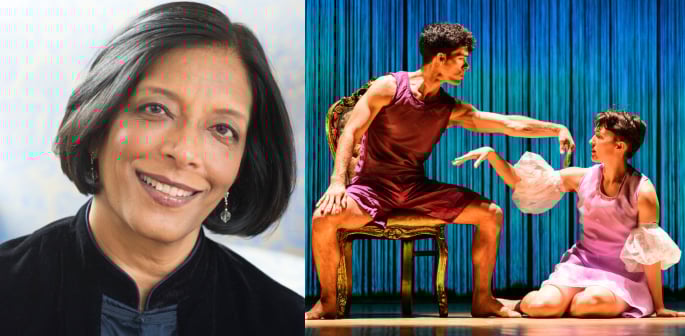
"My artistic decisions will reflect my context."
Few choreographers have reshaped British South Asian dance like Shobana Jeyasingh, whose work confidently bridges tradition and contemporary practice.
Over more than three decades, she has developed a distinctive choreographic voice that moves fluidly between classical Indian forms and experimental performance.
Her work consistently explores identity, migration, and cultural memory through layered and thought-provoking storytelling.
Speaking to DESIblitz, Jeyasingh reflects on her creative influences, artistic decisions, and the ideas shaping her latest production.
Her responses reveal an artist deeply engaged with both her heritage and the realities of modern Britain.
At a time of rapid technological change, she also considers what remains uniquely human in dance.
Writing and Expanding Bharatanatyam
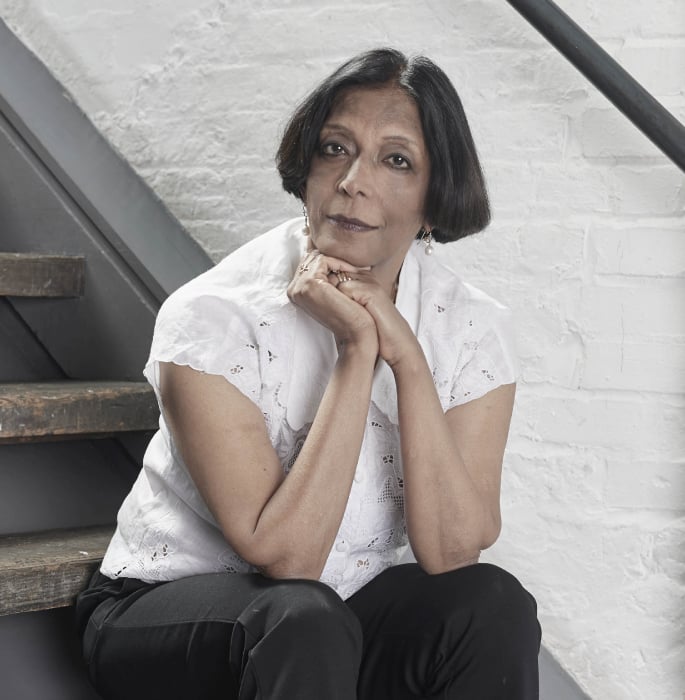 Jeyasingh’s engagement with literature, particularly William Shakespeare, plays a key role in shaping her choreography.
She explains: “Poetry and drama, including Shakespeare’s, give me a structuring model to be inspired by. Dance has great poetic potential because, like poetry, it can communicate on many levels at the same time.”
This perspective highlights how she approaches movement as a layered and expressive form of communication.
Her choreography mirrors the depth of literary works, allowing meaning to unfold in complex and nuanced ways.
By drawing from poetic structures, she creates performances that resonate intellectually and emotionally.
This approach reinforces her belief that dance can function as a powerful storytelling medium beyond words.
Although often associated with Bharatanatyam, Jeyasingh rejects the idea of simply moving away from tradition.
She states: “It was not a ‘moving away’, rather it was an ‘adding to’. All dance forms have boundaries which give them their integrity. Some stories I want to tell are better told without Bharatha Natyam, while others can’t exist without it.”
This reflects her commitment to expanding rather than abandoning classical frameworks.
She acknowledges the importance of boundaries in preserving the identity of any dance form.
At the same time, she recognises the need for flexibility when telling different kinds of stories.
This balance allows her to create work that feels both rooted and innovative.
Art Representation, Persistence and Creative Identity
 Questions of identity and representation are central to Jeyasingh’s artistic philosophy.
She explains: “Whether it is Banksy or Anushka Shankar, all art making is a form of cultural representation. Contemporary artists choose to represent the times they live in.”
Referencing figures such as Banksy and Anoushka Shankar, she places her work within a broader creative landscape.
She continues: “I am a British Asian woman living and working in London, and I am sure my artistic decisions will reflect my context. My Indian heritage is a very important part of everything I do.”
Based in London, her lived experience naturally informs her creative output.
Her work ultimately reflects a nuanced understanding of identity that embraces both individuality and cultural influence.
Reflecting on over thirty years of leading her own company, Jeyasingh offers a concise yet powerful insight.
She states: “Persistence is a valuable thing.”
This simple statement captures the resilience required to sustain a long and evolving artistic career.
Her journey demonstrates the importance of consistency in building a meaningful body of work.
It also highlights the determination needed to challenge expectations within the arts.
Through persistence, she has established herself as a defining voice in British contemporary dance.
We Caliban, Migration and Storytelling
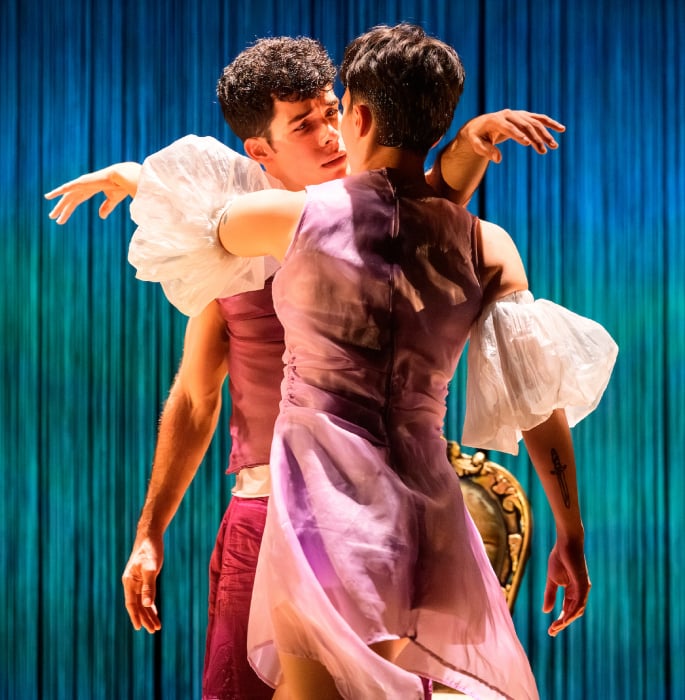
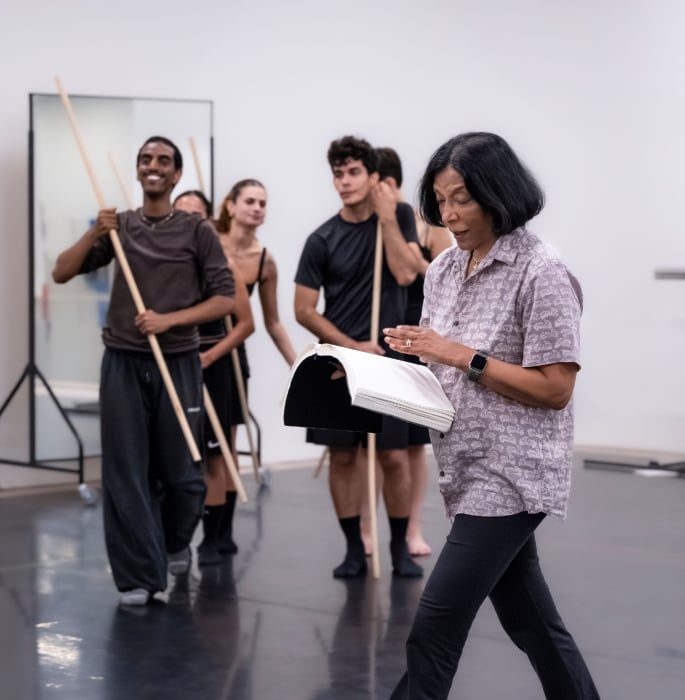 In her latest work, Jeyasingh revisits The Tempest through the perspective of Caliban.
She explains: “I studied The Tempest at some length when I was at university. It is a brilliant play, especially for the ideas of power (political, personal or magical) that it advances.”
Her interpretation centres on the disruption experienced by Caliban within the narrative.
She adds: “Caliban’s life and relationship to his land is disrupted by a shipwrecked but still powerful European Duke.”
This perspective allows her to draw connections between the play and broader histories of colonialism.
She concludes: “His story has echoes for all like me who have inherited the life-changing transformations brought about by colonial administration.”
Jeyasingh’s personal history plays a significant role in shaping We Caliban.
She explains: “My grandparents’ and parents’ lives were hugely impacted by the changes the British brought to the education and cultural evaluation in India.”
These experiences inform the themes explored within the production.
She continues: “The two incidents that We Caliban is built on are the teaching of language and the criticism of Caliban’s morals and culture.”
Through these ideas, she examines how identity is shaped by external forces.
Her work ultimately bridges personal memory with collective historical experience.
Technology, AI and the Future of Dance
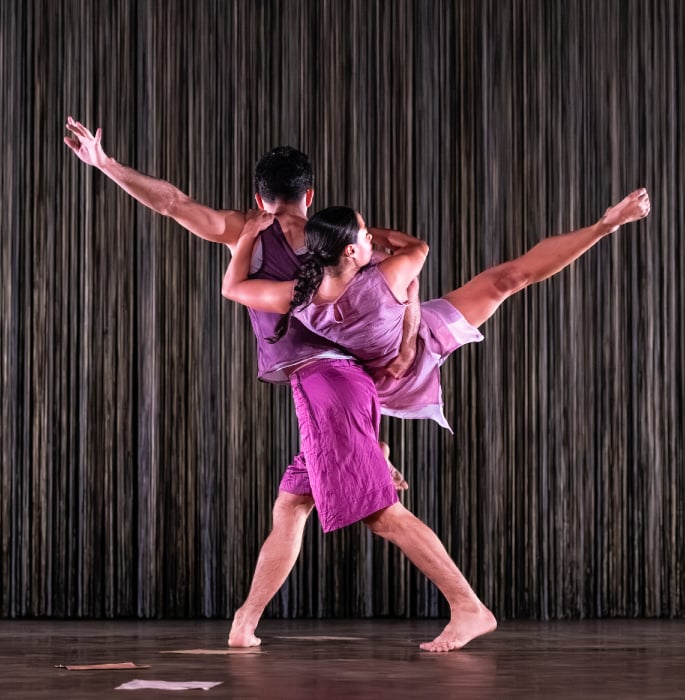 As artificial intelligence becomes more prominent, Jeyasingh reflects on its implications for dance.
She states: “Choreography is about judgement and storytelling. One can see dancing robots aplenty, but I have not seen robotic choreographers yet!”
This highlights her belief in the uniquely human aspects of creative decision making.
She acknowledges the potential of AI while questioning its limitations.
For her, choreography involves intuition and interpretation that cannot be easily replicated.
This perspective reinforces the importance of human presence in performance.
Jeyasingh also considers whether AI can preserve or disrupt classical dance traditions.
She explains: “Perhaps AI can help archive and collate dance practice, but a dance performance, more than any other art form, is about the vulnerability of the human body in real time.”
She emphasises the unpredictability of live performance.
She adds: “When a body dances, one literally does not know what the next second is going to bring.”
Highlighting Bharatanatyam, she notes: “Bharatha Natyam’s flash of the eye, one of its most potent features, is a psychological weapon which comes from deep within the dancer’s intelligence and artistry.”
She concludes: “I doubt whether this volatility can be part of a learnt model.”
While maintaining a critical perspective, Jeyasingh acknowledges the benefits of digital tools.
She states: “Digital technology plays a huge role in modern theatre design and I am a grateful beneficiary.”
This reflects her openness to innovation within her practice.
Technology enhances visual storytelling and expands creative possibilities. However, she remains clear about its limitations in capturing human nuance.
Her approach balances appreciation with thoughtful critique.
Legacy, Breaking Rules and Looking Ahead
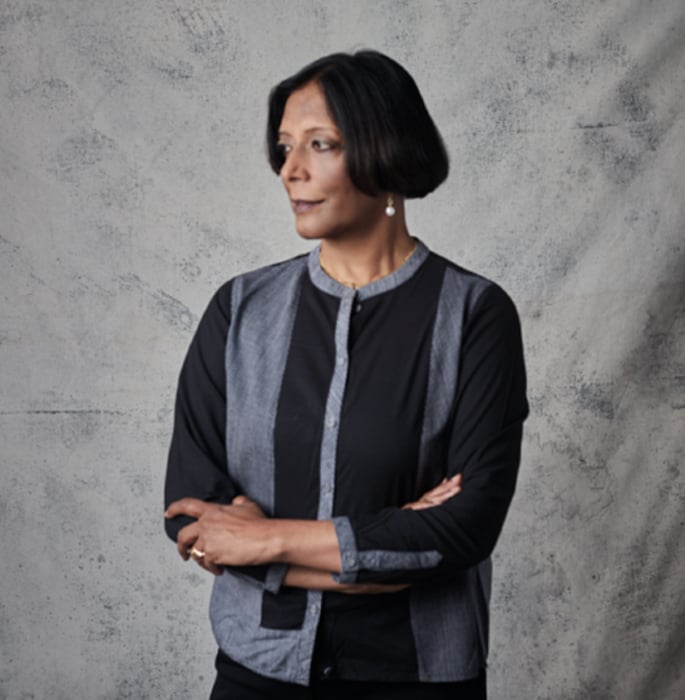 Looking ahead, Jeyasingh reflects on the evolving nature of dance.
She explains: “Dance constantly breaks the everyday rules of comfortable movement by stretching the body’s biomechanics to its limits.”
This highlights how risk-taking is already embedded within the art form.
She continues: “So risk-taking is not new.”
Considering the future, she adds: “The stories that future choreographers will want to tell using dance and evolving technology are sure to break the accepted boundaries of today.”
Her perspective encourages the next generation to embrace change and innovation.
It also reinforces her lasting impact on how dance is understood and practised today.
Shobana Jeyasingh’s insights reveal a deeply thoughtful and forward-looking artist.
Her work demonstrates how dance can navigate identity, history, and contemporary issues with clarity and purpose.
By integrating literature, personal experience, and cultural reflection, she creates performances that resonate widely.
Her views on technology highlight both its potential and its limitations within the arts.
For South Asians in the UK, her journey offers meaningful representation and inspiration.
Ultimately, she reminds us that dance continues to evolve through those willing to question, persist, and reimagine its possibilities.