

















































“I felt like he was judging me”
In Asia and the South Asian diaspora, birth control stigma persists, affecting Desi women in different ways.
South Asian communities are a rich fusion of diverse cultures, traditions and religions. However, overarching ideals, norms, and taboos remain across Desi cultures.
Indeed, taboos around sex for women and birth control ripple through Desi communities. Thus impacting the lives and well-being of women from Pakistani, Indian, and Bengali backgrounds.
Both unmarried and married Desi women can face birth control stigma and difficulties.
Birth control comes in various forms, the most popular including condoms, pills, implants, progestogen injections, patches and Intrauterine Devices (IUDs).
DESIblitz explores how South Asian women, such as those in India and Britain, are affected by birth control stigma.
Cultural Expectations and Ideals
For many South Asian women, cultural norms dictate specific timelines and roles concerning marriage and motherhood. This shapes expectations around when and why women have sex and the usage of birth control.
Traditional values emphasise family formation, where women are expected to have children soon after marriage.
Dr Ranjana Kumari, Director of the Centre for Social Research in Delhi, stated that women in India are under significant pressure to have children:
“Even today in the rural areas and small towns, if you don’t have a child from the natural marriage, then the men are forced by their parents to choose another wife because you can’t produce a child.”
This pressure is not exclusive to South Asian countries. The notion that women should have children soon after marriage continues in the diaspora.
Moreover, there is a belief that education on birth control and sexual health is unnecessary for unmarried Desi women. This assumption derives from the cultural expectation that women do not engage in premarital relations.
If an unmarried South Asian woman is seeking birth control, it can be seen as shameful behaviour.
Tania Chatterjee, a humanitarian worker based in Kolkata, told NBC News:
“There was no sit-down or anything… it’s just kind of a common theme that there’s an appropriate time for sex, and that’s only after marriage.”
Desi women having sex is a topic that is pushed into the shadows. Female sexuality causes discomfort for many, especially the older generations and men.
The unease with issues around sex and sexuality was not always so acute.
Before British colonisation, there was more sexual fluidity in India, where female sexual expression was more liberated.
As a result of British colonisation, ‘sexual conservatism’ emerged, which limited sexual freedom, especially for women.
Family and Community Judgement and Stigmatisation
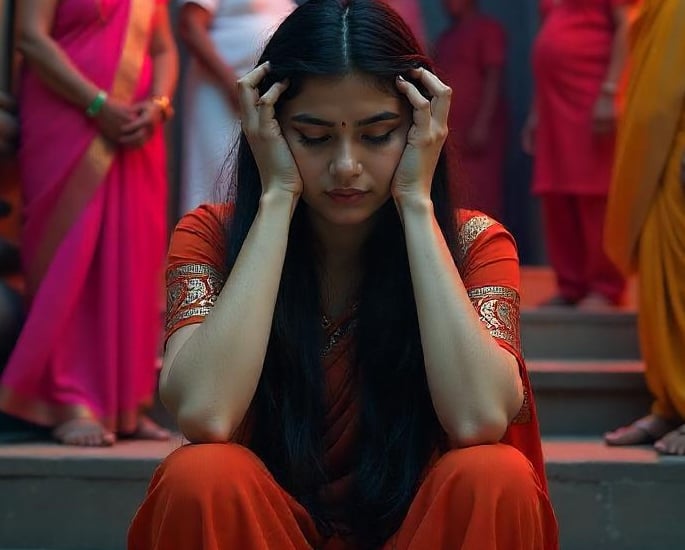
In South Asian communities, family and community influence can be huge.
Concern about how the family and community may judge behaviour and conduct can shape what women feel they can do when it comes to their bodies and sexuality.
Desi women, especially if unmarried, can be worried about facing disapproval from family if they use contraception.
Shivani, an unmarried 20-year-old British Pakistani woman, revealed:
“One of the main concerns with actually getting birth control is being seen at a sexual health clinic or in public by a member of the family or someone who knows my family.
“I am not married, and if someone who knows my family sees me at a sexual health clinic, they might presume I am sexually active before marriage.”
Even though the contraceptive pill can be used to alleviate conditions like painful periods and endometriosis, Desi women may avoid it due to socio-cultural taboos.
An unmarried Desi woman seeking contraception is going against traditional cultural norms and values.
Unmarried South Asian women may have concerns about being seen by members of the community in fear that word would spread, leading to judgment.
Women’s bodies and sexuality, in general, are policed in a way that men are not; this is due to patriarchal ideals.
Men are allowed to have sex freely with no judgment, in contrast to women, who can be severely judged and marked.
Thirty-three-year-old Sunita*, a British Pakistani, told DESIblitz:
“I hate the double standard. Women should control themselves, unlike men.”
“Yet it is often positioned that it’s a woman’s responsibility to deal with birth control.
“If something goes wrong, it’s her fault; she has to deal with the judgements and consequences. He can just walk away.”
Birth Control Stigma Leads to Limited Access to Information

Cultural stigma may lead to a reluctance to engage in open conversations about sexual health and contraception among communities, families, and friends.
This leaves South Asian women without adequate information to make informed choices surrounding their bodies both in Asia and in the diaspora.
Many married and unmarried South Asian women do not have open relationships with their mothers or female figures where they can talk about sex and sexual health.
In the UK, there is a nationwide lack of culturally nuanced health campaigns promoting contraception as a positive thing.
Such campaigns can help give Desi women awareness of resources and knowledge to facilitate greater agency over their bodies.
Culturally nuanced promotions need to be implemented in places where South Asian communities reside to make information more accessible.
Young girls, particularly, may not be aware of the services that are available to them. They might not know emergency contraception is free in pharmacies in the UK.
Moreover, the NHS website has a feature that shows a person the nearest pharmacies that offer contraceptive pills without prescriptions.
Sex education in schools also lacks information about the different types of birth control, what each one does and how it can affect the body.
Mia, a 24-year-old British Indian woman, stressed:
“In school, we only really learned about the menstrual cycle and how to put a condom on.”
“There was no insightful information about the different contraceptive options; we were just told to have ‘safe’ sex.”
A study used survey results from 931 students in England aged 16 to 18. It was found that over half (65%) of the students rated the sex education they’d received as adequate or below.
A female student explained: “All we’ve done in school is go over having safe sex and talked about periods, which, whilst important, is barely scratching the surface of things people need to know about.”
Both girls and boys need to have more detailed education in schools to ensure robust knowledge of sexual health and contraception.
Desi Women Hesitant to Seek Healthcare in the UK

Socio-cultural norms and ideals that create a stigma around birth control can also hinder women from accessing healthcare services. Desi communities ideologically position birth control as something to be used by married Desi women.
Unmarried South Asian women may hesitate to seek medical advice or assistance regarding contraception due to fears of being judged and stigmatised.
This reluctance can prevent them from receiving appropriate health care, education and resources regarding their reproductive health and the choices available.
Moreover, South Asian women may be reluctant to visit a GP or sexual health clinic if the practitioner is male.
Amani*, a 23-year-old British Indian woman, shared her feelings about talking to a male pharmacist:
“I needed to get emergency contraception, and it was extremely awkward talking to a male pharmacist; I felt like he was judging me.”
Desi women may feel uncomfortable talking about their sex life and sexual health to a man, especially if English is not their first language.
Birth control remains a sensitive topic in homes across the diaspora and Asia.
Social-cultural ideals, norms and patriarchy continue to police Desi women, their bodies, sexuality and engagement with sex.
However, the consequences of such policing can manifest differently depending on where you look.
Sterilisation as a Form of Birth Control in India and Britain

In India, Britain, and across the globe, the responsibility of birth control is prevailingly the burden of women.
Apart from condoms, various birth control methods require women to either take something orally or insert devices into their bodies.
While India has tried to diversify methods of contraception for women, sterilisation remains the most frequently used method of contraception.
The National Family Health Survey (NFHS-5) from 2019-2021 found that female sterilisation had risen from 36% to 37.9%. The safer and easier male sterilisation (vasectomy) remained unchanged at 0.3%.
Abhinav Pandey ran a research project on the unequal burden of family planning methods on married women. Many misconceptions about male sterilisation were identified.
One of the misconceptions is that getting a vasectomy will take away the man’s masculinity.
Another is that it will make them unable to do jobs that require hard manual labour.
Abhinav says: “Condoms are more acceptable, but a lot of men told us they didn’t like them because they were uncomfortable and made sex less pleasurable.”
This indicates that women are exposed to the risk of unintended pregnancies for the sake of male pleasure. As a result, they then use emergency contraception or have an abortion.
This links to the idea of sex being about pleasure for men and more of a duty for women.
Women continue to be placed with the burden of responsibility to ensure there are no unwanted pregnancies.
Perspectives on Sterilisation & Birth Control Responsibility

There is a difference in how sterilisation is perceived in India compared to the UK. In the UK, more reversible or temporary forms of birth control are popular and easily accessible.
Sunita stated: “I don’t know anyone in the UK who would think of sterilisation as a form of birth control.
“For men or women, that’s when you don’t want any more children at all or never want any.”
“Sterilisation, for me, implies no going back. It’s permanent. A more severe and serious act than taking a pill or getting an injection.”
Family planning initiatives in India, conducted by both the government and non-governmental organisations, are focused on women’s birth control methods.
Women in India often take sterilisation as a more extreme form of birth control. It is usually positioned as the only suitable option for them.
This is due to contraception being expensive for many, more so if the woman needs a repeat prescription.
Furthermore, contraception may be inaccessible to marginalised women and women in rural areas.
Doctor S. Shantha Kumari, president of the Federation of Obstetric and Gynaecological Societies of India, asserted:
“I believe it should be the responsibility of both men and women that they should be partners in this decision. But the onus is always on women.”
There is a clear need to reframe birth control as a responsibility of both men and women in India.
Indeed, this is needed to promote a more progressive and positive attitude toward women’s bodies and choices.
This reframing is also needed in the UK and globally, with the onus shifting to focus on men and women being equally responsible.
Mental Health Impact on South Asian Women

The stigma and silence encompassing birth control can have significant negative impacts on mental health. Feelings of guilt and shame are most common.
Anxiety can also emerge among South Asian women who feel unable to openly discuss their sexual health and reproductive choices with healthcare professionals.
Desi women may feel stress, especially if they do not know precisely what types of contraception are available or suitable.
Some women may not like the idea of having an implant that stays in their body. Indeed, they may have anxiety if they are not adequately informed.
Prisha*, a 22-year-old British Indian woman, told DESIblitz:
“I had a lot of anxiety about what contraception would be right for me.”
“I just had an abortion, and I didn’t want to go on a contraception that would make me depressed or bleed for months.
“When speaking to a sexual health nurse at a clinic, she told me that contraception affects everyone differently and it is not guaranteed what side effect I would get.
“The nurse said she personally did not like the idea of having something implanted that would not be easy to remove, and I agreed, so I chose the mini-pill.”
Some Desi women like Prisha are now daring to step forward and ask questions despite the taboos around birth control.
Empowerment and Agency

Despite the challenges, there is a growing movement within the South Asian community aimed at breaking the silence surrounding birth control and sexual health.
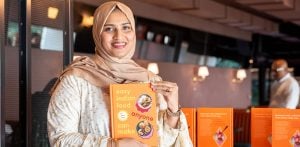
For example, Amina Khan on TikTok makes videos with tips on sexual health and well-being. She, for example, provides advice on dealing with period pain and explains what types of contraceptives there are.
@aminathepharmacist Save this video! – you won’t find this breakdown of the different contraception’s anywhere else!? My award-winning Hormone Balance, Skin & Hair supplements will be in stock in September. They sell out VERY fast, within a few hours so sign up ?? Link in bio to sign to the wait list and be notified instantly ? #contraception #depoinjection #coppercoil #hormonalcontraception #microgynon #contraceptivepill #birthcontrol #fertility #pharmacy #pharmacist ? Chillest in the Room – L.Dre
Empowerment comes from knowledge, and by encouraging conversations around reproductive health, South Asian women can reclaim their sexual agency.
This empowerment can be achieved through more robust education, healthcare initiatives, and open dialogue within communities and families.
Social media can help women who are digitally literate access information surrounding birth control.
Through social media and the online world, women can gain information on their rights and what options they have regarding contraception.
This can empower them and help them make more informed decisions about what they want to do with their bodies.
Education is a powerful tool that can help debunk myths surrounding contraception.
Indeed, education can promote informed decision-making.
It is essential to break down taboos around premarital sex and contraception and debunk norms that position sex as pleasure only for men.
The stigma surrounding birth control is a significant issue affecting South Asian women.
Socio-cultural expectations, norms and gender dynamics shape the stigma around birth control and women’s sexuality and bodies.
However, the landscape is gradually shifting as dialogue begins to flourish.
Conversations on social media are a prominent factor in helping destigmatise the use of contraception in Britain, India and across South Asia.
By fostering open discussions and advocating for healthcare access, the South Asian community can work towards dismantling birth control stigma. This will, in turn, encourage Desi women to seek advice and make informed decisions about reproductive health and sex.