









































"Marriage is not based on lovey-dovey concepts"
Arranged marriages have long been a cornerstone of South Asian culture, symbolising tradition, family values, and social cohesion. Yet, are arranged marriages stigmatised today?
Romantic love has increasingly become the norm as a foundation for marriage. Indeed, it is highly idealised through popular culture and the media.
Moreover, in many South Asian communities, particularly among younger generations, arranged marriages began to be viewed differently.
Some see it as a respectful practice of maintaining cultural roots and invaluable in getting a good life partner. Yet, for others, arranged marriages are associated with outdated customs that limit individual freedom and agency.
Thirty-four-year-old Shazia, a British Pakistani, stated:
“My attitude to arrange marriages has seesawed from one side to the other. How I see them today is way different to when I was a teenager and in my early 20s.”
Individuals from Desi backgrounds, such as Indian, Pakistani and Bengali, often find themselves straddling two worlds. The tension between the needs and choices of the individual and collective (such as family) still manifests.
Indeed, this is powerfully seen in matters of relationships, romantic love, marriages, and the role of the family.
Thus, DESIblitz investigates whether arranged marriages are stigmatised in the Desi diaspora.
Traditional Arranged Marriages
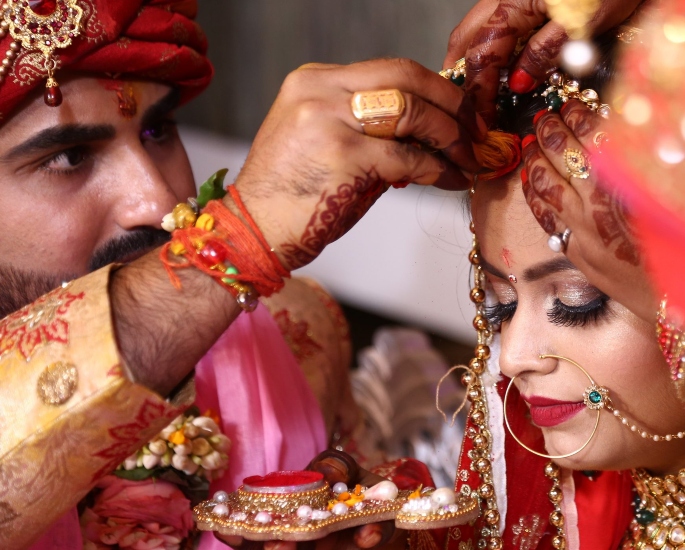
Arranged marriages have traditionally been a way for South Asian families to ensure compatibility, financial stability, and the preservation of cultural values.
Historically, these marriages were seen as a family decision rather than an individual one. While love could develop, it was often secondary to practical considerations.
Instead, there was an emphasis on the fact that marriage mattered and impacted the whole family, not just two people marrying.
Therefore, elders such as grandparents and parents played a crucial role in matrimonial decisions.
Fifty-two-year-old British Pakistani Nashid* stressed:
“Growing up, we knew we would marry with our dad’s approval. There was no other option.”
“Not just me and my sisters, but brothers too. I was given a choice, but from families and men, my dad knew.
“It wasn’t forced. I said no to the first family who came. But we didn’t question the role of our parents in the decision.
“Times have changed now.”
Nashid stresses that the contours of arranged marriages have shifted and continues to shift:
“[T]he arranged marriages of today are different to my day. Parents and family often introduce the couple, and they get to know each other and decide if they want to move forward with marriage.
“I do know some who say yes to engagement and marriage after three or four meetings.
“But that’s when usually the families know each other or checks have been done properly, at least with those I know.
“One of my sons had an arranged marriage, and he is as happy as the son who married his girlfriend.”
Stereotypes and Misinformation on Arranged Marriages
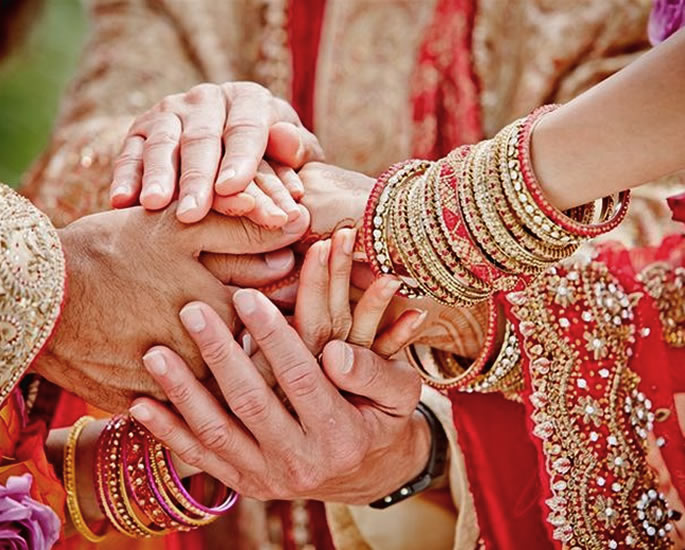
Stereotypes and misinformation about arranged marriages can also lead to the stigmatisation of arranged marriages as archaic, problematic and negative.
Arranged marriages are often misunderstood by those unfamiliar with the practice. In Western societies, they are sometimes confused with forced marriages, leading to the perception that they are oppressive or outdated.
Indeed, Nashid has found this to be the case with younger generations of British Asians she has interacted with:
“Some of the younger generations see arranged marriages as backwards, old school. Westerners can confuse arranged marriages with forced ones.
“But arranged marriages aren’t forced marriages; there was always a difference. And our kids often change their tune as they get older.”
Negative portrayals of arranged marriages in media can further reinforce stereotypes. Depictions often highlight instances of coercion, reinforcing the belief that individuals in arranged marriages lack agency.
In turn, arranged marriages are sometimes viewed as a tool to uphold patriarchal values.
Critics argue that they can perpetuate gender imbalances, especially when families prioritise certain traits like caste, religion, or socioeconomic status over individual compatibility.
Dr Nidhi Shrivastava, a first-generation Indian American, reflected on what the negative stereotypes around arranged marriages are:
“I don’t know in a very patriarchal way in which the woman is oppressed, unable to work, faces dowry, but while there might be some truth to it. I don’t think all arranged marriages are terrible and scary.
“In Western culture, people are often set up on blind dates all the time, and I don’t think it’s that different.”
“I don’t think they are terrible as stereotypes tend to show as my parents had a loving one, and at one point, I considered it too.
“I think relationships tend to take a lot of work, time, and dedication. Ultimately, it boils down to this, whether one chooses the love or arranged route.”
Ideas of Romantic Love and Individual Choice

The growing trend toward love marriages in many parts of the world, including within the Desi community, contrasts with the traditional practice of arranged marriages.
This shift creates tension between those who view arranged marriages as old-fashioned and those who see it as a valued cultural tradition.
For those within Desi communities who oppose the stigmatisation of arranged marriages, the emphasis is on the fact that love can grow.
Neelam*, a 35-year-old British Bengali and single mother, asserted:
“I’ve said over and over again. Our coloniser had really done a number on us. He even managed to brainwash us into thinking arranged marriages were uncivilised just because there were cases of abuse, like everything else.
“I always say to my mum that if I could go back in time, I would beg my grandfather to arrange my marriage.”
“And I would’ve definitely married someone from back home.
“My grandfather was very intelligent, well revered and had a wide network. So finding me someone educated, with deen and looks decent would’ve been a breeze for him.
“When I visited Bangladesh, he’d ask me often, so long as he had my father’s permission to do so.
“Deep in my heart, I wanted to, but my mind would say, ‘Arranged marriage, that too to a freshie (a way of othering those from back home). What will my peers and cousins think of me?’
“Marriage is not based on lovey-dovey concepts; it’s real and requires work, respect, and love, too. But you have to be practical, and love grows as you go through thick and thin together. Unless you’re not a human.
“When I say love, I mean love in the form of care, and when your spouse shows up for you everyday.”
Attitudes to Arranged Marriages Vary

Arranged marriages and how they are perceived varies within Desi communities and families.
Attitudes to arranged marriages can shift and slide with age, depending on the space one is looking in and the type of arranged marriage undertaken.
Shazia revealed to DESIblitz:
“I used to think arranged marriages were bad, too old-fashioned for me.
“I could never marry a stranger. But last year, I finally felt ready to marry, and I’m not into dating, so I asked my mum to look into finding Rishta.
“I never thought I would do that. While mum is helping, I’ll still want to take at least a year to get to know the person and spend time with them.
“The traditional arranged marriages I could never do; marrying a total stranger is craziness, in my eyes.”
The #ArrangedMarriage hashtag often shows contrasting opinions on platforms like Reddit and Instagram.
One Indian-American woman posted about feeling alienated by her peers for agreeing to an arranged marriage, stating that people in her social circle made jokes about her “being sold off”.
This reflects the social stigma that can exist within the South Asian diaspora when traditional practices clash with more liberal ideals.
Nevertheless, many also stress that there are different types of arranged marriages and that this marriage form is not necessarily bad.
A Reddit user replying to a second-generation South Asian Muslim immigrant in Canada who was not keen on the idea of an arranged marriage stated:
Comment
by from discussion
inprogressive_islam
In turn, Mohammed, a British Pakistani who had two arranged marriages, told DESIblitz:
“The first time, I made the mistake of not taking time; we didn’t take time to get to know each other outside our families.
“My parents said to take time, but I didn’t listen.
“We realised after the marriage we were too different and that we liked our families more than each other.
“It took me time to be ready to consider marriage again; the second time, I made sure I didn’t rush.
“My family’s input was always important; we are tight, and I needed someone who would be happy with that and want to be part of it.”
Moreover, Iram*, a 29-year-old Pakistani based in Canada, said:
“Personally, I don’t see myself going down that route, but I understand why some would. Arranged marriages can work really well and some can be bad.
“What people forget is the same is true for love marriages, where there’s no arranged element. You can date for years, and then when married, it’s a nightmare.”
Individual preferences and experiences (direct and indirect) shape attitudes towards arranged marriages and how people view them.
The Evolution of Arranged Marriages

Arranged marriages, how they are perceived, and their contours have evolved.
Contemporary arranged marriages have moved towards a more collaborative approach, rather than elders making all the decisions.
Modern arranged marriages often involve parents introducing prospective spouses. However, the couple is allowed time to build a relationship before deciding whether they have an engagement and then marry.
Crucially, the couple make the final decision.
This format allows the prospective couple to get to know each other before marriage and develop a relationship.
Thus bridging traditional values with modern relationship dynamics.
Others can decide to have a more formal or traditional arranged marriage, where they spend less time together before marriage. Choices are made.
Nevertheless, arranged marriages can be seen as archaic and restrictive.
Western values, ideals around romantic love, media portrayals, and shifting societal norms have contributed to the stigma that can manifest around arranged marriages.
Despite this, arranged marriages are not universally rejected. Many families now focus on mutual consent and individual choice, blending tradition with modern values.
For some in the diaspora, especially younger South Asians arranged marriages no longer signify an imposition but a choice made in collaboration with their families, balancing personal preference with cultural norms.
As the Desi diaspora continues to negotiate the balance between cultural heritage and individual desires, the concept of arranged marriage will likely continue to adapt.
Indeed, as attitudes and practices continue to evolve, arranged marriages will likely persist in some form.