

















































"I used to scold myself"
Young Indian women are increasingly reclaiming their right to masturbation as a form of self-care and sexual discovery, despite the heavy cultural stigma that still surrounds the act in South Asian society.
This quiet shift represents a direct challenge to the traditional silence imposed on female desire within conservative households.
A comprehensive academic study published in the International Journal of Sexual Health in November 2025 explores these private experiences through in-depth interviews with women aged 18 to 30.
Titled I Should Not Be Doing This Thing: A Qualitative Exploration of Masturbation Experiences Among Young Indian Women, the research highlights a significant tension between modern autonomy and inherited shame.
By examining the psychological and social barriers these women face, the paper provides an authoritative look into the evolving landscape of Desi female sexuality.
Patriarchal History
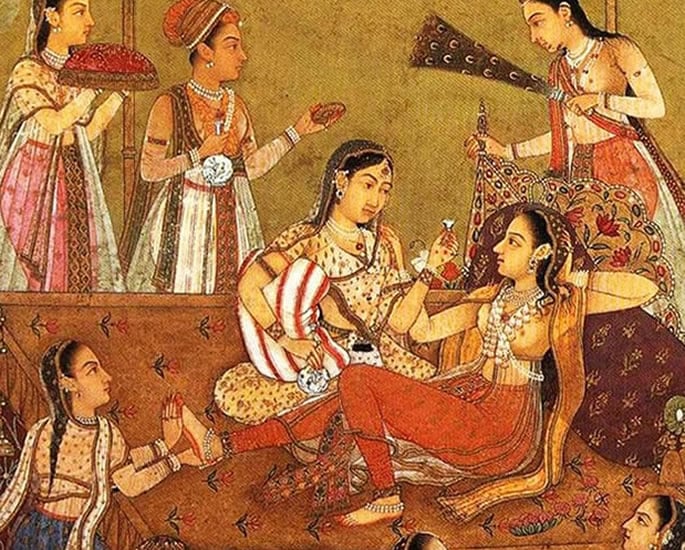
The historical context of sexuality in India is a complex mix of ancient openness and colonial-era restraint.
While historical artefacts, such as ancient dildos and depictions of self-stimulation in religious texts, suggest a long-standing acceptance of sexual pleasure, the British colonial period introduced Victorian values that deeply stigmatised such acts.
The study highlights how these colonial shadows, combined with indigenous patriarchal norms, have created a contemporary environment where female masturbation is often viewed as deviant or spiritually impure.
According to the research, many Indian women are socialised to believe that their bodies are vessels for the preservation of family honour rather than for individual gratification.
This is often reinforced by religious doctrines across Hinduism, Islam, and Christianity, which frame self-pleasure as a violation of spiritual purity.
One of the most striking findings is the internalisation of these societal biases.
Participants frequently described a phenomenon similar to ‘Dhat syndrome‘, a culture-bound anxiety traditionally associated with perceived semen loss in men, but adapted to the female experience through a lens of moral corruption.
Anjali* recalled how her upbringing taught her to view sexual content as inherently “dirty”, recalling the phrase: “Child, a dirty scene is coming, go away, don’t watch it.”
These early messages form a sexual script that many women struggle to rewrite in adulthood.
The study suggests that even when women engage in masturbation, they often do so under a cloud of “internal conflict due to society”.
Priya* encapsulated this struggle with the poignant reflection: “Earlier I used to be like ‘What am I doing?’… I used to scold myself – ‘I should not be doing this thing’.”
The Role of the Media
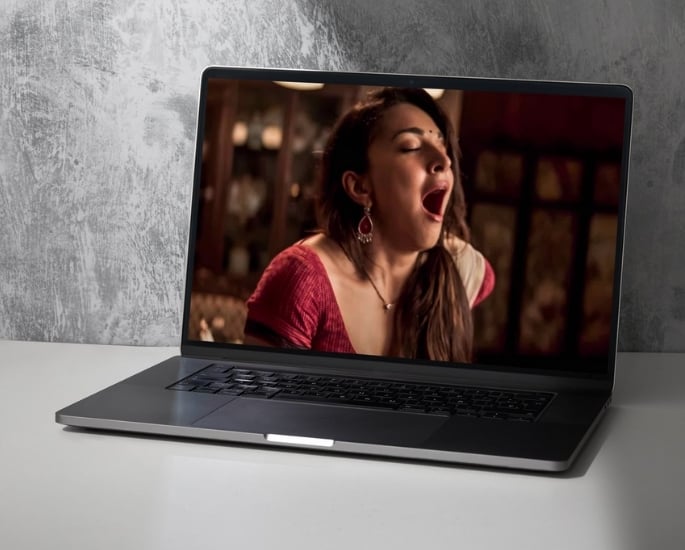
In the absence of formal sex education in Indian schools and homes, media has become the primary source of sexual literacy for young women.
The study noted that nine out of 15 participants identified films, print articles and the internet as pivotal in shaping their understanding of masturbation.
High-profile Indian films and series such as Lipstick Under My Burkha and Lust Stories have played a big role in dismantling taboos by depicting female pleasure as a natural aspect of life.
Tara* mentioned that seeing a woman masturbate on screen for the first time was a revelatory experience:
“That is how I got to know about the concept… I was glad that I could watch that movie and find out about it.”
This reliance on visual media reflects a shift toward the ‘Media Practice Model’, where individuals actively seek out content that resonates with their emerging sexual identities.
However, this digital reliance is a double-edged sword.
While mainstream media can empower, the consumption of pornography often introduces unrealistic standards that lead to body dissatisfaction and skewed expectations.
The study highlights how the idealised depictions of female anatomy and performance in pornographic material can make women feel inadequate.
Rhea* noted that pornographic content often portrays hairless, light-skinned genitals, which do not reflect the reality of many Indian women.
Furthermore, the researchers found that eight participants reported negative experiences with pornography, citing its “exploitative practices” and focus on the male gaze.
This creates a difficult environment where women must navigate between liberating representations of pleasure and the distorting effects of a male-dominated adult industry.
Privacy and Resource Scarcity
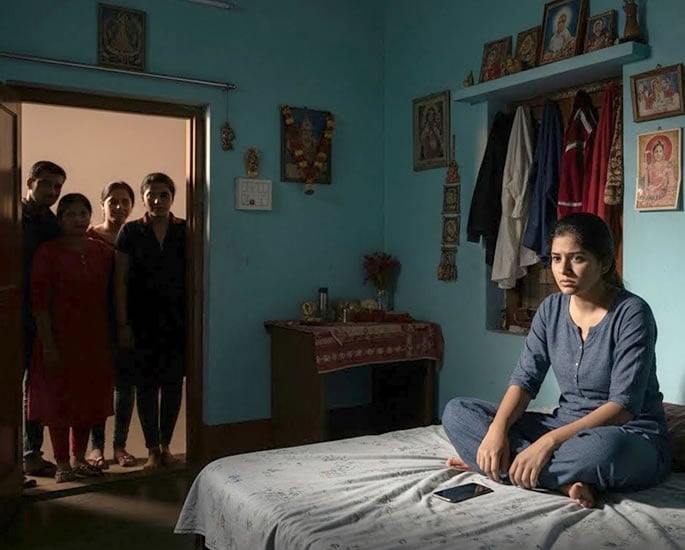
Beyond the psychological hurdles, young Indian women face significant physical and financial barriers to exploring their sexuality.
In many Indian households, particularly in urban areas where space is at a premium, privacy is a luxury that few can afford. The study reveals that resource scarcity is a major deterrent to masturbation.
Women living in joint families or sharing rooms with siblings often find themselves unable to find a private moment.
Anjali explained the difficulty of living in a shared space: “I don’t have my own room and have to share space with my brother, so the only space I get is the bathroom.”
This lack of physical space often turns what should be a relaxing experience into a stressful race against the clock, fraught with the fear of exposure to family members.
The barrier to entry also extends to the purchase and use of sex toys.
While the market for sexual wellness products is growing in India, the social stigma surrounding these items remains intense.
Participants reported feeling a deep sense of anxiety about visiting sex stores or even ordering products online.
Neha* expressed this fear: “What if I go there (sex store) and someone I know sees me?”
Even after successfully acquiring a toy, the problem of concealment arises. The study notes that women often have to hide these items under clothing and live in constant fear that they might be discovered while charging a device.
Financial constraints further complicate this, especially for students or freelancers with limited income.
The high cost of quality vibrators, combined with the lack of reliable information on how to use them safely, has even led to consequences of ill-informed experimentation, including physical discomfort and minor lesions.
Empowerment vs Emotional Vulnerability

The most profound aspect of the research lies in the duality of the masturbation experience.
For many women, self-pleasure is a vital tool for mental health, providing stress relief, improved sleep quality, and a sense of bodily autonomy.
In a fast-paced, high-pressure society, masturbation serves as a deliberate strategy to relax and unwind.
Simran*, an IT professional, shared how masturbation helps her manage insomnia:
“Masturbation helps me feel tired, and then I have a very sound sleep.”
Beyond the physical benefits, the act is often described as empowering because it allows women to prioritise their own needs and gain confidence in their ability to satisfy themselves without a partner.
Shreya* said:
“The confidence stems from the fact that I do not have to look for pleasure elsewhere because I can pleasure myself. I feel empowered.”
Yet, this empowerment frequently coexists with deep-seated emotional vulnerabilities.
The study found that nine out of 12 participants reported feeling guilt, shame, or a moral dilemma after masturbating.
This emotional fallout is often tied to the ‘Sexual Double Standard’, where male masturbation is normalised as a biological necessity while female masturbation is scrutinised as a moral failing.
Meena* described a harrowing internal conflict between her body’s needs and her spiritual beliefs:
“I don’t want to sin but my body needs it so much that I go ahead… Does my spirit really need this or does my body really need this?”
This persistent sense of breaking faith with one’s parents or religion highlights the immense pressure placed on young Indian women to conform to traditionalist ideals, even when their private actions suggest a more progressive reality.
The reality for young Indian women today is a quiet but persistent struggle to own a part of themselves that society has spent centuries trying to suppress.
The 2025 study reveals that while the act of masturbation is becoming more common, the emotional cost remains high for those caught between traditional values and personal autonomy.
It is no longer enough to simply acknowledge that these behaviours exist; there is a pressing need for a cultural shift that moves beyond viewing female desire as a moral transgression.
By bringing these experiences into the light, the research paves the way for a future where sexual health is treated as a fundamental right rather than a source of secret shame.
Ultimately, the transition from the guilt-ridden “I should not be doing this” to a place of self-acceptance is the true frontier for women’s rights in modern India, promising a more holistic approach to well-being that finally includes the right to pleasure.