
















































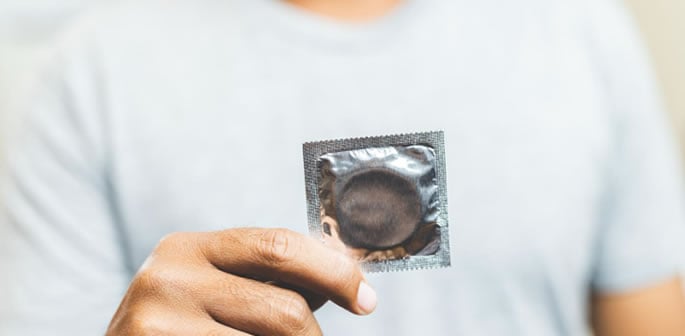
"She found out after she realised she was pregnant."
In India, stealthing is a covert violation that remains misunderstood by many.
It involves the secret removal of a condom during sexual intercourse. This occurs without the partner’s consent or knowledge.
Colloquially described as condom sabotage, it undermines the foundations of sexual autonomy and comes with numerous risks, including sexually transmitted diseases (STDs) and unintended pregnancies.
Stuti Mehrotra’s paper, Unmasking Deceptive Consent, explores these ethical dilemmas in India, identifying the act as a coercive sexual practice.
We explore the issue of stealthing in India and the legal landscape.
Legal Obstacles to Consent

Section 375 of the Indian Penal Code (IPC) defines the parameters of rape in the country.
Mrinal Satish, associate professor of law at National Law University Delhi, highlights Explanation 2 of Section 375, which defines consent as an unequivocal voluntary agreement between sexual partners.
It must be communicated through words, gestures, or clear non-verbal signals.
Consent must apply specifically to the sexual act being performed at that time.
Satish argues that intercourse with a condom is a specific sexual act. Removing the condom mid-intercourse changes the nature of that act.
The penetration following the removal lacks the original consent provided by the partner.
Under this interpretation, the act amounts to rape under existing Indian laws.
However, women’s rights lawyer Flavia Agnes describes the law in India as being strictly black-and-white.
Agnes suggests the system lacks the finesse to make such acts punishable, noting that the legal framework is not yet prepared for these complexities.
This creates a significant hurdle for victims seeking justice in Indian courts.
Mehrotra’s paper argues that consent cannot be an all-encompassing or broad construct. Instead, it must be viewed as contextual and specific to the interaction. If consent is given for one activity, it is not universal.
This perspective is vital for redefining how deceptive sexual practices are handled.
The research paper also explores remedies through the lens of tort law. Currently, no well-established principle compels compensation for harm caused by stealthing.
However, legal jurisprudence offers analogies in the transmission of various STIs.
In cases like McPherson v. McPherson, a duty of care was recognised. Individuals must inform partners of their STI status to prevent physical harm. Failure to do so can lead to claims of fraudulent misrepresentation.
Medical negligence cases, such as wrongful pregnancy, provide further legal precedent.
Accountability is established when a professional’s error leads to an unwanted birth. In Boone v. Mullendore, a physician was held responsible for such an outcome. The victim received compensation through specialised legal remedies.
Victims of stealthing must demonstrate that the deliberate removal of a condom is extreme. This action is viewed as a socially unacceptable act in intimate settings.
However, this path remains largely untested in the Indian civil court system.
Mehrotra also considers stealthing as a potential breach of an implied contract. Sexual encounters involve the core tenets of offer, acceptance, and mutual consideration.
The agreement to use protection forms the basis of an implicit contract.
Stealthing deviates from the agreed-upon terms during the sexual encounter.
Cultural Fatalism and Reproductive Agency

Cultural attitudes in India significantly shape the societal response to stealthing.
Activist-lawyer Nandita Rao suggests that Indians are a generally fatalistic race. This mindset often leads to a disregard for personal safety.
She compares this to people seating young children on two-wheelers.
Rao argues that this fatalism contributes to sexual powerlessness for women:
“Marital rape is still not considered a crime in our country, and women can’t say no to their husbands, or sex workers to their customers. So we are far more badly off.”
This environment allows stealthing to flourish with very little social resistance.
The social stigma surrounding sexual health also plays a major role, with Rao noting that the word “condom” is often censored in media.
This prevents a healthy educational campaign about reproductive and sexual freedom.
Mehrotra’s research highlights how instances of stealthing are often brushed aside and in India, the lack of awareness regarding sexual autonomy prevents many from seeking justice.
The issue of stealthing sits within broader debates around reproductive rights. When a partner removes a condom, reproductive choice is taken away, undermining individual rights.
The right to decide whether to engage in sexual activity is inviolable, and any breach of this consent constitutes a coercive sexual practice.
However, power dynamics are not always one-sided.
Mehrotra’s research highlights that women can also tamper with condoms to get pregnant without a man’s consent, undermining male consent in sexual encounters.
Rao stresses the need to empower women with genuine reproductive freedom, including the ability to say “no” without fear of reprisal.
Yet limited access to safety information remains a major barrier.
In an overpopulated country, Rao notes, safety is often deprioritised, leaving individuals feeling their rights matter less.
This environment can foster resignation among victims, many of whom view seeking legal justice as futile. Legal outcomes are further shaped by class and gender.
Mehrotra points out that convictions often hinge on “idealised behaviours” of victims, a bias that discourages many from approaching the police.
Medical Implications of Stealthing

Medical professionals in India witness the consequences of stealthing first-hand.
Dr Rajan Bhonsle, Head of Sexual Medicine at KEM Hospital, said: “Here, it’s been happening for years.”
Patients often visit him due to fears of STDs or pregnancy and only learn about stealthing during consultations.
Identifying the main reason for stealthing, Dr Bhonsle said: “The man, in most cases, will say the condom comes in the way of his pleasure, which is why he takes it off mid-sex.”
Sometimes, it happens because the man may want to impregnate his wife.
When it comes to stealthing abroad, Dr Bhonsle said:
“We see more instances of male partners acquiring STDs from a female partner than vice versa.
“So, any man gloating about taking off the condom is nothing but foolish.”
Mehrotra’s research paper argues for a broader understanding of consent.
Engaging in sex without a condom carries significant health risks, including unintended pregnancy and disease transmission.
This makes it essential to examine consent through more specific frameworks, particularly in cases where protection is deliberately tampered with, which fall under stealthing.
The findings highlight the urgent need for greater awareness of consent in a contemporary context.
Establishing stealthing as a distinct criminal offence would offer clarity and protection for individuals in relationships. Redefining consent within the Indian legal framework has therefore become a pressing necessity.
While the medical community addresses the physical consequences of these deceptive acts, including infections and unintended pregnancies, this response alone is insufficient.
It underscores the need for a broader social approach that confronts the coercive nature of such practices. Victims often experience severe psychological distress as a result.
When seeking remedies, victims face emotional, financial, and physical harm, often feeling cornered by their circumstances.
The absence of a clear legal definition means stealthing is not currently recognised as a crime, creating a grey area in the law.
The Impact of Stealthing

The personal experiences of stealthing victims in India reveal deep psychological trauma.
Neha* said it happened to her twice but she realised before things went further:
“Both times, we were in the doggy position and for some ‘genius’ reason, guys believe that if we are facing away, we would not be able to understand if the condom is there or not.”
The incidents have left her less trusting of men.
On the realisation she was being stealthed, she continued:
“Thankfully, I felt the bare skin of his penis upon insertion and nothing ‘bad’ happened!”
Although Neha managed to stop the stealthing incidents, some women have experienced major consequences.
Detailing what happened to a female friend, Priya* explained:
“A soon-to-be-married man she encountered on a Tinder date did this.
“She found out after she realised she was pregnant. That a**hole didn’t even bother to show up to any doctor’s appointments.
“He had zero guilt, zero remorse.”
Priya revealed that her friend even told the man’s fiancée, only for the woman to offer her money.
Priya continued: “It will forever haunt me how easily men get away with assault.”
Echoing Neha’s comments, Priya highlighted the predatory nature of some men:
“I’ve also heard men insisting on the doggy position so that they can stealth, or take photos/videos without the girl’s knowledge.”
Meanwhile, Radhika* has a urinary tract infection that is resistant to several drugs. She believes she contracted it after she was stealthed during a one night stand.
These accounts underline how stealthing leaves lasting psychological scars, even when immediate physical harm is avoided.
For others, the consequences extend into long-term health issues, reinforcing how deeply violating and life-altering stealthing can be.
Stealthing remains a complex issue within India’s private spaces, sitting at the intersection of law, medicine, and culture.
Legal experts continue to debate the boundaries of consent. Medical professionals treat the physical consequences of deception.
Meanwhile, victims face the brunt of such acts and their stories reflect a significant challenge to intimacy and trust.
The discourse continues as India navigates these intricate sexual realities.