













































“We try to make a good beer with our heads down.”
Pakistan is home to its oldest and largest brewery, which is preparing for overseas export of beer after a decades-long ban ended.
Murree Brewery, founded in 1860 during British colonial rule, continues operating in a country where alcohol remains officially restricted.
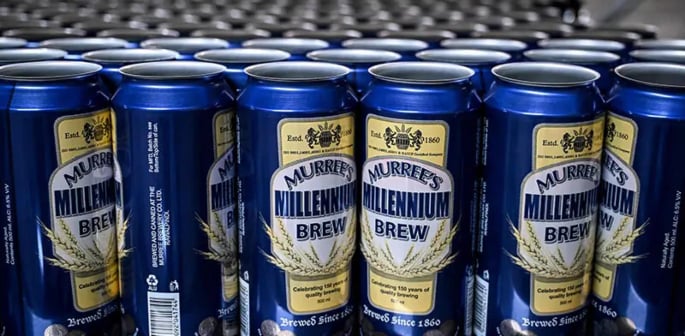
Bottles and cans move rapidly along production lines at Murree Brewery, presenting a rare sight in Pakistan’s Muslim majority society.
Established to serve British soldiers and colonial officials, the brewery has survived decades of religious opposition and strict regulation.
Isphanyar Bhandara, the third-generation leader of Murree Brewery, described the company’s survival as deeply challenging yet rewarding.
He said: “It’s a journey of a roller-coaster and resilience.”
Bhandara described the approval to export alcohol as a moment his family had sought unsuccessfully for several decades.
“Getting permission to export is another happy milestone.
“My grandfather, and late father, tried to get the export licence, but couldn’t get it. Just because, you know, we are an Islamic country.”
Bhandara said the situation became more surprising when another foreign-backed brewery received local brewing permission in 2017.
Reacting to that development, he questioned: “What happened to all the Islamic lectures?”
That decision prompted Murree Brewery’s leadership to begin lobbying efforts aimed at lifting longstanding export restrictions.
Originally based in the Murree hills, the brewery’s main facility now stands in Rawalpindi near highly sensitive government locations.
Despite operating under heavy scrutiny, Murree Brewery recorded revenue exceeding $100 million in the last fiscal year.
Alcohol sales accounted for slightly more than half of the total income, with non-alcoholic beverages and bottle manufacturing making significant contributions.
Sales are legally limited to religious minorities and foreign nationals, such as Christians and Hindus.
Yet, alcohol consumption continues discreetly across social circles nationwide.
Pakistan’s historical relationship with alcohol has long been complex and quietly acknowledged by segments of society.
Bootlegging remains common, often involving dangerous homemade liquor that causes fatalities due to methanol contamination.
A bootlegger told AFP anonymously:
“I have to bribe the police and take extra risks, so the price is doubled.”
“The extra charge is to keep everyone happy, whether it’s a Muslim customer or a police officer keeping an eye on me.”
Before the export ban, Murree Brewery supplied products to India, Afghanistan, the Gulf states, and even the United States.
Bhandara said: “It sounds very strange or very bizarre today, but we were exporting to Kabul.”
With restrictions eased, Murree Brewery has already sent limited shipments to Japan, Britain, and Portugal.
Bhandara explained: “Right now, the target is not revenue or to make money… the target is to explore new markets.”
The brewery employs over two thousand workers and is now evaluating European expansion opportunities.
Asian and African markets are also under consideration as Murree Brewery assesses long-term international growth strategies.
Isphanyar Bhandara disclosed: “We are not allowed to advertise, so we keep our heads down. We try to make a good beer with our heads down.”