
















































"but there has never been a hunger for children"
Socio-cultural ideals across the world prevailingly position motherhood as desired by women. Indeed, marriage and motherhood are still positioned as expected and wanted milestones for Desi women.
Accordingly, women from Indian, Pakistani and Bengali backgrounds who do not want children can find themselves going against normative standards, ideologies and expectations.
South Asian communities and cultures traditionally position children as the essential result of marriage. Women are also positioned as inherently motherly, highly caring and nurturing.
Nevertheless, some women are challenging these normative ideas and expectations, choosing a child-free life.
A woman, whether single, married or in a relationship, may never wish to be a parent.
DESIblitz explores whether it remains taboo for Desi women not to want children and examines if they face any challenges.
South Asian Culture and Ideas of Motherhood
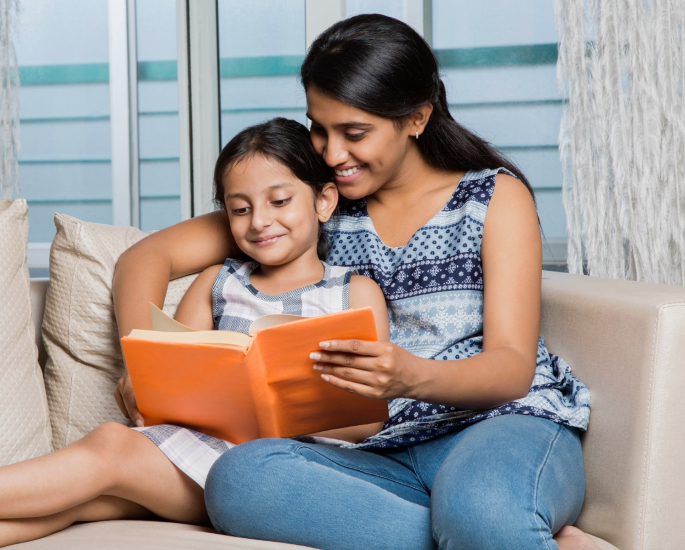
Through a traditional Desi lens, motherhood is often seen as a vital milestone for Desi women. It is viewed as a key reason for marriage within South Asian cultures.
Sonia, a 33-year-old British Pakistani, showed her frustration:
“I want kids, but it doesn’t mean I want to get married or need to.
“When I said that, some of my family and friends were seriously shocked.
“I’ve never wanted to be pregnant or give birth, and the urge still has not hit. It grosses me out.
“But I’ve always wanted to adopt, single or married.
“I have friends who don’t want kids at all; they have it harder in a lot of ways. But the aunties think we’ll both come around; ‘it’s a phase’, and we’re ‘young’.”
The expectation to have children is deeply entrenched in ideals of the family, religious values, and socio-cultural norms.
Desi cultures and communities still tie women’s worth to their ability to bear children. People assume they will want children eventually.
Thus, marriage and motherhood are seen as some of the most important life achievements.
In 2013, Anurag Bishnoi, who runs a fertility clinic in northern India, asserted:
“[W]omen earn respect in India by fulfilling two responsibilities – bearing children and feeding the family”.
Moreover, Nazia*, a 40-year-old British Bengali, told DESIblitz:
“In Asia, and Asian families here and I would think most places around the world, there’s this idea women are incomplete without children. And for Asians, that means marriage.
“Yes, we can now have careers, but marriage and children are still seen as key to a female having a complete life.”
Desi Women Choosing to be Child-Free
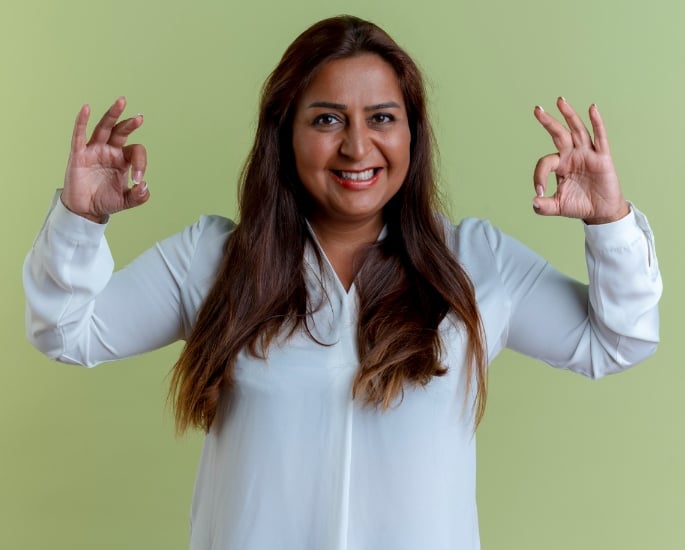
Within Desi households in Asia and the diaspora, there is an assumption that motherhood is always desired and yearned for. However, this is not the case.
Forty-five-year-old Nadya, a British Pakistani, stated:
“My womb isn’t crying out in sorrow and emptiness. I don’t have fertility issues; I actively choose to be childless.
“Biologically, yes, I can give birth, but there has never been a hunger for children.
“I have nieces and nephews, and I love them. But I’m also very happy that they can be given back to their parents.
“I’ve been able to do things I couldn’t if I had a child. My life is exactly as it should be. Not everyone can understand that.”
For Nadya, the assumption that all women have a biological drive to have children is highly problematic and pigeonholes women.
“These assumptions of what women should want and be are such traps.”
In turn, Maya*, a 40-year-old Indian researcher currently in England, reflected:
“My husband and I both didn’t and still do not want children.
“We are financially very secure but have very busy and fulfilling lives. A child to further the bloodline would be raised by helpers and extended family, not us.
“We knew that and know it’s not how a childhood should be. We are happy with our lives as they are and do not want to change.
“There are children in our lives through friends and family, and we care for them.
“But it’s further highlighted to us that we are completely happy as we are now. A family unit of two.”
Prevailingly, children are positioned as key to the formation and existence of a family.
However, families come in various forms, including those with and without children. A cohabiting or married couple without children is just as much a family as one with children.
Purpose and kinship can be found beyond being a parent.
Challenges Desi Women Face when wanting to be Child-Free

A woman can be positioned as incomplete without bearing or raising a child. Unless there is a fertility issue, it is assumed children will come after marriage.
Motherhood and having biological children remain highly idealised.
Worldwide, society views women as inherently nurturing and expects mothers to serve as the primary caregivers of their children.
In South Asian cultures, society elevates motherhood to near-divine status, expecting mothers to prioritise their children’s needs over their own.
A woman who prioritises career over family and children will almost always be judged.
Accordingly, Desi women can find themselves dealing with a variety of challenges when they choose to go child-free.
When women stress they do not want children, they are going against normative expectations and ideals.
Maya stressed: “Times have changed; for my generation and younger, it is easier. But there is a strand of judgement that runs through our communities and families.
“It’s not just Asian people; you see it in White and other groups.
“But I feel it’s more tangible and forceful in our communities and other communities that are collectivist and family-focused.
“We’ve both had people ask us if there are fertility issues. Others have told me ‘I’ll change my mind’ or ‘regret it’.
“It can become deeply frustrating, particularly for a woman.
“With some family and community members, their eyes tell me they think I am abnormal.”
“I have reached the stage where I ignore the judgement; we are happy as we are.”
Nazia, who is a successful property developer and financially independent felt considerable pressure to conform:
“My goal has always been to have a career and explore the world and life. As a young girl, I never imagined having children.
“My mum, aunts, uncles, and grandmother spoke about it, and yes, it was expected. Yet, I could never visualise myself in that role.
“At one point, I was going to give in to pressure, marry, and have a child, but I realised down that path lay unhappiness.
“Unhappiness for me, the husband and child.
“My twenties and thirties my mum and aunties really pushed me to see things differently.
“The pressure was suffocating. I did leave to work in another city for a while, just to put space between us all.”
Diversity in Desires, Needs and Aspirations

There remains a need for traditional ideals and expectations of what Desi women should aspire to be and become, to be dismantled.
Desi women are not uniform in their desires, needs and aspirations.
For some Desi women, having a child is a wanted milestone in their lives at some point. However, there are also Desi women who have no yearning for children and have different aspirations.
Despite increased conversations around reproductive autonomy, cultural taboos persist, making it difficult for women to express their desire to remain child-free.
For Desi women, the decision to remain child-free is still viewed as unconventional and against the norm.
A key reason for this taboo is due to cultures that deeply idealise and highly value marriage, motherhood and children.
Some find the decision difficult to understand because they assume all women want children and that all women are innately nurturing and mothering.
Despite socio-cultural pressures, younger generations of Desi women are more able to stand firm and reject traditional roles.
There is a growing belief that a woman’s identity and worth shouldn’t be defined by motherhood. Both for women who wish to be child-free and women who are mothers, for the latter, it is only one layer of their identity.
Cultural pressures remain, but more Desi women are finding the strength to make decisions that align with their personal values and desires.