

















































"Being part of this launch feels deeply personal to me."
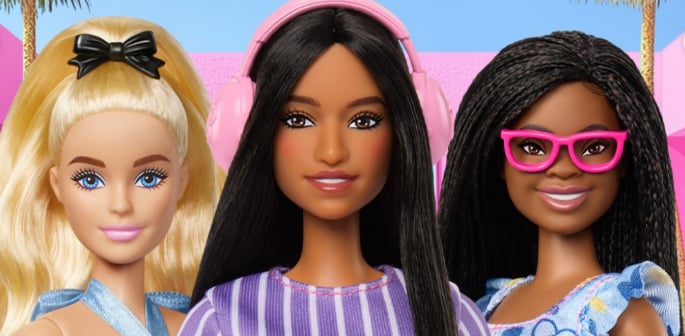
Barbie has long shaped how children imagine the world, and now Mattel India is making that world more inclusive with its first autistic Barbie.
“This launch is a meaningful step towards representation through play,” says Jamie Cygielman, Global Head of Dolls at Mattel.
“Every child deserves to see themselves reflected in toys.”
The new doll joins previous dolls representing Type 1 diabetes, blindness, and Down syndrome, showing Barbie’s commitment to moving away from a singular idea of beauty or ability.
Developed over 18 months, the autistic Barbie was created in close collaboration with the Autistic Self-Advocacy Network, ensuring the design reflects lived experiences rather than assumptions.
 “Representation starts with listening and learning from real experiences,” Cygielman adds.
“Our design team was guided by autistic individuals to create a relatable and inclusive doll.”
The doll features slightly averted eye gaze, articulated elbows and wrists, and hand movements that allow stimming, reflecting the daily experiences of many autistic children.
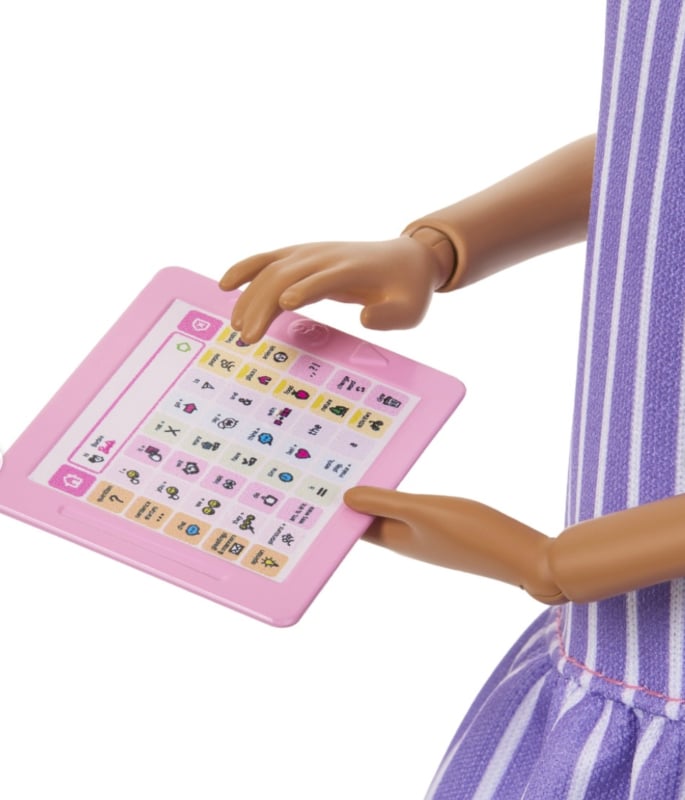
“It was important to include accessories like noise-cancelling headphones and a fidget spinner,” Cygielman says.
“These small details make play authentic and affirming for neurodivergent children.”
The soft purple A-line dress and flat shoes are designed with sensory comfort and freedom of movement in mind, creating a child-friendly and inclusive play experience.
 Mattel India partnered with autistic advocates and creators, including Precious and Mikko Mirage, Madison Marilla, and Indian autistic fashion designer Aarushi Pratap, for the launch campaign.
Pratap says, “Being part of this launch feels deeply personal to me. Seeing an autistic Barbie is recognition of experiences often overlooked, and it makes me visible to the world.”
Known for sensory-friendly fashion blending Indian cultural references, Pratap adds, “Art became my language and fashion gave me my voice. This collaboration shows neurodivergent creativity can be celebrated globally.”
Barbie’s Fashionistas collection now includes over 175 looks, encouraging children to explore stories different from their own and fostering empathy through imaginative play.
“Through inclusive toys, children learn to understand differences without being taught,” says Cygielman.
“We hope this doll inspires empathy, understanding, and acceptance from an early age.”
As part of the India launch, Mattel will contribute a portion of proceeds to the India Autism Centre, supporting initiatives focused on awareness, acceptance, and inclusion.
The autistic Barbie will be available from January 2026 through leading retail and e-commerce platforms in India, suitable for children aged three and above.