








































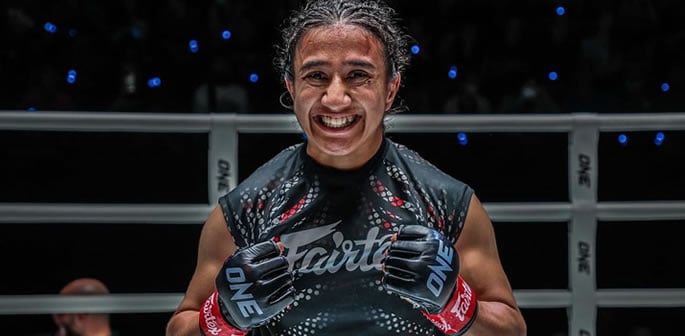
“I felt that in MMA, I had found a missing piece in life."
Six years ago, Anita Karim made a choice that would forever change her life.
At 20, she left university and the familiar streets of Islamabad to pursue a career in mixed martial arts (MMA), a sport largely unknown and unrecognised in Pakistan at the time.
She was entering uncharted territory: no Pakistani woman had ever competed internationally in MMA before her.
Today, she is not only a trailblazer but the face of women’s MMA in her country, and made history by winning the first professional women’s MMA fight ever held in Pakistan.
From her childhood in the mountains of Karimabad to gruelling training stints in Thailand, Anita’s journey has been defined by resilience, discipline and a refusal to conform.
This is the story of a fighter who defied tradition, family expectations, and a male-dominated sporting culture to become a national icon.
Early Life
Born on October 2, 1996, Anita grew up in Karimabad, a mountainous town in Pakistan’s Gilgit-Baltistan region.
Nestled 2,500 metres above sea level, the town is renowned for its striking landscapes of snow-capped peaks, turquoise rivers and terraced orchards.
Anita’s family belonged to the Burusho people, an ethnolinguistic group, and followed the Ismaili sect of Shia Islam.
Life in Hunza was simple and physically demanding. From a young age, Anita carried out chores in the fields, transporting firewood, cattle fodder and apricots across steep mountain trails.
Martial arts entered Anita’s life at seven, when her father, Nisar, enrolled her in taekwondo.
She recalled: “He wanted me to learn martial arts so I could be strong like my brothers and as a form of self-defence.
“He felt that physical strength could instil a sense of independence in me from an early age.”
Anita’s father and three older brothers were all practitioners of MMA, making combat sports a constant presence in her childhood.
Neighbourhood scuffles and even a harrowing moment when a man chased her while working in the fields reinforced the need for self-defence skills.
These early experiences shaped her physical abilities and a mindset defined by determination and courage.
Despite her demanding physical routine, Anita Karim excelled academically.
Hunza’s high literacy rate, particularly among women, provided opportunities rare in other parts of Pakistan.
Her community encouraged girls to pursue education, a value reinforced by guidance from the Aga Khan.
Anita said: “While in other parts of Pakistan, different communities try to bring each other down, we build each other up in Hunza.”
This supportive environment laid the groundwork for the bold decision she would later make: to pursue a career in MMA rather than follow the conventional path of university and marriage.
Becoming ‘The Arm Collector’
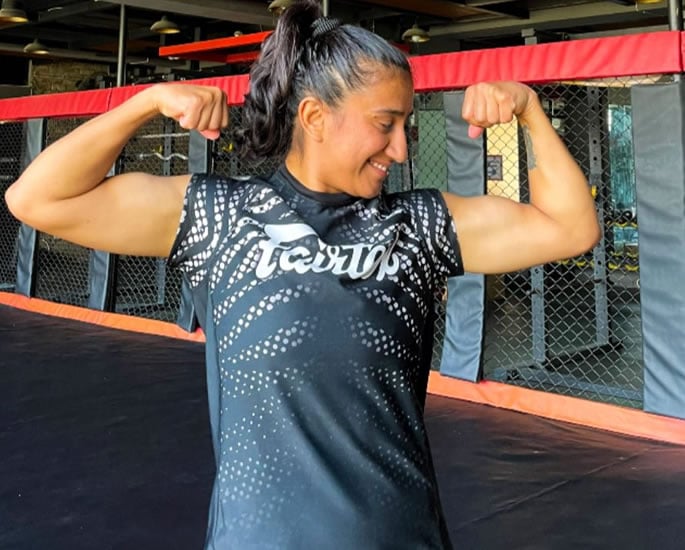
Anita Karim’s entry into MMA was gradual but deliberate.
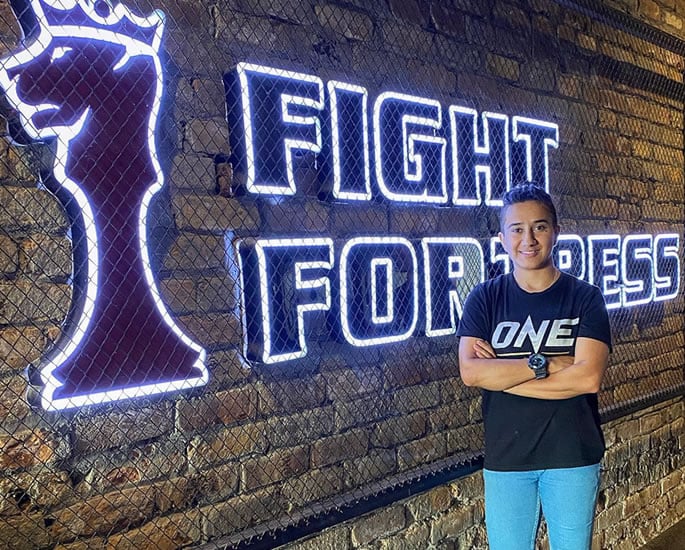
Visiting her brothers’ gym, Fight Fortress, in Islamabad, started as a casual activity. Over time, she became fascinated with the sport and began light training to build fitness and skill.
She explained: “I felt that in MMA, I had found a missing piece in life.”
Once her parents consented, albeit with strict conditions against giving up, she immersed herself in training.
Her first year involved intensive physical conditioning and learning MMA techniques, combining boxing, grappling, Brazilian jiu-jitsu and kickboxing.
As the only female in the gym, Anita sparred with men, a challenge that honed her strength and resilience.
She quickly developed a reputation in local competitions, earning the nickname ‘The Arm Collector’ after dislocating an opponent’s elbow during a Brazilian jiu-jitsu match.
Anita recounted: “I had a girl down on the mat in an Americana lock… I yanked harder and felt her arm go limp.”
This mix of technical skill and competitive spirit became the foundation of her fighting style.
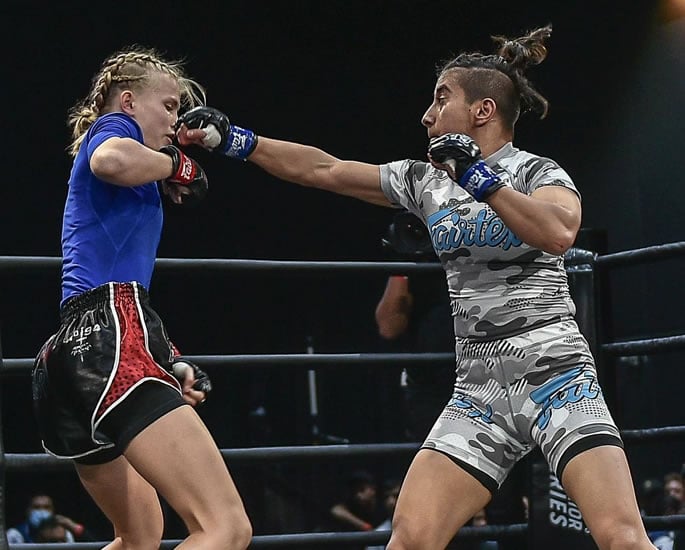
Anita’s international debut came in July 2018 in Singapore against Nyrene Crowley, a seasoned New Zealander.
Though she lost by submission, the fight was a critical learning experience.
Returning to the gym, she refined her technique, gained muscle, and improved her strategy.
Seven months later, she defeated Indonesia’s Gita Suharsono, claiming her first win and cementing her status as Pakistan’s first female MMA victor.
A Hero’s Welcome
Anita Karim’s victory resonated far beyond the gym. When she returned to Pakistan, crowds gathered to celebrate her at Islamabad airport, chanting her name and showering her with petals.
The reception continued through the Hunza Valley, where hundreds lined the roads to Karimabad.
She admitted that the experience transformed public perceptions of women in MMA.
Recognising the need for higher-level training, Anita moved to Pattaya, Thailand, to join Fairtex, a renowned Muay Thai and MMA gym.
The transition was challenging. She endured 14-hour training days, injuries, homesickness, and cultural adjustments, often tackling obstacles alone.
Anita learned to cook, cope with self-doubt, and treat problems like puzzles.
Over five years, she trained with world-class fighters, including Stamp Fairtex, and amassed four wins from five bouts, building a reputation as one of Asia’s most promising MMA athletes.
Returning to Pakistan in 2024, Anita married long-term partner Hassan Gul Basti, an MMA and boxing trainer.
Their union offered personal stability, allowing her to focus fully on training at Fight Fortress, where she continues to mentor younger fighters while preparing for major competitions.
Sustaining MMA in Pakistan
Despite her fame, sustaining a career in MMA in Pakistan remains financially demanding.
With limited sponsorships, no government support, and a cricket-dominated sports culture, Anita Karim relies on personal training and private clients to cover expenses.
She admitted: “It is not cheap to sustain yourself as an MMA fighter.
“You need money for a regular intake of expensive nutritional supplements, a high-protein diet, and for rehab and recovery following major fights.”
Training at Fight Fortress is intense, with a combination of Muay Thai, grappling, and boxing drills.
Anita often faces opponents taller and stronger than her, yet she uses agility, technique, and experience to hold her own.
Her commitment to the sport is unwavering, grounded in her connection to her roots.
She added: “At the end of every training session, I post a selfie to feel good about myself and the work I put in, play some Burushaski music on my headphones, close my eyes and let it carry me back to Hunza.”
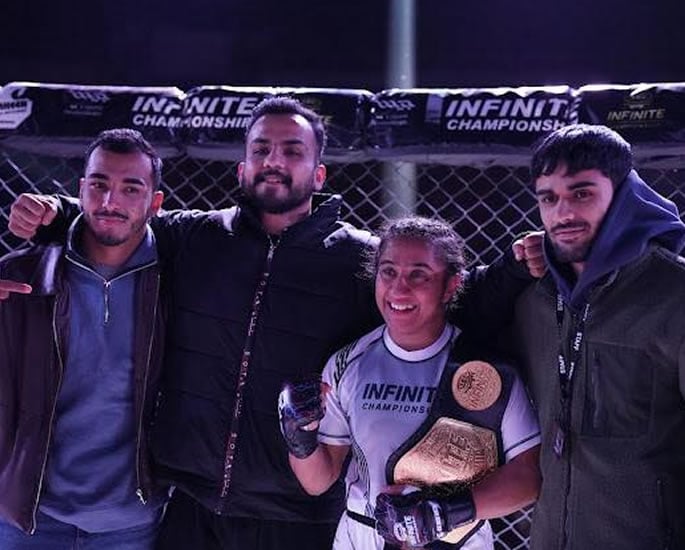
On January 10, 2026, Anita made history by competing in the first women’s MMA fight held in Pakistan. She knocked out Iran’s Parisa Shamsabadi in the first round to win the Professional MMA League Infinite Championship.
Anita Karim’s journey reflects a rare blend of courage, skill, and perseverance.
From mountain childhoods and martial arts classes to international competition and training in Thailand, she has consistently pushed boundaries and challenged societal expectations.
She has not only carved a path for herself but also paved the way for future generations of Pakistani women to pursue combat sports.
Anita Karim embodies the spirit of a fighter in every sense – resilient, disciplined, and unyielding.
Her story is a testament to the power of determination, the importance of community support, and the transformative potential of sport in breaking barriers.