

















































"The real problem isn’t the video - it’s the people sharing it."
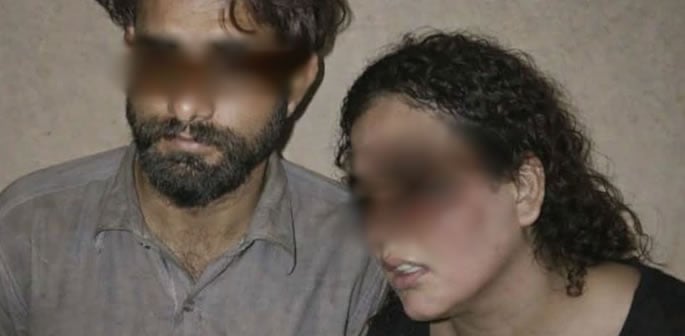
A Pakistani woman has been arrested over her link to an explicit video, which has gone viral and sparked backlash.
The clip has sparked a debate on morality, privacy and accountability in the digital age.
According to reports, the investigation was launched on the instructions of Gujranwala City Police Officer Dr Sardar Ghias Gul Khan.
Police said they used advanced scientific methods to trace the woman and take her into custody.
To apprehend the man seen in the footage, special police teams were formed under the supervision of the DSP Cantt.
The Gujranwala CPO stated the investigation would be conducted on merit and that all those involved would face punishment under the law.
Social media platforms were flooded with clips labelled “Umairi Leaks”, showing the woman getting intimate with a younger man.
The footage was reportedly recorded by the couple themselves.
In the video, the woman could be heard insulting her husband and brothers while praising a man identified as “Umairi”, which further fuelled public anger and debate.
Although many of the clips have been removed for breaching policies, screenshots continue to circulate.
Netizens praised the police for acting swiftly, with some even mocking the couple with memes.
Others argued the footage was a private matter between consenting adults.
One wrote: “The real problem isn’t the video – it’s the people sharing it.
“Turning someone’s private moment into entertainment says more about the audience than the clip.”
Some also claimed the authorities wrongly targeted those in the video and failed to hold accountable the individuals who circulated the clip.
The case has now reached the Lahore High Court.
Justice Jawad Zafar heard a bail application filed by Umair Raza, also known as Umairi, the man purportedly seen in the leaked video.
The court sought a response from the police and issued a notice to the station house officer of the relevant police station, directing him to submit a reply.
During the hearing, the accused’s counsel, Umair Ansar Goraya, argued that the viral video circulating online has no connection with the petitioner.
He also stated there is no video evidence showing Umairi’s presence at the scene.
The case continues to raise difficult questions about privacy, consent and responsibility as explicit content spreads rapidly across social media.