














































“Almost 1,000 cricketers from 18 nations have registered"
Pakistani cricketers are facing fresh uncertainty over their prospects in The Hundred.
Sources told BBC Sport that Indian-owned franchises in The Hundred would not consider Pakistan players for March’s auction.
The development has raised questions about fairness, governance and the growing influence of IPL-linked ownership in global T20 cricket.
It also tests the England and Wales Cricket Board’s commitment to anti-discrimination principles within a competition it still controls.
At stake is more than selection policy.
The issue touches on geopolitics, commercial power and the lived experience of South Asian communities in the UK.
The Hundred was designed as a bold, inclusive format to widen cricket’s reach. Instead, it has found itself at the centre of a debate about access and equality in the modern franchise era.
IPL Influence
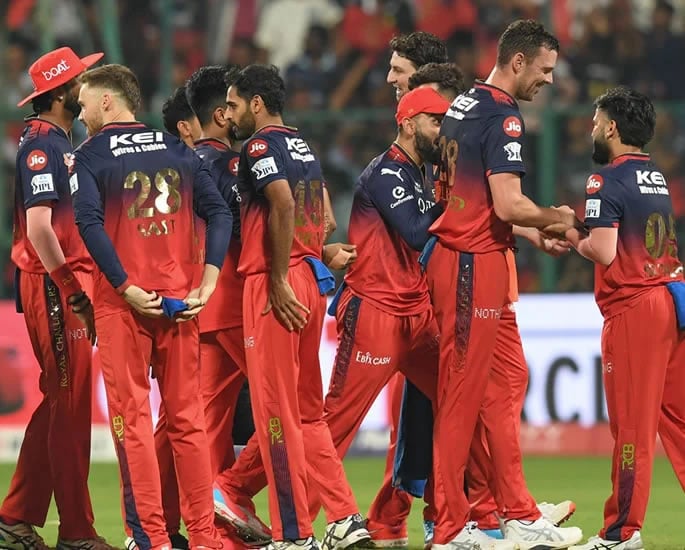
Pakistani players have not featured in the Indian Premier League since 2009 because of diplomatic tensions between India and Pakistan.
That absence now appears to be shaping decisions beyond India’s borders.
Four of The Hundred’s eight franchises – Manchester Super Giants, MI London, Southern Brave and Sunrisers Leeds – are at least part-owned by companies that control IPL teams.
A senior ECB official indicated to an agent that interest in his Pakistan players would be limited to sides not linked to the IPL.
Another agent described the situation as “an unwritten rule” across T20 leagues with Indian investment.
James Sheridan, deputy chair of Manchester Super Giants, rejected any suggestion of political considerations:
“The only conversations we’ve had is to pick the two best squads to give us the best possible chance of winning the two competitions.”
An ECB spokesperson emphasised inclusivity: “The Hundred welcomes men’s and women’s players from all over the world and we would expect the eight teams to reflect that.
“Almost 1,000 cricketers from 18 nations have registered for The Hundred auction, with representation on the longlist of over 50 players respectively from Australia, South Africa, New Zealand, Pakistan and West Indies.”
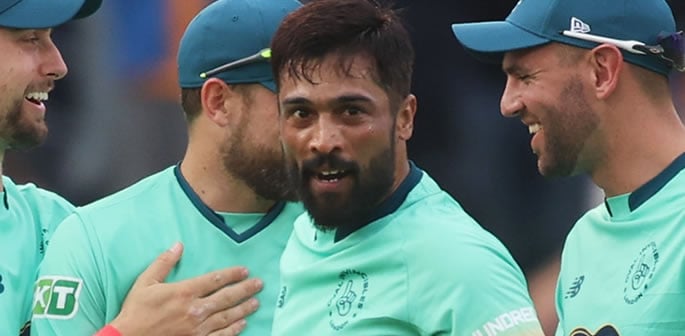
Two Pakistan internationals, Mohammad Amir and Imad Wasim, featured in the 2025 edition. It was the final edition before new investors took control.
Others, including Shaheen Afridi, Shadab Khan and Haris Rauf, have appeared in previous seasons of the men’s competition.
No Pakistan players have featured in the women’s Hundred.
Pakistan’s men are sixth in the International Cricket Council’s T20 rankings. The women’s team sit eighth.
The men’s side are scheduled to play a Test series in the West Indies during this year’s Hundred. However, white-ball specialists would remain available for franchise duty.
Availability has historically been complicated by the Pakistan Cricket Board’s handling of No-Objection Certificates (NOCs).
The PCB has withdrawn NOCs at short notice in the past.
However, there are seven leading players participating in Australia’s Big Bash League.
The pattern extends beyond England.
No Pakistan players have featured in South Africa’s SA20, launched in 2023. All six teams are owned by IPL franchise groups, including the four now involved in The Hundred.
In the UAE’s ILT20, franchises controlled by the owners of MI London and Southern Brave have not signed a Pakistan player across four seasons.
They have, however, recruited cricketers from 15 other nationalities. By contrast, American-owned ILT20 side Desert Vipers have signed eight Pakistan players in the same period.
In January, IPL side Kolkata Knight Riders released Bangladeshi bowler Mustafizur Rahman after being instructed to do so by India’s Board of Control for Cricket. No official reason was given.
The decision came amid strained political tensions between India and Bangladesh.
Taken together, these examples suggest that geopolitics can intersect with franchise recruitment, even when competitions operate outside India.
Equality and Community Impact
The ECB sold its 49% stakes in each Hundred franchise last year, raising £500 million in private investment.
The funds have since been distributed to counties and the grassroots game. Host counties retained or sold part of their remaining 51%.
The ECB retains overall control of the competition. A new board, featuring team representatives, has been formed to shape its strategic direction.
The tournament also falls under the independent cricket regulator, established following the 2023 Equity in Cricket report. That report found discrimination to be “widespread” within the English game.
Against that backdrop, scrutiny of selection practices is inevitable.
Tom Moffat, chief executive of the World Cricketers’ Association, said:
“Every player should have the right to fair and equal opportunity.
“While employers have autonomy in recruitment, those decisions should always align with principles of fairness, equality and respect.”
The County Cricket Members’ Group urged accountability:
“We expect the relevant county boards and the ECB to hold private partners accountable if there is any reason to believe the non-selection of Pakistan players was a blanket decision based on nationality.”
The debate resonates beyond boardrooms.
According to census data, 12% of Greater Manchester’s population and 4% in Leeds identify as Pakistani. Fans in Manchester, Leeds and London may see no Pakistan representation in their local teams this season.
In 2018, the ECB launched its South Asian Action Plan, led by Vikram Banerjee, now managing director of The Hundred.
The initiative aimed to increase engagement within South Asian communities across 10 core cities. Representation on the field has been a visible part of that outreach.
The ECB chief executive, Richard Gould, said last year he expected “players from all nations to be selected for all teams” in The Hundred and warned “clear anti-discrimination policies” were in place.
The ECB has warned the eight sides that action would be taken if there is any evidence of discrimination, including ignoring players based on nationality.
A statement by The Hundred and its eight teams read:
“The England and Wales Cricket Board and all eight of The Hundred team franchises reaffirm their commitment to ensuring The Hundred continues to be a competition that is inclusive, welcoming and open to all.
“The Hundred was established to reach new audiences, grow the game of cricket and ensure that everyone, regardless of their ethnicity, gender, faith, nationality or other, can feel they belong in our sport.
“This has been a guiding principle from the outset and remains at the heart of everything we do.”
“As the governing body responsible for running the tournament, the ECB is committed to ensuring there is no place for discrimination, and has regulations in place to take robust action to tackle any such conduct.
“Players must not be excluded on the grounds of their nationality.
“All eight teams commit to selection being based solely on cricketing performance, availability, and the needs of each team.
“This reflects the broader commitment of the ECB to make cricket the most inclusive sport, creating opportunities, breaking down barriers and ensuring that players from all backgrounds have a fair and equal pathway to the top of the game.
“We want The Hundred to feature the very best talent from across the world, and will continue working proactively to ensure that the competition is a benchmark for inclusivity.”
Franchise cricket has become a global network, with IPL ownership groups extending influence across continents. Financial investment has strengthened competitions, but it has also concentrated power.
The Hundred remains a young tournament navigating rapid change. Its credibility rests on transparent governance and trust among players and supporters.
But if Pakistan players are overlooked purely on cricketing grounds, franchises will argue that autonomy must be respected.
If nationality becomes a determining factor, the implications extend far wider.
The question confronting The Hundred is straightforward but significant. Can a competition rooted in inclusivity maintain that principle amid shifting ownership structures and geopolitical realities?
Pakistani cricketers have a proven pedigree in T20 cricket and have featured in previous editions of the tournament.
Yet patterns across multiple leagues suggest nationality may influence recruitment where IPL-linked ownership is involved.
The ECB insists anti-discrimination safeguards remain in place and that the auction pool is globally representative.
Ultimately, the integrity of The Hundred will be judged by its actions rather than assurances.
For players, agents and supporters, the expectation is clear. Selection should reflect performance and availability, not passport.
Whether that standard is upheld in the upcoming auction will shape perceptions of fairness in English cricket’s newest showpiece.