

















































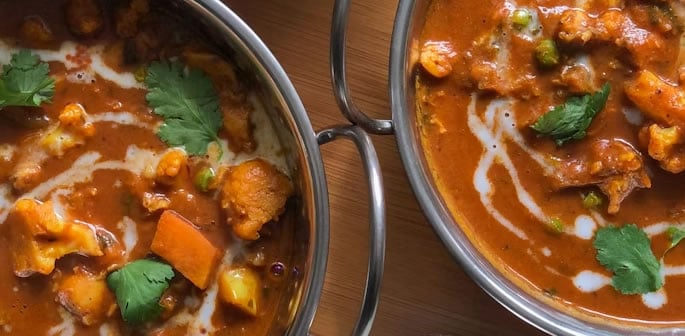
the array and vibrancy of spices and colour it brings
For millions in the UK, delicious curries are a takeaway go-to.
Almost nine in ten people eat it regularly, with many ordering it several times a month, often without considering how dramatically nutritional value can vary from dish to dish.
Crowd-pleasers such as chicken tikka masala, butter chicken, and korma dominate menus, yet their popularity has quietly shaped the idea that all curries are equally indulgent.
That assumption is misleading.
With around 8,000 Indian restaurants and a further 2,000 Thai takeaways across the UK, curry encompasses everything from vegetable-led stews to fat-heavy comfort dishes.
Some options are undeniably calorie-dense, high in saturated fat and salt. Others, when prepared traditionally, are built on spices, vegetables, pulses, and lean protein.
The difference lies in how curries are cooked, not how spicy they are. Once you know what to look for, ordering a healthier curry becomes straightforward.
Why Indian Cuisine Can Be One of the Healthiest Takeaway Choices
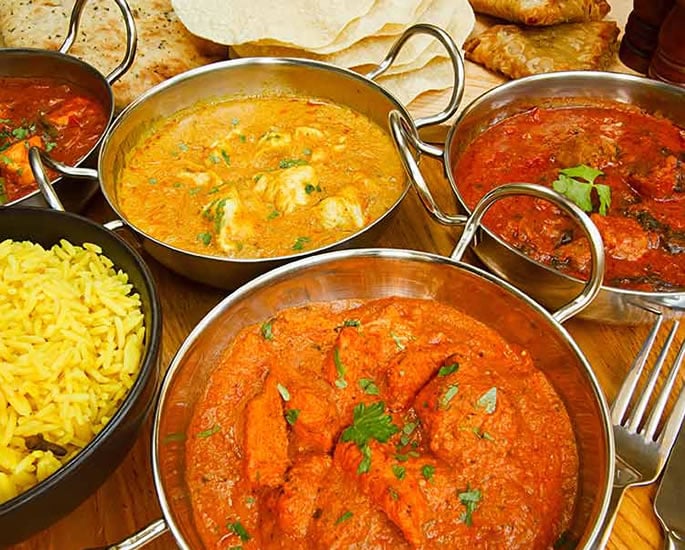
Indian cuisine’s reputation for richness often obscures how it is traditionally structured.
At its core are vegetables, lentils, legumes, spices, and restrained cooking methods designed to extract flavour without excess.
That balance is why many nutritionists continue to rate Indian food among the healthier takeaway options when chosen carefully.
Vince Kelly, a culinary lecturer at Capital City College and a member of Culinary Medicine UK, told the Daily Mail he regards Indian food as among the healthiest takeaway choices:
“These dishes are rich in spices with anti-inflammatory properties, as well as vegetables, pulses and lean proteins such as chicken.”
Kelly also highlights the sensory and nutritional breadth of the cuisine:
“One of the best things about an Indian takeaway is the array and vibrancy of spices and colour it brings to the plate.”
That variety plays a meaningful role in dietary diversity, as Kelly added:
“If you’ve ever heard of the ’30 different plants a week’ rule, that doesn’t just include fruit and vegetables but also spices – and having a portion of Indian food definitely contributes to the variety in our diet.”
Emily Lenoir, a Registered Associate Nutritionist (AfN) and Behaviour Change Coach at Voy, reinforces that point with scientific context.
She said: “Curcumin in turmeric may help reduce inflammation, ginger can support gut health and cardamom may aid blood sugar regulation.
“Together, these spices enrich meals and, when used regularly, contribute to long-term wellbeing.”
Lenoir also points to Indian cuisine’s reliance on plant-based staples.
“Equally important is Indian cuisine’s reliance on fresh vegetables, lentils, legumes and whole grains, providing fibre, plant-based protein and micronutrients such as iron, folate and zinc.”
The problem, particularly with takeaway food, is not the cuisine itself but how it is adapted.
Cream, ghee, coconut oil, and sugar are often used generously, pushing fat and calorie levels far beyond traditional norms. That makes informed ordering essential rather than optional.
Vegetable Curries
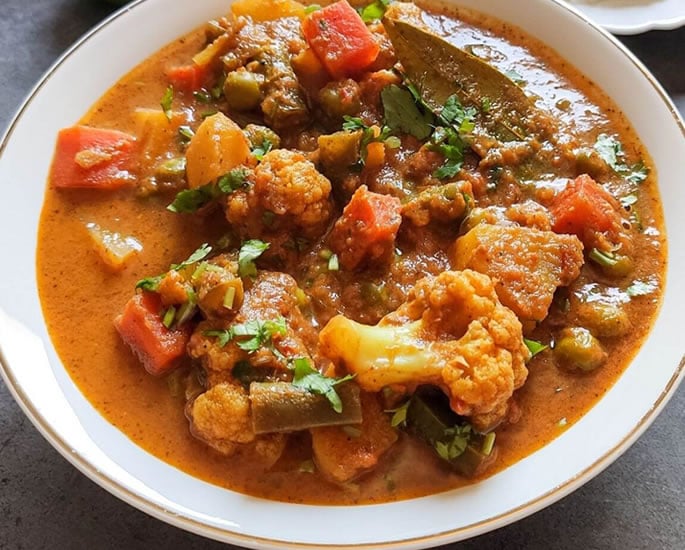
One of the easiest ways to make a takeaway curry healthier is to prioritise vegetables over meat.
That approach is not a modern concession but a reflection of how Indian food is traditionally cooked and eaten.
With an estimated 40% of India’s population following a vegetarian diet, vegetable-led dishes are not secondary options but central to the cuisine.
Vince Kelly encourages diners to look beyond familiar menu shorthand and focus on cooking method.
He said: “A baji – not to be mistaken for a deep-fried bhaji – is a sautéed or lightly stewed mix of vegetables cooked with spices rather than batter and oil.”
This distinction matters because it separates spice-driven cooking from oil-heavy preparation.
Kelly added:
“This gives you gut-boosting fibre, volume and micronutrients without the heavy calories of richer curries.”
Fibre not only supports digestion but also promotes satiety, making vegetable curries surprisingly filling despite their lighter profile.
Emily Lenoir points to tomato-based vegetable curries as particularly strong options.
She said: “Tomato-based curries like vegetable jalfrezi (300–450 calories per serving) are rich in antioxidants such as vitamin C.”
Tomato sauces also tend to rely less on cream, keeping saturated fat levels lower.
Mixed vegetable curries offer additional benefits as they offer a variety of nutrients that support immune and metabolic wellbeing.
When ordered without excessive oil, these dishes deliver flavour intensity without calorific excess, making them among the most balanced choices on the menu.
Daals

Daals sit at the intersection of tradition, nutrition, and practicality.
Made from lentils, peas, or beans simmered with spices, they form the backbone of everyday eating across the Indian subcontinent.
Unlike many takeaway curries, daals are water-based rather than cream-based, which keeps fat content naturally low.
Dal tadka, one of the most widely recognised versions, typically contains around 280 calories per serving.
Despite its simplicity, it is nutritionally dense, offering plant-based protein, complex carbohydrates, and significant fibre.
That combination supports steady energy release rather than blood sugar spikes.
Kelly is particularly vocal about the benefits of lentil-based dishes. He said: “Lentils provide plant protein plus soluble fibre that slows digestion, improves fullness and benefits cholesterol.”
These qualities make daal especially valuable for those looking to eat more sustainably without sacrificing satisfaction.
Beyond personal health, daals also score highly on environmental metrics.
When paired with roti instead of fried breads or large portions of white rice, daal becomes one of the most balanced meals a takeaway can offer.
Bhuna
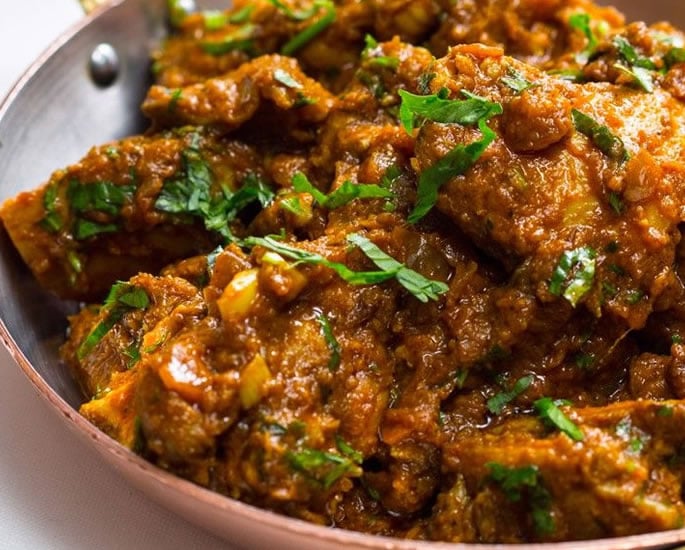
For those unwilling to give up meat entirely, bhuna represents the most sensible compromise.
It delivers depth and richness without relying on cream, butter, or excessive oil. Instead, flavour is developed through patience and reduction.
Emily Lenoir warns that popular creamy dishes often disguise their nutritional cost. She explained:
“Creamy curries like chicken korma or butter chicken can reach 800-900 calories per serving, mainly from cream, butter and nuts.”
She also highlighted lamb-based dishes, adding:
“Similarly, lamb rogan josh is flavourful but often higher in saturated fat when prepared with fattier cuts of meat.”
The most calorie-dense items on takeaway menus are those packed with cream, butter and sugar. This combines high levels of saturated fat with curry pastes that can also be rich in refined sugar.
This combination can contribute to weight gain and blood sugar instability when eaten regularly.
Bhuna avoids these pitfalls by design. Onions and tomatoes are cooked down slowly with spices, creating a thick, clinging sauce rather than a loose, oily gravy.
The dish is often finished in the oven, which intensifies the flavour without additional fat.
A chicken bhuna typically comes in at around 350 calories per portion, making it one of the leanest meat-based options available.
Saag Aloo
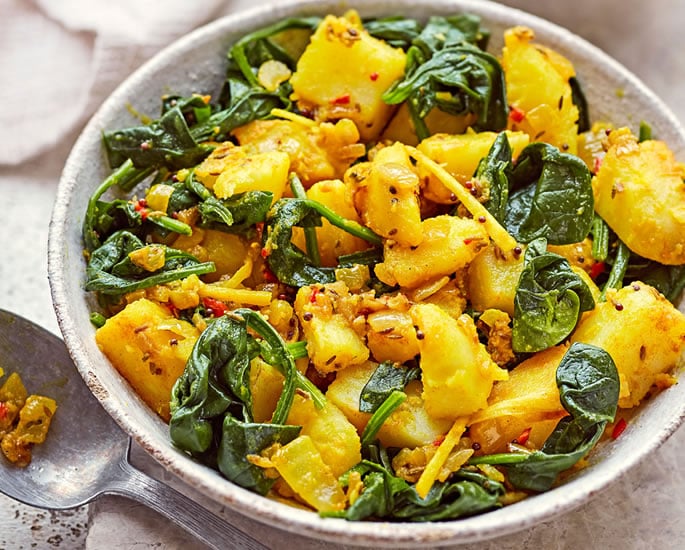
Saag aloo has earned its place as a dependable, healthier takeaway choice. Combining potatoes and spinach with aromatic spices, it delivers comfort without excess.
Unlike cream-based dishes, it relies on modest oil use and layered seasoning for depth.
The spice profile usually includes cumin, mustard seeds, asafoetida, garlic, and ginger.
These ingredients bring antioxidant and digestive benefits while keeping the dish fragrant rather than heavy. Spinach contributes iron and folate, while potatoes provide fibre and slow-release energy when cooked sensibly.
Kelly highlights this balance: “The leafy greens supply iron, folate and antioxidants while the fibre from both the spinach and potato moderates blood sugar absorption.
“It is flavour dense without being calorie dense.”
A typical takeaway portion of saag aloo contains no more than 350 calories. It works well as a main dish or as a shared side alongside daal or grilled meats, offering flexibility without nutritional compromise.
Which Curry to Avoid
Thai cuisine is often positioned as a healthier alternative to Indian takeaway, largely due to its use of herbs, spices, and fresh ingredients.
In many cases, that reputation is deserved.
However, coconut milk significantly alters the nutritional profile of certain dishes.
Kerry Beeson, a Nutritional Therapist from meal service Prep Kitchen, explains why coconut milk is nutritionally distinct.
She said: “It’s also rich in medium-chain fatty acids like lauric acid and caprylic acid, which are converted into ketones that the body can use for energy without affecting blood glucose.
“They also have antimicrobial and anti-inflammatory properties.”
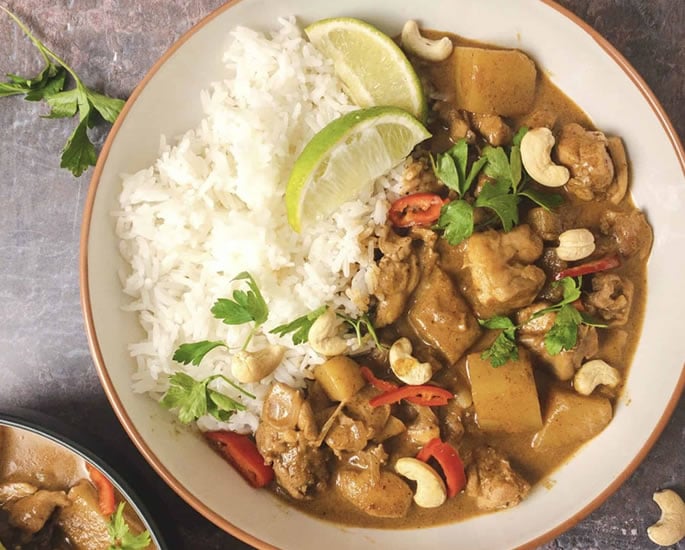
Despite these benefits, massaman curry remains one of the heaviest Thai options.
Beeson estimates that a typical serving contains around 540 calories and 20g of fat, largely due to coconut cream, potatoes, and peanuts. Vegetable content is often limited by comparison.
She said: “Whilst it’s full of Thai flavours, it’s one of the most calorific Thai curries due to its high fat and carb content, and often lowest in vegetables.”
The issue is compounded by accompaniments such as white rice, which significantly increases the calorie content without offering little in the way of nutritional value.
Massaman delivers comfort and richness rather than balance. It remains best enjoyed occasionally rather than as a default choice.
A healthier takeaway curry comes down to knowing what to look for.
Choosing tomato-based sauces, vegetable-led dishes, daals, bhunas, or saag aloo lets you enjoy the full depth of flavour without overloading on fat or calories.
Creamy, butter-heavy options are indulgent treats, not everyday choices.
With a little awareness, you can order confidently, enjoy your favourite dishes, and still keep your meal balanced – proving that Britain’s love for curry can be both delicious and sensible.