
















































“People walk with their chest out more when it’s a boy”
Within the Desi community, a baby’s gender has been seen as a significant issue of focus.
Historically, boys have been preferred, a preference shaped by concerns about inheritance, social status, and marriage practices.
Those from South Asian backgrounds, such as Pakistani, Indian, and Bengali, felt the consequences of this preference.
Socio-cultural pressure to produce more sons than daughters existed at one time and this was also a reality in the West.
In the Western world, attitudes towards gender have become more modern. Indeed, considerable steps have been taken to make it more egalitarian.
These efforts have also influenced the South Asian diaspora.
However, the question of a baby’s gender remains a prevalent conversation in both South Asia and the diaspora.
Join DESIblitz as we explore whether a baby’s gender still matters in Desi families.
Cultural Expectations
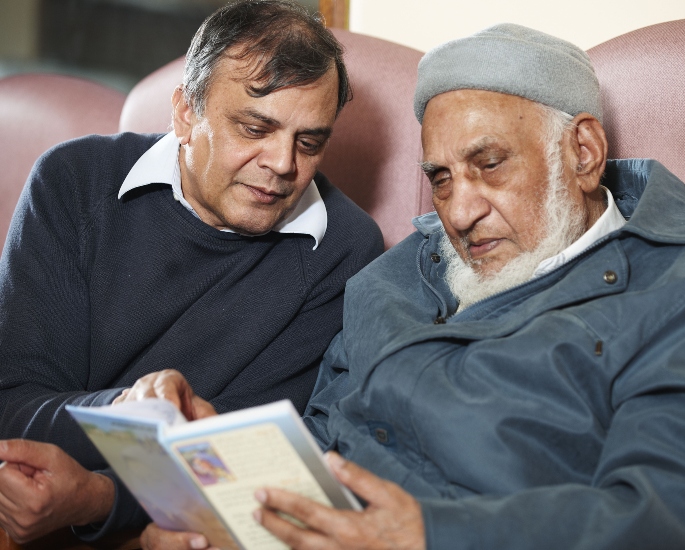
Traditionally, the son is expected to provide financial and emotional care for their parents, especially later in life.
Daughters have been seen as draining the family’s wealth through practices such as dowries.
There is also the viewpoint that any money a woman makes will not stay within her family but add to the wealth of her in-laws.
People have viewed sons as protectors of the family. In contrast, they have perceived daughters as needing protection, making them a burden on the household.
Cultural traditions also favour sons, and older sons are given special treatment. For example, they perform funeral rites and provide old-age support for parents.
This centrality of eldest sons means that, traditionally, parents give them more significant investments.
A 2022 Pew opinion poll showed strong gender norms in India for these familial roles, though it did not specify birth order.
Sixty-three per cent of respondents said sons should be primarily responsible for parents’ funeral rites, while only 1% said daughters should.
The remaining 35% said that the responsibility should be shared.
Most thought caring for parents should be shared between sons and daughters. Yet a significant minority, 39%, said sons bear this responsibility, compared to only 2% who said daughters.
Although these traditions remain prevalent within India, they have become diluted within the diaspora, such as within Britain.
Shabana, a 24-year-old British Asian, said: “I don’t think it is much of a thing in younger generations.
“For my grandparents, yes, they were hoping the first-born child would be a boy.”
“I think it varies from family to family. Some have irrational assumptions that boys will take care of their parents in old age.
“From what I have seen, it is usually the daughters and daughter-in-laws taking care of them.”
Twenty-seven-year-old British Pakistani Mobeen* stated:
“Some men can be foolish and say they need a boy to carry on the family name. But generally, I feel like things have changed in the UK; those people are within the minority.”
The Influence of Patriarchal Structures

Patriarchal structures dominate both in the Eastern and Western worlds.
A patriarchal structure can be defined as “a social system where men control a disproportionately large share of social, economic, political, and religious power”.
Therefore, a baby’s gender does determine its place within society.
However, how patriarchy and its consequences manifest are different due to a difference in culture and tradition.
Unlike Western societies, which promote “individualism”, South Asian cultures take a “collectivistic” approach.
It promotes interdependence, social cohesion and cooperation, with the family forming the focal point of this social structure.
Traditional families in India endorse traditional gender role preferences. Women’s roles are focused on housework, caring and child-rearing, while men are seen as the breadwinners and heads of the family.
However, though India is still patriarchal, a rise in the proportion of female-headed households can be seen. Thus resulting in some change.
Nevertheless, women also have been victims of several social evils, such as child marriage, female infanticide and rape.
Moreover, they are paid half the money their male counterparts earn for the same job and do more than half of the total agricultural work.
From the moment a girl is born in India, she is already at a disadvantage to her male counterparts. Therefore, the view is a baby girl will be less beneficial to the family.
The socio-cultural environment in the UK is different to that of South Asia. Nevertheless, there are still those who feel that the patriarchal society and cultural norms add social pressures and put them at a disadvantage.
Aparna*, a 35-year-old British Bengali woman, revealed:
“I remember when I was pregnant, all everyone around me could think of was if it was going to be a boy or a girl.
“Boys are a favour, girls a blessing. But a favour takes you further in life than a blessing.”
“Boys are allowed to just exist, but a girl’s existence has to carry some form of high contributing factor for her existence to be considered valuable.
“Many pretend because we’re in a ‘liberal’ society, because honesty is not the best policy, and people say they are happy either way.
“Deep inside, they’re wishing for a boy, and it shows in their emotions and narratives once a baby is born.”
In India, the legal framework and policies are explicitly gender biased. But in the UK, there is a focus on gender equality.
Nevertheless, the value placed on males still finds its way into Desi families and communities in South Asia and the diaspora.
Access to Education Impacted by Gender
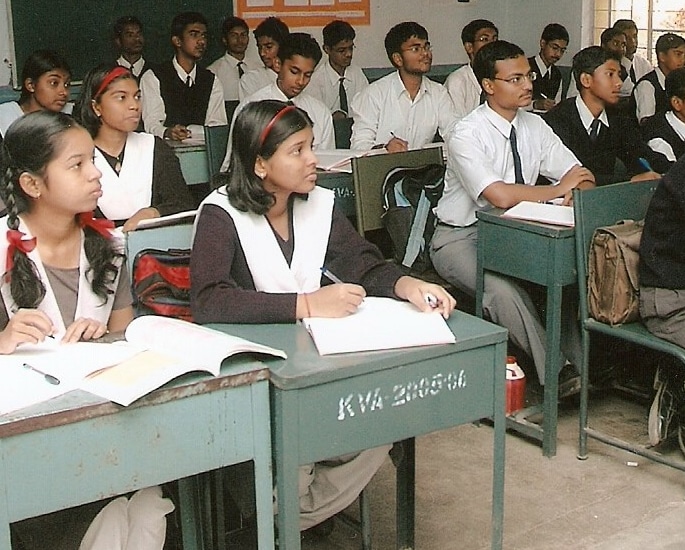
Another factor that can shape preferences for a baby boy over a girl is considerations around future educational access. This is especially true in South Asian countries.
For example, in India, families and communities can favour boys over girls when it comes to receiving an education, further disadvantaging girls.
This is improving with the government’s laws and initiatives to improve women’s education levels. For example, there are programmes such as ‘Beti Bachao, Beti Padao,’ which translates to ‘Save Girls, Educate Girls.’
As of 2024, India’s female literacy rate is now over 80% in urban areas and over 60% in rural areas.
These initiatives have raised girls’ status in India and made them less of a ‘burden’ on their families.
Thus, these initiatives give them more opportunities and independence and help make Desi families more accepting of having baby girls.
This issue is not as prevalent for women in the UK, Canada, and other diasporas.
For example, while Desi women are one of the most socially excluded groups in the UK, their numbers at university have increased rapidly in recent years.
Furthermore, South Asians are among the most highly educated ethnic groups in the UK.
In the UK, the Equality Act 2010 “legally protects people from discrimination in the workplace and wider society.”
Similarly, Canada’s Employment Equity Act and the Pay Equity Act ensure a longstanding commitment to gender equality.
Therefore, educational concerns do not have as much of an influence on shaping preferences for a baby’s gender.
Using Sex Selection to Guarantee a Baby Boy

Globally, 23.1 million female births have been documented as missing. This resulted in an imbalanced sex ratio at birth between the late 1990s and 2017.
India accounts for almost half of this missing women population.
The preference for sons has been a heavily documented issue in India. Sex selection has been one of the methods used to guarantee a baby boy.
As of 2023, India has one of the most skewed sex ratios in the world, with approximately 108 men for every 100 women.
The UN Population Fund estimates that India misses out on nearly 400,000 female births a year due to sex selection.
The Indian government has made efforts to end sex-selective abortions by making it illegal to reveal the sex of a foetus.
However, this practice has persisted and formed an unregulated market of in vitro fertilisation clinics. Such clinics offer a new avenue to guarantee a baby’s gender.
To curb this, the Indian government passed the Assisted Reproductive Technology (Regulation) Act in 2021. The aim was to regulate, supervise, and ensure good ethical practices in the rapidly evolving field of assisted reproduction.
Some see this as an infringement of reproductive rights, while others see it as a step forward in the fight for gender equality.
Gender selection is illegal in the UK. The procedure is only available if you have a severe genetic condition that you risk passing on to your children and only affects a specific gender.
Furthermore, there is less motivation to resort to drastic measures, such as sex selection, because there are no such overt discriminatory ideals against women.
Regardless, there is still an unspoken preference for sons in the Desi community.
Puneet, a 37-year-old British Punjabi woman, asserted:
“People are less obvious about it now. You see it more when a baby is born, and the elders want to call and tell everyone.
“People walk with their chest out more when it’s a boy.”
These preferences are reinforced by the elders in the family rather than the younger members.
In contrast, the younger generations are much less concerned about their child’s gender due to greater gender equality.
For example, Shabana, a 34-year-old British Kashmiri, said:
“I don’t think it is so much of a thing in younger generations.
“My grandparents, yes, I’m the firstborn, and they hoped I’d be a boy.
“My grandad even had boys’ names picked out.”
Inheritance Rights and Gender Inequality

South Asian societies face a deep-rooted issue that laws alone cannot fix. This issue reflects ongoing tensions in achieving equality in the distribution of inheritance between men and women.
Between 1976 and 1994, five states in India equalised inheritance rights for women, and in 2005, federal legislation imposed equal rights across all states.
Studies have found that increased inheritance rights have positively impacted children’s health, increased education levels and have helped better marital outcomes.
It is unclear whether a change in law has affected a household’s choice of how much they invest in women.
Culturally, there is still discrimination against women holding property, which has reinforced the preference for a son. Thus resulting in a higher female child mortality rate due to the perceived costs of raising a girl.
Whereas in India, these laws are blatant discrimination against women, in the UK, this is more of an unspoken cultural practice.
In families within the South Asian diaspora, people often assume that the son(s) will inherit the parents’ assets, especially when there is no will or the parents have lived with the son.
The son becomes entitled to their parents’ assets, and the daughters get nothing.
Although this is not written in law, it is still an assumed practice that continues in society’s backgrounds.
Is Change Taking Place?

Whilst the focus placed on a baby’s gender in Desi families has changed over time, it remains a significant issue in the community.
Cultural and social pressures, as well as gender norms, remain a factor in how families view a boy versus a girl.
This is especially prevalent in India, where men are often seen as carriers of the family name, heirs to wealth, and breadwinners.
These attitudes persist in an environment that has seen increased freedom and education for women in South Asia.
However, changes point towards a positive shift, where these rigid gender preferences are becoming diluted in more urban areas.
With increased female education, work opportunities and inheritance rights, daughters are increasingly considered equally valuable family members.
Some Desi families in the UK still adhere to the cultural traditions of their countries of origin. However, there is a noticeable shift towards more egalitarian views on gender.
The UK’s legal protections and access to education play a role in challenging these gender biases in the Desi community.
However, a baby’s gender has played a significant role in Desi families for centuries, and biases will not be eradicated overnight.
Some in the UK still prefer sons, believing they will provide financial security, care for parents in old age, and carry on the family name.
Nevertheless, these beliefs have become diluted among second and third-generation British South Asians.
As these younger generations grow up in an environment where gender equality is increasingly celebrated, there is hope for a time when a baby’s birth is met with equal joy regardless of gender.
Continued efforts are needed to challenge these preferences and ensure that children are equally valued in all aspects of society.