



















































A thriller sequel can raise the stakes through writing alone.
Vijay Salgaonkar has spent three films making evidence disappear. At the box office, he has done the opposite with Drishyam 3: The Conclusion.
The film has now passed Rs. 370 crore (£28.7 million) net on Day 25, on a reported budget of Rs. 110 crore (£8.5 million).
Measured against what it cost to make, that is a return of more than 236%, and it is edging towards the top three most profitable Bollywood releases of 2026.
That ranking matters more than the headline total.
In a year dominated by war epics and sequels with nine-figure budgets, a plot-heavy thriller about a family, a missing body, and a very patient father is out-earning many of them where it counts: at the box office.
The question for producers is why suspense franchises keep doing this.
The Numbers Behind the Run
The scale of this run is easy to underestimate. The film took roughly Rs. 95 crore worldwide on its opening day, ahead of the opening-day figures of Jailer, Tiger 3 and Kantara: Chapter 1.
It then became Ajay Devgn’s first lead-role film to cross Rs. 300 crore India net, doing so in ten days.
That total overtook Tanhaji, which had been the benchmark for Devgn as a leading man for six years.
The run has held up since. By Day 18, the film stood at Rs. 548.25 crore (£42.5 million) worldwide gross, with international markets contributing around 23% of the business.
A few days later, trade tracking put the worldwide total at Rs. 431.02 crore (£33.4 million) India gross plus Rs. 129 crore (£10 million) overseas gross.
Even the Malayalam original, a strong earner in its own right, has been left behind.
That version ended its theatrical run with a worldwide box office of around Rs. 238-240 crore (£18.5 million), and the Hindi version has already surpassed it.
The film isn’t the biggest earner of 2026. Dhurandhar 2: The Revenge sits at the top with Rs. 1,149.30 crore (£89 million) net in India, and at the domestic level the film also trailed Border 2 for a time.
But absolute totals and profitability are different measures. This is where Drishyam 3’s story gets interesting.
Why Return on Investment tells a Different Story
A box office total says how many people bought tickets. Return on investment says how efficiently the money was turned into those tickets. The two diverge sharply for big-budget cinema.
A tentpole action film needs to recover costs that run well beyond the shoot: large-scale VFX, stunt choreography, international locations, star fees and a marketing campaign designed to saturate every platform.
To count as a hit, it has to earn multiples of an already enormous outlay. A film can gross Rs. 500 crore (£39 million) and still deliver a modest margin if it cost a fortune to build.
Drishyam 3 sits at the other end. A budget of Rs. 110 crore (£8.5 million) buys a very different kind of film: a controlled shoot, a small number of key locations, a tight cast and a script that does the heavy lifting.
When a film like that crosses Rs. 370 crore (£28 million) net, almost every extra rupee is margin. This is the core logic of the mid-budget thriller.
It doesn’t need to be the biggest film of the year to be one of the most profitable.
The Script is the Special Effect
Action extravaganzas sell spectacle, and spectacle is expensive. Suspense franchises sell tension, which is far cheaper to produce and, as it turns out, just as bankable.
Consider what the Drishyam franchise actually spends money on.
There are no collapsing skyscrapers or fleets of vehicles. The drama comes from a man’s quiet planning, a police investigation closing in, and an audience trying to work out what he knows that they don’t.
The central question, whether he can keep his family safe, is understood by anyone regardless of language or background. It also explains why the series travels so well.
Overseas audiences accounted for a notable share of this film’s earnings, and a story built on family stakes and a cat-and-mouse contest needs no cultural translation.
There is also a structural advantage in how thrillers are experienced.
A twist-driven film rewards word of mouth in a way spectacle doesn’t.
People will tell friends to see a thriller before the ending gets spoiled, which pushes audiences into cinemas early and pulls in groups who might otherwise wait for streaming.
For the family audience that powers much of Bollywood’s repeat business, that urgency is valuable.
The Franchise Factor
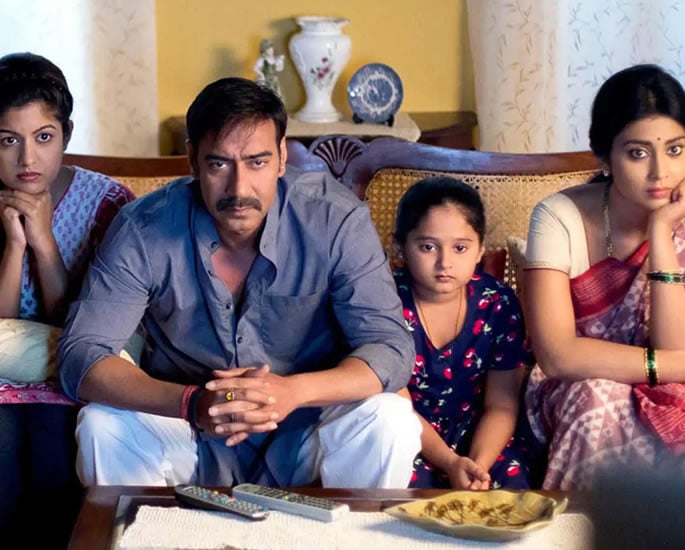
Drishyam 3 is also a sequel, and a franchise that has already earned trust takes much of the risk out of a release. Audiences arrived knowing what they were getting.
The combined domestic net of the three Hindi Drishyam films has crossed Rs. 500 crore (£39 million), putting the series alongside Devgn’s Singham universe.
That is what makes suspense sequels such efficient bets. Each instalment builds an audience that is already invested in a specific character and a specific puzzle.
Marketing doesn’t need to explain the premise. It only needs to promise that the story will end properly.
The film leaned into that with its billing as the conclusion and a release date that echoes the franchise’s own plot, with the team encouraging fans to mark October 2 as “Drishyam Day”.
Action sequels can rely on familiarity too, but they have to keep topping the previous film’s scale, and that pushes budgets up with every instalment.
A thriller sequel can raise the stakes through writing alone. The budget doesn’t have to climb in step with the ambition.
Where the Model has Limits
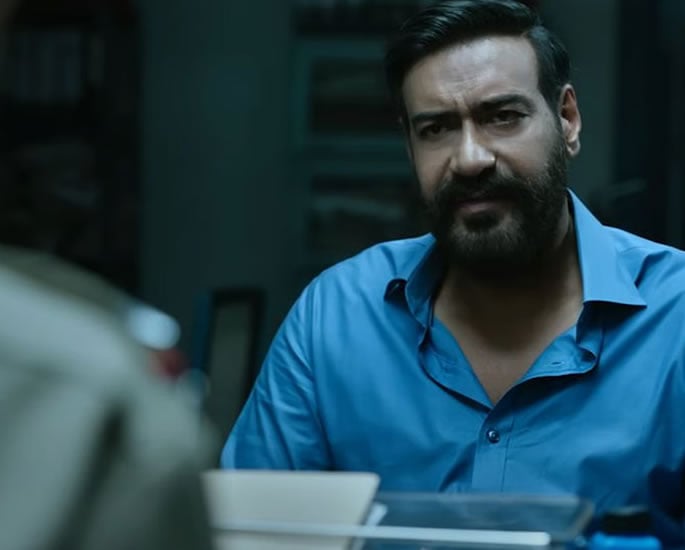
None of this means big-budget cinema is a bad bet. Spectacle films can be enormous earners, and the year’s leaders show that a hit at that scale can dwarf anything a mid-budget film produces in absolute terms.
When a tentpole works, it works spectacularly, and it can move a studio’s whole year.
The difference is the shape of the risk. A tentpole is a high-variance wager: it needs a huge audience to clear its costs, and a weak opening can be very hard to recover from.
A mid-budget thriller is a lower-variance one. It can afford to open modestly and build, because its break-even point is much lower.
Drishyam 3 also benefited from timing. Its run was front-loaded, with the opening week accounting for roughly 70% of its India net through Day 18, and collections have slowed as the weeks have gone on.
One day in its third week brought in just Rs. 2.65 crore (£205,000) India net, with a Dussehra-driven rise the day before.
Even so, the film faces no major Hindi release until Ramayana on November 5, which gives it a clear window to keep adding to a total that has already been very profitable.
What the Industry should take From It

The lesson isn’t that studios should stop making large films. It is that the economics of storytelling reward discipline.
Producers who put their money into script development, strong casting and a clear emotional hook can generate returns that tentpoles struggle to match.
For audiences, this is encouraging. The same trade tracking that celebrates this film’s numbers also shows that people are willing to turn out in force for a patient, dialogue-heavy thriller with no spectacle to speak of.
Suspense, it turns out, is a premium product at a mid-range price.
There is already talk of a fourth film. Devgn has called this the end of the franchise but added a teasing “for now”, so the door isn’t closed.
If the series does return, producers will have good reason to resist the temptation to inflate it.
The formula that earned a return above 236% was about knowing exactly what the audience wanted to find out, and making them wait for it.