















































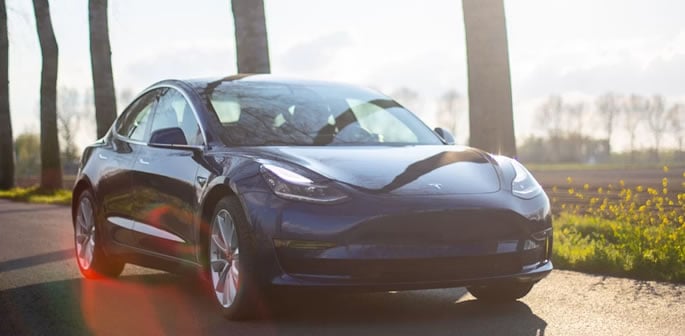
"we are at a tipping point of buying an EV over a petrol car."
Electric cars are no longer a niche choice for early adopters. In the UK, they are becoming a mainstream option driven by falling running costs, improving charging networks and stronger consumer choice.
In May 2026, the UK’s new car market recorded its strongest performance since before the pandemic.
Battery electric vehicles accounted for 27.3% of new registrations, according to the Society of Motor Manufacturers and Traders (SMMT).
EV registrations rose by 34.2%, reflecting stronger demand and wider availability.
Industry experts say the shift is already happening.
The key question for drivers is no longer whether EVs work, but whether they now make more financial sense than petrol cars.
Are Electric Cars Now Cheaper to Run?
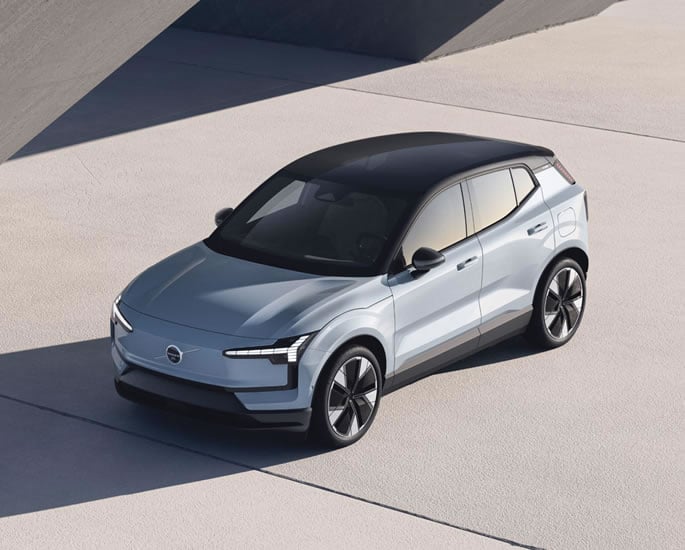
For many drivers, the biggest change is cost. Electric vehicles are increasingly cheaper to run than petrol or diesel alternatives, particularly for those who can charge at home.
A petrol car typically costs around 27p per mile to fuel at current UK prices. An electric vehicle charged at home can cost as little as 2p per mile using off-peak tariffs.
Even on standard domestic electricity rates, the annual difference is significant.
A driver covering around 6,200 miles a year may spend roughly £450 on electricity in an EV. The equivalent petrol cost can exceed £1,200, based on average UK fuel prices.
Nat Barnes, head of PR at smart home charging company Ohme, said:
“We have probably been there for about six months now to be honest.”
Dale Lewington, director of commercial at charge point operator Source, said:
“I think we are at a tipping point of buying an EV over a petrol car. The recent fuel price volatility has helped with that.
“The reliability is better, the cost is coming down and there is an increasingly good second-hand market for EVs.”
Maintenance costs also favour electric vehicles.
EVs have fewer moving parts than combustion engines, meaning no oil changes, timing belts or exhaust systems. Industry studies consistently show lower servicing costs over the lifetime of the vehicle.
Motoring journalist Shahzad Sheikh, known online as Brown Car Guy, told DESIblitz:
“If you can install a charger at home, particularly a smart charger taking advantage of lower-rate tariffs, and your daily mileage is well within the EV’s range, you’ll save well over 70% of your typical annual fuel costs.”
The used EV market is also expanding. SMMT data shows rising demand for second-hand electric cars, improving affordability and reducing one of the biggest historical barriers to entry.
However, upfront price remains a key factor.
While EV costs have fallen, some models still carry a premium compared with petrol equivalents, depending on segment and manufacturer.
Is Charging still the Biggest Barrier?
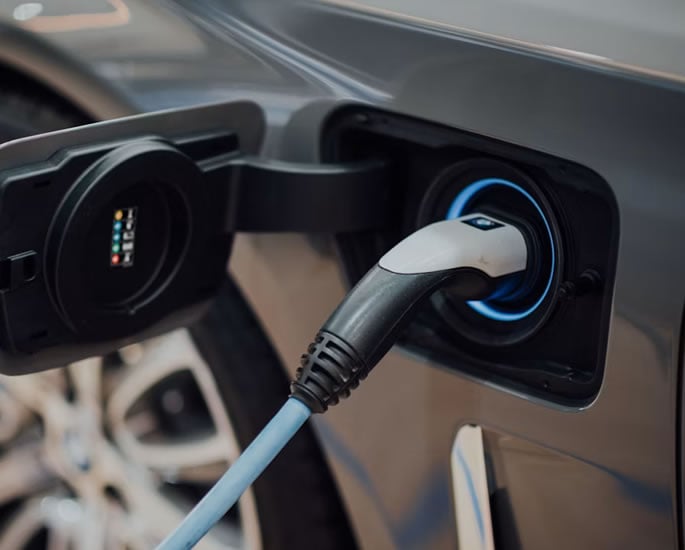
Charging remains the most important factor shaping EV adoption in the UK. The gap between drivers with home charging and those without is still significant.
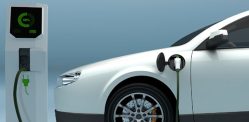
Drivers with off-street parking benefit most. Installing a home charger allows overnight charging at lower electricity rates. This can reduce running costs to levels significantly below petrol or diesel equivalents.
Public charging is improving quickly, but it remains more expensive. Ultra-rapid chargers on motorways and service stations can cost around 75p per kilowatt hour.
At that level, running costs can approach those of petrol vehicles.
This creates what industry experts describe as a “two-tier system” for EV ownership.
Barnes said: “There’s no doubt it has been a ‘have and have-not’ situation. If you don’t have off-street parking it will cost you more.
“However, it’s worth noting one thing: the price of petrol is only going to go up.”
Lewington added: “It is still a big difference, but we are working to bring down the price of ultra-rapid chargers.
“There are various levers the government can pull on this. VAT, for example. Currently, public chargers are taking 15% VAT, and changing that could make a huge difference.”
The UK charging network has expanded rapidly.
Tens of thousands of public charge points are now available across the country, with continued investment from both private operators and government-backed schemes.
But Shahzad said progress is not fast enough:
“While we’ve seen more charging facilities available in cities, and these have improved in terms of accessibility and charging speeds, they are still not enough, and wouldn’t be able to cope with a sudden surge in demand, and we’d see queues of EVs waiting to charge.
“And if you want to do longer trips, this proves particularly difficult and time-consuming.
“You often find that public charges are not working.”
Range anxiety is also declining.
Many modern EVs now offer 200 to 350 miles of real-world range, which is well above the average daily driving distance in the UK.
Should you Buy an Electric Car in 2026?
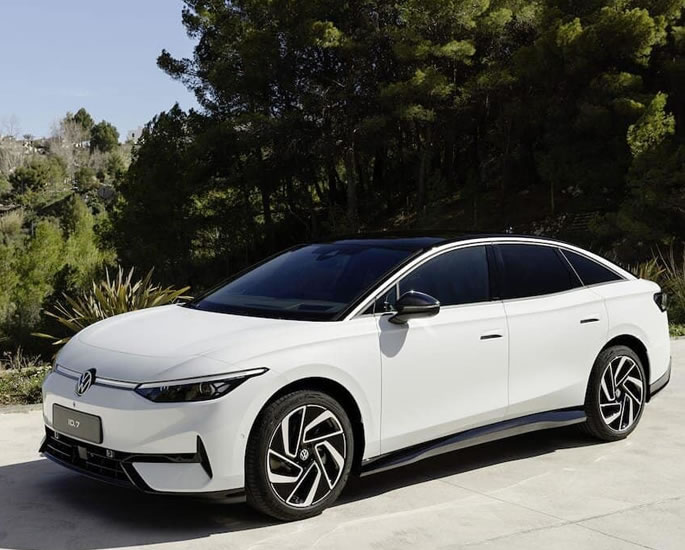
For many UK drivers, the financial argument for electric cars is now stronger than ever. However, the decision still depends heavily on individual circumstances.
EVs are most cost-effective for drivers who can charge at home, commute regularly and keep their vehicle for several years.
In these cases, lower running costs and reduced maintenance often outweigh higher upfront prices.
The market is also becoming more competitive. Manufacturers across Europe and China are driving down prices and increasing choice, particularly in the small SUV and hatchback segments.
Battery technology has improved significantly. Most manufacturers now offer warranties of around eight years.
Real-world data suggests modern EV batteries retain the majority of their capacity well beyond 100,000 miles, although performance varies by model and usage.
However, EVs are not yet ideal for everyone.
Drivers without home charging, those in rural areas with limited infrastructure, or those who frequently travel long distances may still find petrol or hybrid vehicles more practical.
Depreciation also remains a consideration. While the used EV market is strengthening, resale values vary widely depending on brand, battery health and model demand.
Despite these limitations, the direction of travel is clear.
The UK now has more than two million registered electric vehicles, and EVs continue to grow as a share of new car sales.
Shahzad stated that in 2026, EV sales are below the 33% target but as the transition continues, there will be fewer fuel-consuming cars on the market.
He added: “The choice of what’s still available as pure petrol and diesel cars is fast diminishing in the market.
“While you might still be able to buy hybrids, and more likely plug-in hybrids.
“By 2030, I suspect there will be very few pure petrol cars available (probably only sports and high-performance vehicles) and no diesels except for some commercial vehicles.”
Electric cars have moved beyond early adoption. In many cases, they now offer lower running costs, improved technology and increasing long-term value compared with petrol cars.
The biggest advantage is clear for drivers who can charge at home. For them, EV ownership is already financially compelling in many cases.
Challenges remain, particularly around public charging costs and access. These issues continue to create inequality in the EV market.
However, with falling prices, expanding infrastructure and rising fuel costs, the balance is shifting quickly.
For many UK drivers, the decision is no longer about whether electric cars are viable. It is about how soon they become the smarter financial choice.