

















































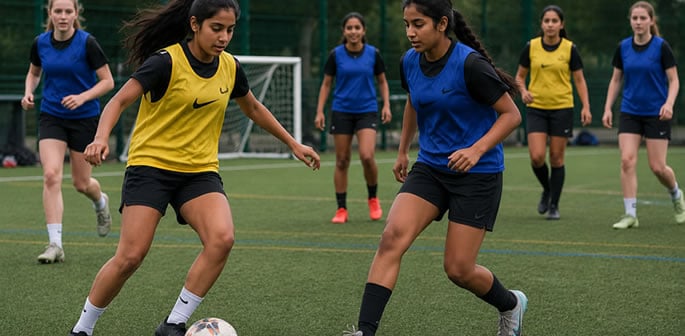
"Closing the gap means tackling inequalities"
Teenage girls in the UK take significantly less part in sport than boys. The gap varies by region, access to facilities and local infrastructure.
So what is the size of the gap in sport participation between girls and boys in the UK?
New research shows girls aged 11-18 play around 84 minutes less sport per week than boys on average.
In urban areas, the gap is around 100 minutes weekly. In rural areas, it is around 75 minutes weekly. In some constituencies, the gap exceeds two and a half hours.
The data shows a national imbalance in access to sport for teenage girls.
What is the Sport Participation Gap?

The sport participation gap between girls and boys in the UK is around 84 minutes per week nationally. Girls aged 11-18 take part in less sport than boys across almost all regions.
In urban areas, the gap is around 100 minutes per week. The gap in rural areas is around 75 minutes per week.
The widest gap exceeds two and a half hours per week in Birmingham Perry Barr. The smallest gap is close to zero in Cumbria.
The UK shows a highly uneven pattern of sport participation, with geography strongly shaping access to sport.
How does the Gap vary across the UK?

The gap varies significantly by region. The West Midlands and the north-east of England record the widest gaps. The south-east, north-west and Scotland record smaller gaps.
A mapping study by consultancy Public First covers all 650 UK constituencies.
It finds that participation levels differ strongly depending on local sports provision.
Areas with the lowest sports provision have a 46% wider gap than areas with the highest provision. Access to facilities strongly influences participation rates.
Urban areas show a larger gap than rural areas. Girls in cities take part in less sport than boys by a wider margin.
The pattern is consistent across most regions. Local infrastructure shapes participation levels.
Why are Fewer Girls taking Part in Sport?
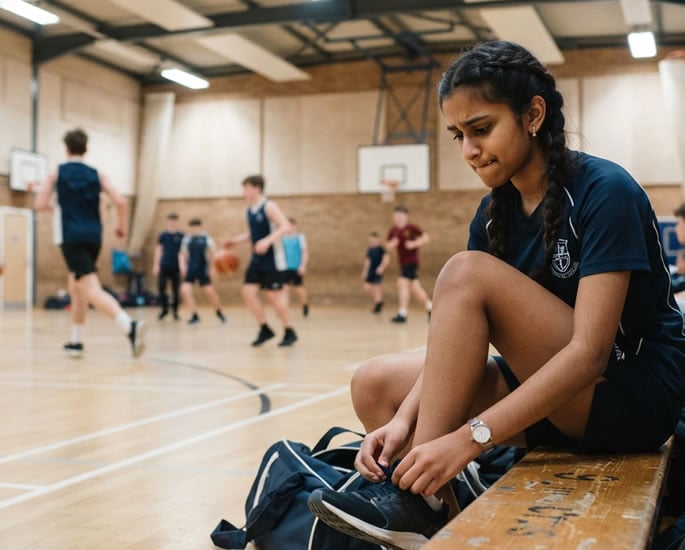
Several structural factors explain the gap.
Safety concerns reduce participation in some areas while limited access to facilities reduces opportunities.
Girls rely more on organised sport than boys. This includes school teams and sports clubs.
Where organised sport is limited, participation falls more sharply for girls. Informal sport is less accessible to girls in many areas.
Girls from ethnic minority backgrounds take part in less sport than other groups. This is more pronounced in urban areas.
The research was commissioned by broadcaster Sky. It builds on previous findings on gender gaps in sport participation.
What are the Economic and Social Impacts?

The participation gap has economic and health impacts. Increasing teenage girls’ participation could generate more than £640 million annually.
This includes £570 million in productivity gains. It also includes £73 million in NHS savings.
Girls currently miss around 1.4 hours of sport per week compared with boys. This gap is consistent across multiple studies.
Closing the gap would improve health outcomes. It would also improve long-term productivity.
Jonathan Licht, chief sports officer at Sky UK and Ireland, said access is uneven.
He said: “Every girl should have the opportunity to experience the confidence, friendships and sense of belonging that sport can bring.
“Yet too many girls are still missing out, and this research shows the barriers they face are not the same everywhere.
“Closing the gap means tackling inequalities in access and investment, starting in publicly funded settings where opportunity should be equal for every girl.
“Now is the moment to turn evidence into action and deliver lasting change for girls across the country.”
Sports Minister Stephanie Peacock said government investment is targeting inequality:
“Every girl deserves the chance to experience the benefits that sport can offer, but too many are still missing out.”
“That’s why the government is investing £400 million to improve facilities across the country, with a focus on underrepresented groups including women and girls, and over £1 billion to help schools deliver sport.”
The gap in sport participation between teenage girls and boys in the UK is consistent and measurable, but it varies significantly depending on location.
Some areas record only small differences, while others show substantial and persistent disparities.
The gap is smaller in areas with stronger sports provision and wider where facilities and organised opportunities are limited.
Urban areas tend to show larger differences than rural areas, reflecting uneven access to sport infrastructure across the country.
Safety, availability of facilities and reliance on structured sport all play a role in shaping participation levels. Girls are more dependent on organised opportunities such as school sport and clubs, which are not evenly distributed.
The findings show that the gap is primarily driven by unequal access to facilities and organised sport opportunities, rather than differences in interest or ability.
This points to a structural imbalance that continues to shape participation in teenage sport across the UK.