





































"Growing up, I never got to see myself on screen"
British Asian characters on television have evolved significantly over the past 60 years, shifting from limited stereotypes and supporting roles to complex, fully realised characters at the centre of major storylines.
This evolution reflects a wider change in how British Asian communities have been represented on screen.
Early portrayals often focused on narrow roles, such as shopkeepers, taxi drivers and immigrant figures, while modern television increasingly explores identity, family, ambition and the realities of British Asian life.
For decades, British Asian communities formed a growing and vital part of life in the UK, yet television representation often failed to reflect that reality.
Characters were frequently invisible or reduced to familiar stereotypes that revealed more about the limited perspectives behind the camera than the communities being portrayed.
That has changed, although progress has been uneven.
British Asian characters now occupy a wider range of roles across British television, but questions around authenticity, diversity and representation remain.
From early stereotypes to groundbreaking characters today, here is how British Asian representation on TV has evolved.
Caricatures and Stereotypes
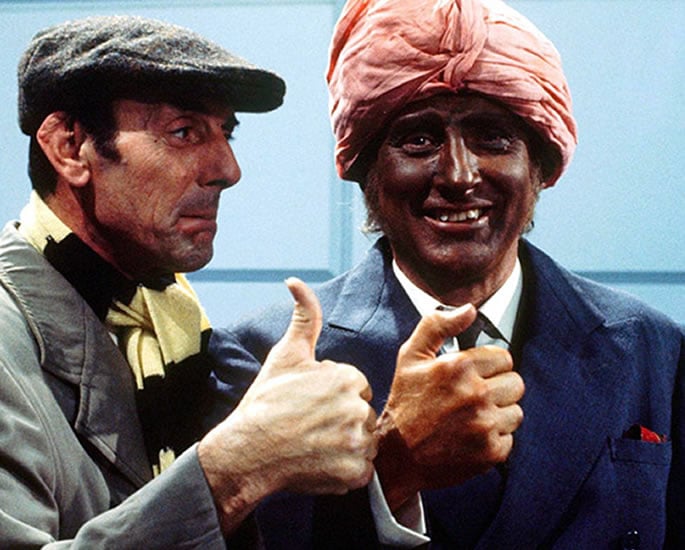
British Asian characters on television had a difficult beginning. During the late 1960s and 1970s, their presence on screen was often shaped by stereotypes rather than meaningful storytelling.
One of the most controversial examples was Curry & Chips, which aired in 1969 and used the experiences of South Asian immigrants as the basis for much of its humour.
Characters were presented through exaggerated accents and racial stereotypes, with comedy often built around the idea of Asian people in Britain being viewed as outsiders.
Rather than exploring the realities of migration, identity or community, these portrayals frequently reduced British Asians to the role of the “other”.
British Asian characters in mainstream television drama were also limited during this period.
When they did appear, they were often minor figures, such as shopkeepers or neighbours, included to represent diversity without being given developed personalities or significant storylines.
These early portrayals rarely allowed British Asian characters to have agency, complexity or stories of their own.
Instead, many reflected the limited perspectives of the television industry at the time, where authentic representation remained scarce.
For many years, British Asian characters existed on screen as background figures rather than central voices. They were present in British television, but rarely given the opportunity to tell their own stories.
When Comedy started to Fight Back
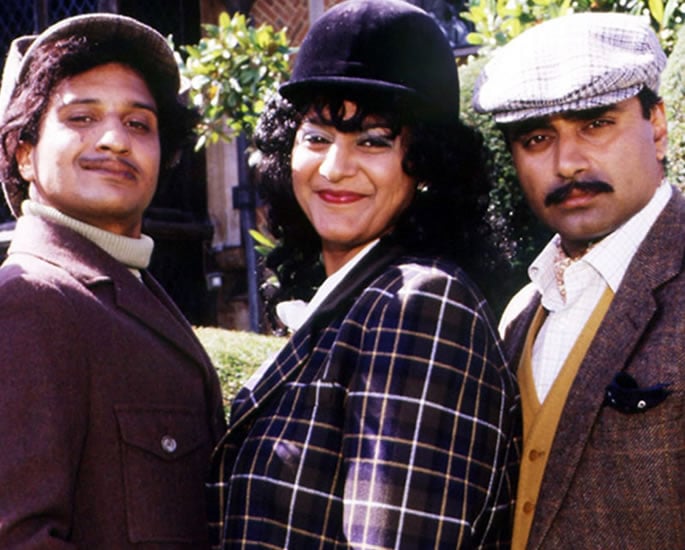
The shift for British Asian characters on television began in comedy, with a new generation of performers reclaiming their own stories and experiences.
A major turning point came with Goodness Gracious Me, which moved from BBC Radio 4 to television screens in 1998.
The show starred Sanjeev Bhaskar, Meera Syal, Kulvinder Ghir and Nina Wadia.
It blended classic British comedy with a distinctly South Asian perspective, taking familiar situations and turning stereotypes on their head through sharp satire.
The biggest difference was authorship.
British Asian characters were no longer being created primarily through an outside perspective. They were written, performed and shaped by people who understood the communities and experiences being represented.
The shopkeeper was no longer simply the subject of the joke. He could be the person delivering it.
British Asian comedy created space to explore shared experiences, including racism, the challenges of navigating British identity and the complexities of South Asian family life.
The representation was not without its limitations, but it marked an important change.
For the first time, British Asian characters on mainstream television were being presented through voices from within the community, making the stories more authentic and recognisable.
Entering the Mainstream
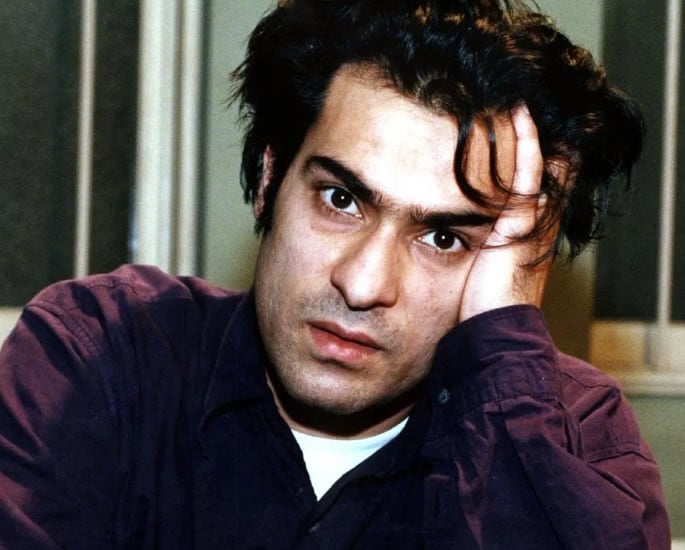
The 2000s brought British Asian characters further into mainstream television drama, but their introduction was often shaped by narrow and limiting storylines.
Following the events on September 11, 2001, wider political debates around terrorism, security and community relations influenced some portrayals of British Asian characters on screen.
As a result, certain storylines focused heavily on issues such as radicalisation, identity and cultural tension.
South Asian families also became more visible in British soap operas during this period.
However, many early storylines focused on generational conflict, traditions and family pressures, rather than the everyday experiences that shaped their characters as individuals.
This pattern could be seen in long-running soaps such as EastEnders and Coronation Street.
Sanjay Kapoor was introduced in 1993 as part of the Kapoor family, one of EastEnders‘ first South Asian families.
His early storylines included his arranged marriage to Gita and the challenges surrounding their business, including financial difficulties and personal betrayal.
In Coronation Street, Dev Alahan arrived in 1999 as a corner shop owner. While he later became involved in a wider range of family and personal storylines, his early portrayal was closely tied to his role as a shopkeeper and businessman.
These characters represented important progress in terms of visibility, but British Asian representation was still developing.
Too often, ethnicity remained the defining feature of a character rather than one part of a wider identity.
British Asian characters were increasingly present on television, but the next challenge was ensuring they were seen as complete individuals rather than cultural symbols.
Ackley Bridge takes Centre Stage
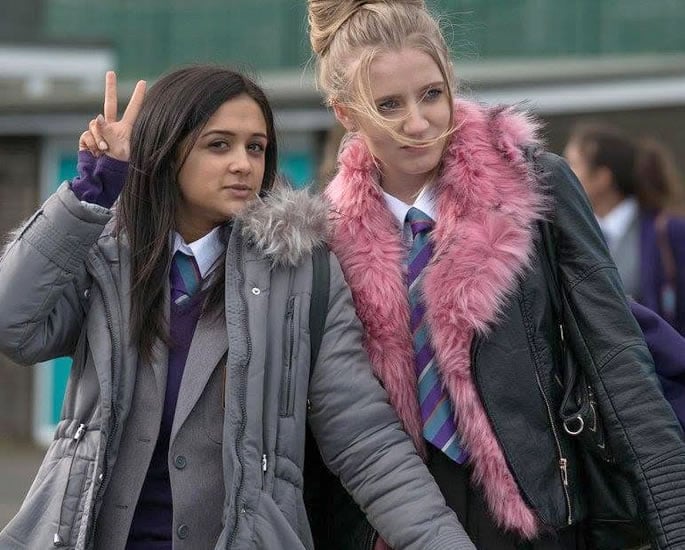
British Asian characters reached another important turning point in 2017 with Ackley Bridge, which placed a British Pakistani community at the centre of a mainstream television drama.
The series followed the merger of two schools in a diverse Yorkshire community, with British Asian characters driving many of the show’s central storylines.
Their relationships, ambitions and conflicts became the focus, rather than simply their cultural background.
Kaneez Paracha, played by Bhavna Limbachia, became one of the most layered British Asian characters on British television.
She was a devoted mother navigating the tension between protecting her family and allowing her children to make their own choices.
Kaneez was written with complexity and humanity. She was not reduced to a stereotype, a symbol of tradition or a cautionary figure, but presented as a person with conflicting emotions and personal struggles.
Characters like Nasreen Paracha showed that British Asian characters could also be rebellious, funny and deeply flawed, navigating identity, friendship, sexuality and first love without their ethnicity being used as the only source of conflict.
The importance of Ackley Bridge was that British Asian characters were allowed to exist as complete individuals. Their ethnicity shaped their experiences, but it was not the only thing that defined them.
Adeel Akhtar and his BAFTA Moment
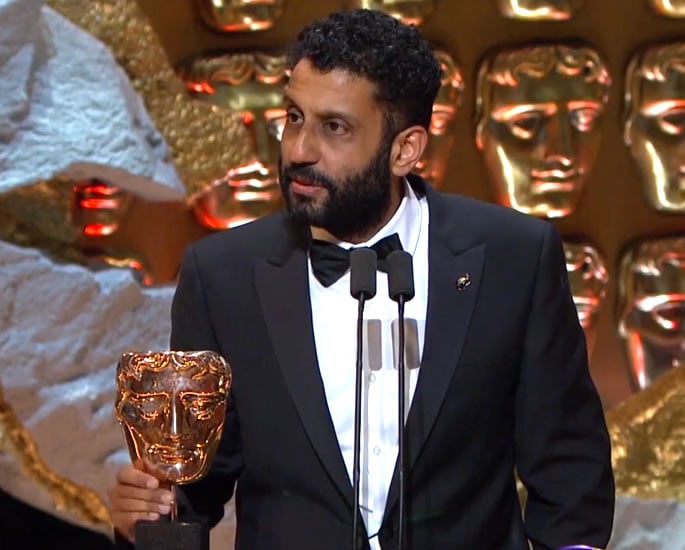
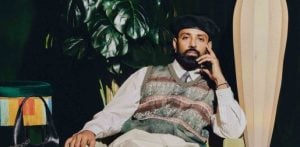
No discussion of British Asian characters on television is complete without acknowledging the milestone achieved by Adeel Akhtar in 2017.
Akhtar became the first Asian man to receive a BAFTA Television Award for Best Actor, winning for his powerful performance in Murdered by My Father.
The one-off drama told the story of Shahzad, a young British Pakistani man trying to prevent a so-called honour killing within his family.
Akhtar brought a quiet and devastating humanity to a character caught between loyalty, fear and survival.
The historic win highlighted how long British Asian actors had waited for opportunities to lead major television dramas and be recognised for complex, central performances.
Akhtar reflected on the significance of the achievement by saying:
“The fact that I was the first Asian to win a BAFTA is an amazing feeling but with it, I’d like to work through that to a point where it becomes that someone sees me just as an actor.”
His words captured a wider ambition shared by many British Asian performers and characters on screen: not to be defined only by their background, but to be recognised for their talent, range and storytelling ability.
Man Like Mobeen and the Arrival of a Working-Class Hero
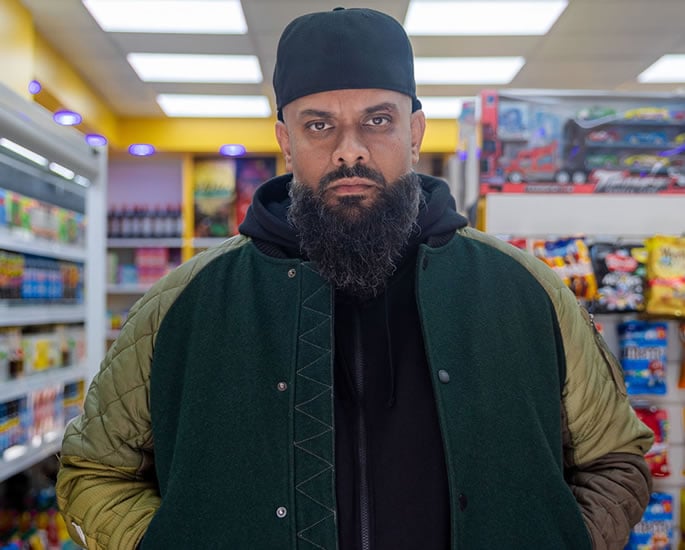
British Asian characters were rarely given the opportunity to tell working-class stories from the inside. Man Like Mobeen changed that when Guz Khan created the series for BBC Three in 2017.
The show followed Mobeen, a reformed drug dealer from Small Heath, Birmingham, as he raised his younger sister Aqsa while trying to live according to his faith and become a better person.
Mobeen was not written as a character for audiences to observe from a distance. He was created from within the community, reflecting the humour, challenges and everyday realities of life in Small Heath.
The series ran for five series and became one of BBC Three’s most successful comedy shows.
Khan has spoken about wanting to create a programme that people from Birmingham and Small Heath could recognise and feel proud of.
Co-writer Andy Milligan highlighted how limited portrayals of Muslim men had often been on British television.
He said:
“Until very recently, it was rare to see a Muslim man in his thirties on television without him wearing a suicide vest.”
Against that backdrop, Man Like Mobeen represented a significant shift.
It centred a British Asian Muslim character who was flawed, funny and complex, allowing audiences to see a wider version of Muslim masculinity on screen.
Rewriting the Rules with We Are Lady Parts
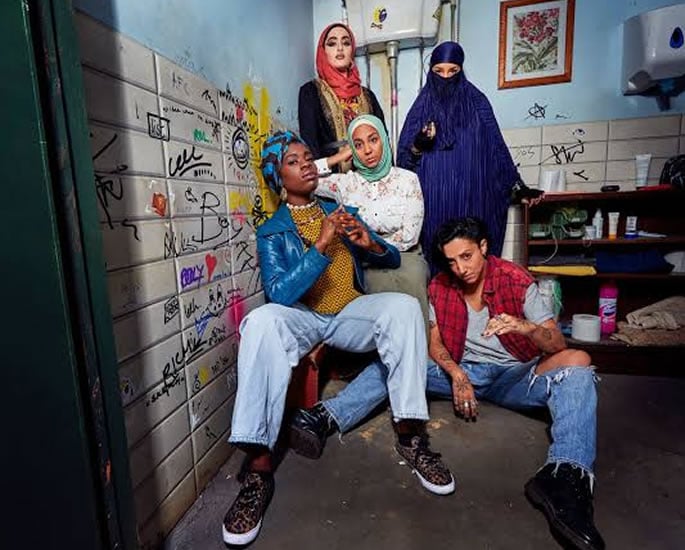
If any single show captures how far British Asian characters have evolved on television, it is We Are Lady Parts.
Created, written and directed by Nida Manzoor, the Channel 4 series follows an all-Muslim punk band navigating music, faith, identity and romance with humour, honesty and emotional depth.
The series was recognised with multiple industry awards, including three BAFTA Craft Awards in 2022, with Manzoor winning for Comedy Writer.
Manzoor has spoken openly about creating the kind of show she never saw while growing up.
The British Asian characters in We Are Lady Parts were shaped by their own ambitions, personalities and experiences.
Manzoor said: “Growing up, I never got to see myself on screen so making this show has always fed my soul in a really meaningful way.”
That authenticity can be seen in the detail of its characters.
Amina, a biochemistry PhD student, navigates the tension between family expectations and her own romantic choices.
Saira, the band’s lead singer who wears a niqab while performing punk music, challenges assumptions about the relationship between faith and rebellion.
Together, the characters in We Are Lady Parts reject the idea that there is one single British Asian or Muslim experience. Instead, the series presents identity as complex, personal and constantly evolving.
Lead Roles in the Streaming Era
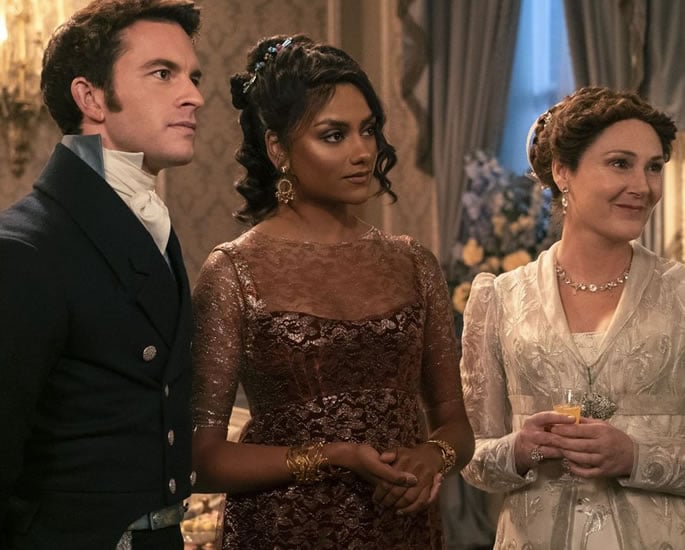
The rise of streaming platforms such as Netflix, Amazon Prime Video and Disney+ expanded the opportunities available for British Asian characters in ways that traditional broadcasters had often been slower to embrace.
Streaming platforms allowed British Asian characters to appear across a wider range of genres, including romantic dramas, period stories and complex character-led narratives.
Their ethnicity could inform their experiences without becoming the only defining feature of who they were.
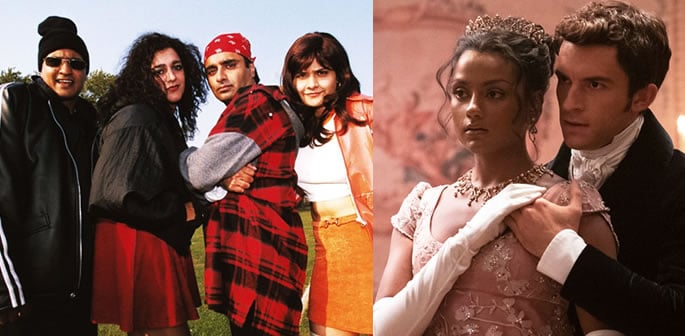
A major example came with Bridgerton in 2022, when Simone Ashley played Kate Sharma, the female lead opposite Jonathan Bailey in the show’s second series.
Charithra Chandran played her younger sister Edwina Sharma, with both characters placed at the centre of the show’s main romantic storyline.
Other British Asian actors also began taking on leading and high-profile roles across international productions.
Nikesh Patel starred in Hulu’s Four Weddings and a Funeral.
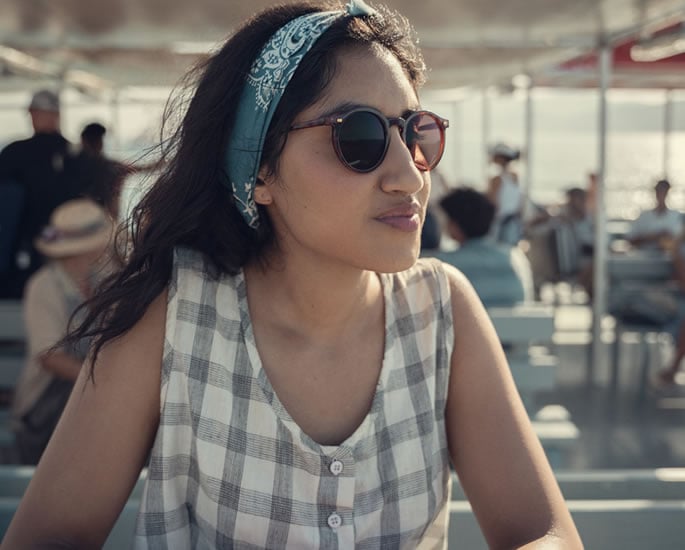
But perhaps one of the most visible recent milestones came when Ambika Mod played Emma Morley in Netflix’s adaptation of One Day.
The role marked a significant moment because a character previously portrayed as white in earlier adaptations was reimagined with a British Asian lead.
Mod has spoken about growing up rarely seeing people like herself in leading roles.
She said: “Even up until my early 20s, seeing people like me in lead roles was quite rare in TV and film.”
The shift reflects wider changes in representation across the industry.
According to Ofcom’s Diamond Diversity Data, ethnic minority representation among writers and leading roles remained limited in UK television during the early 2020s.
Streaming has not solved every issue around representation, but it has helped create more opportunities for British Asian actors to play characters whose identities are broader than their ethnicity alone.
What Challenges still Remain
The progress made by British Asian characters on television is real. But so are the challenges that remain.
While representation on screen has improved, diversity behind the camera continues to highlight a significant gap.
According to Ofcom’s Diamond Diversity Data, South Asian people accounted for just 1.5% of credited television writers and 1.3% of credited directors in 2020-21.
This remains a notable disparity when compared with the UK population, where South Asian people make up around 7.5% of the population.
Milestones for British Asian Characters in TV
- BBC Asian programming for South Asian immigrants began on October 10, 1965 on BBC One.
- Goodness Gracious Me originally started as a BBC Radio 4 show before moving to television in 1998.
- Adeel Akhtar became the first non-white actor to win a BAFTA TV Best Actor award in 2017.
- We Are Lady Parts won three BAFTA Craft Awards in 2022, including Best Comedy Writer for Nida Manzoor.
- Man Like Mobeen ran for five seasons on BBC Three, becoming the channel's most-watched comedy in 2023.
- British Asians make up over 7% of the UK population, yet TV lead roles remained rare until recently.
The figures highlight that greater visibility for British Asian characters on screen has not always been matched by equal opportunities for South Asian creatives shaping those stories.
That gap behind the camera has consequences for what appears on screen.
A wider range of writers, directors and producers can help create more authentic portrayals and expand the types of stories being told.
Some areas of British Asian representation remain particularly limited.
Queer British Asian characters are still relatively rare, with only a small number of series exploring the intersection of South Asian identity, sexuality and culture in depth.
Working-class British Asian experiences outside specific regional settings, such as the Birmingham community portrayed in Man Like Mobeen, are also less frequently represented.
Many portrayals continue to focus on professional, middle-class characters, leaving other experiences less visible.
British Asian characters in genres such as science fiction, fantasy and historical drama remain less common, although shows such as Bridgerton have demonstrated that South Asian actors can successfully lead stories beyond traditional representation categories.
The evolution of British Asian characters on television shows how far representation has come.
However, the statistics behind the industry reveal that progress must continue both on screen and behind the scenes.
British Asian characters on television have travelled a remarkable distance from the limited portrayals of the 1970s.
They have moved from background figures such as shopkeepers and taxi drivers to leading roles in period dramas, working-class comedies, music-based stories and major streaming productions.
That transformation has been shaped by writers, actors and producers who challenged the narrow versions of British Asian identity that television had often presented.
However, the story behind the camera remains more complicated.
While representation on screen has expanded, the number of South Asian writers, directors and creators shaping those stories remains disproportionately low.
The future of British Asian representation will depend not only on the characters audiences see, but on who is given the opportunity to create them.
Greater diversity among the people writing, directing and commissioning television will determine whether this progress continues and whether an even wider range of British Asian experiences can be told.