
















































The first traces of agriculture were recorded at around 8,000 BCE
Indian cuisine is renowned worldwide for its rich flavours and diverse range of dishes.
From aromatic curries to savoury street snacks, Indian food is celebrated for its complexity, depth and ability to tantalise the taste buds.
But behind the aromas and mouthwatering flavours lies a rich history that has evolved over thousands of years.
We embark on a journey through time to explore the fascinating evolution of Indian cuisine.
From its ancient roots in the Indus Valley civilisation to the influences of colonialism, we delve into the diverse culinary traditions that have shaped Indian food as we know it today.
Early History

The first traces of agriculture were recorded at around 8,000 BCE in North Rajasthan.
According to archaeological evidence, the prehistoric site Mehrgarh in Baluchistan contains the oldest signs of cultivation and herding in South Asia.
Neolithic ruins at Mehrgarh date from between 7,000 and 3,000 BCE.
In terms of Indian cuisine, the cultivation of various grains, legumes and vegetables in this fertile region laid the groundwork for a diverse array of dishes that continue to define Indian cuisine today.
Ingredients such as wheat, barley, millet, lentils and a plethora of spices have long been staples in North-Western Indian cooking, reflecting the region’s rich agricultural legacy.
The first indications of turmeric, cardamom, black pepper and mustard farming date back to around 3,000 BCE.
Indus Valley Civilisation

Dating between 3,000 BCE – 1,500 BCE, the Indus Valley civilisation began to take shape amidst a thriving society rich in resources, both cultivated and wild.
The fertile plains of the Indus Valley, along with its neighbouring regions, provided an ideal environment for agricultural activities.
Among the crops cultivated during this period, barley and wheat emerged as primary staples, reflecting the agricultural practices that laid the foundation for the evolution of Indian cuisine.
Additionally, legumes such as beans, peas and pulses were also grown, contributing to the dietary diversity of the region.
This was a significant period of cultural exchange, facilitated by early trade routes that extended beyond the Indian subcontinent.
One such notable trade connection was established with the ancient civilisation of Mesopotamia, marking the beginning of international trade for the region.
Although the commodities traded were limited to luxury items such as spices, textiles and precious metals, this exchange of goods played a crucial role in shaping culinary practices and flavours.
It is within this historical context that the earliest traces of Mesopotamian influence on Indian cuisine begin to emerge.
The exchange of spices and other culinary commodities fostered a cross-cultural exchange of culinary techniques and ingredients, contributing to the variety of flavours that characterise modern Indian cuisine.
The Vedic Era

The Vedic Era was a pivotal period in the evolution of Indian civilisation, significant developments occurred that influenced the trajectory of Indian cuisine.
As human settlements expanded and migrated towards the fertile Indo-Gangetic plains, agriculture became the primary occupation of the people, laying the groundwork for the cultivation practices that would shape Indian cuisine for centuries to come.
The refinement of agricultural techniques during this era led to increased productivity and diversity in food production.
Fruits, vegetables, grains and spices formed the cornerstone of the Vedic diet, supplemented by dairy products and honey.
One of the most enduring legacies of the Vedic Era is the development of Ayurveda.
The word “Ayurveda” itself signifies the union of two Sanskrit words: “Ayus”, meaning life, and “Veda”, meaning wisdom.
Ayurveda supports the philosophy of living in harmony with nature’s laws and emphasises the importance of maintaining balance in all aspects of life, including diet.
Central to the principles of Ayurveda is the recognition that food plays a crucial role not only in nourishing the body but also in maintaining overall health and well-being.
In recent years, the influence and benefits of Ayurveda have transcended geographical boundaries, with an increasing number of individuals around the world embracing its principles for holistic living.
The 2nd Urbanisation

The period between the 1st and 6th century marks India’s “second urbanisation”, where urban centres flourished in the fertile Gangetic Valley.
This marked a significant chapter in the evolution of Indian society and its culinary customs.
At the same time, the emergence of new religious ideologies, notably Jainism and Buddhism, introduced profound shifts in dietary practices and culinary attitudes.
These religions advocated for vegetarianism as a means of adhering to their core principles of ahimsa (non-violence).
The emphasis on compassion towards animals and all living things led to a widespread adoption of vegetarianism among adherents.
This transformed dietary habits and also contributed to India’s culinary landscape.
Vegetarian cuisine gained prominence and has gone on to become integral to Indian cuisine.
At the same time, the Mauryan Empire experienced a period of unprecedented prosperity and cultural advancement.
During this time, Indian society learned the fundamentals of culinary etiquette, including dining practices, table manners and hospitality.
Elaborate feasts and banquets hosted by the Mauryan rulers served not only as displays of wealth and power but also as opportunities for cultural exchange and refinement of culinary arts.
The Mughal Empire

The Arab community’s coastal trading activities along India’s western shoreline, particularly in regions like Gujarat and Malabar, marked a significant juncture in India’s culinary history.
This period, which began in the 7th century, not only facilitated trade and cultural exchange but also introduced Islam to the Indian subcontinent.
The Arab traders brought with them a rich culinary heritage that left an indelible mark on Indian cuisine.
One notable contribution is the samosa.
The precursor to the samosa, known as sambusas or meat-filled patties, can be traced back to Arab cookbooks dating back to the 10th and 11th centuries.
Over time, this savoury snack evolved into the iconic triangular pastry filled with spiced potatoes, peas and other ingredients.
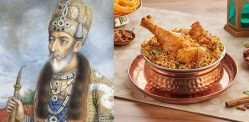
However, it was during the Mughal empire that the influence of Arab and Persian cuisines reached its peak.
This led to the emergence of Mughlai cuisine, a blend of Indian, Persian and Central Asian cuisines.
Rich gravies flavoured with almonds, saffron and aromatic herbs became hallmark features of Mughlai cuisine, adding depth and complexity to traditional Indian dishes.
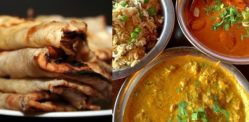
The Mughals also introduced a variety of bread, including rumali roti, tandoori roti, and sheermal, which complemented the decadent gravies and kebabs.
This era witnessed the popularisation of cooking techniques such as dum pukht, a slow-cooking method, as well as dishes like biryani.
Both are incredibly popular things in modern Indian cuisine.
Colonisation

The colonisation of India by various European powers, including the Portuguese, Dutch, French and ultimately the British, brought about a complex interplay of cultural exchange, trade and culinary fusion.
One of the most notable influences of colonisation on Indian cuisine was the introduction of new ingredients and cooking techniques from Europe.
European colonisers brought with them a variety of foods such as potatoes, tomatoes, chillies and various spices, which were incorporated into Indian cooking.
European cooking techniques such as baking and stewing were weaved into Indian culinary practices, leading to the creation of innovative dishes that combined the best of both worlds.
The establishment of colonial trading posts also facilitated the exchange of culinary traditions between India and Europe.
European traders and settlers interacted with local communities, leading to the fusion of ingredients, cooking styles and flavours.
This cultural exchange gave rise to new culinary creations such as Indo-Portuguese seafood dishes, Indo-French sauces, and Anglo-Indian curries, which reflected the hybrid nature of colonial cuisine.
Commercialisation and industrialisation also became a thing.
The British Raj, in particular, implemented policies that promoted cash crop cultivation, leading to the widespread cultivation of tea, coffee and spices for export.
This impacted traditional agricultural practices and dietary habits, as subsistence farming gave way to commercial agriculture focused on meeting colonial demands.
Additionally, the British colonisation of India led to the establishment of a railway network and modern transportation infrastructure, which facilitated the movement of goods and people across the subcontinent.
Regional cuisines and culinary traditions spread, leading to greater culinary diversity and cross-regional influences.
Despite the challenges and disruptions caused by colonisation, Indian cuisine also adapted and evolved in response to colonial influences.
The fusion of Indian and European culinary traditions gave rise to new dishes, flavours and cooking techniques that continue to shape the culinary landscape of India today.
Modern Indian Cuisine

In the modern day, Indian cuisine continues to evolve across the world.
One of the most notable trends in modern Indian cuisine is the emergence of vibrant restaurant cultures that showcase the diversity and creativity of Indian cooking.
Contemporary Indian restaurants have embraced fusion cuisine, blending traditional Indian flavours with international culinary influences to create innovative and eclectic dishes.
Indo-Chinese, Indo-Italian and Indo-American cuisines are just a few examples.
This fusion movement has gained rapid popularity, with numerous restaurants across India and around the world embracing the concept and putting their creative spin on traditional dishes.
Moreover, the concept of street cuisine in India has moved beyond the confines of the street and found a place within the menus of upscale restaurants and chains.
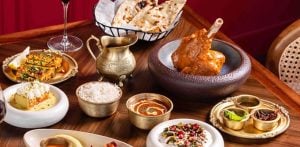
Street food favourites such as chaat, pav bhaji and vada pav have been reimagined, offering a taste of the vibrant street food scene in a more refined setting.
Similarly, traditional roadside eateries known as dhabas have gained popularity among urban youngsters seeking authentic and rustic dining experiences.
Indian cuisine has evolved over thousands of years, shaping how the cuisine looks today.
From the first signs of agriculture to influences during different eras, Indian cuisine has undergone a remarkable journey of transformation and adaptation.
The interplay of diverse regional influences, trade routes and cultural exchanges has resulted in a culinary landscape that is as diverse and dynamic as the people who call India home.
But Indian cuisine is not merely a relic of the past, it is a living, breathing entity that continues to evolve and adapt to the changing times.