













































"It is not yet clear how they will treat gaming sites."
The UK government confirmed that a social media ban for under-16s is coming, with ministers aiming to bring it into force in early 2027.
Platforms including TikTok, Instagram, Facebook, Snapchat, YouTube and X are expected to be covered, but major questions remain over gaming platforms, VPNs, age checks and educational content.
The announcement marks one of the biggest changes to children’s online access in the UK.
Alongside the ban, ministers have proposed stronger protections against contact from strangers and signalled further restrictions on features such as infinite scroll and AI chatbots.
However, many of the practical details have yet to be revealed.
The government has promised further information in July 2026, leaving technology companies, parents and child safety groups waiting for answers.
These are the biggest questions that remain.
What does the Ban mean for Gaming Sites?
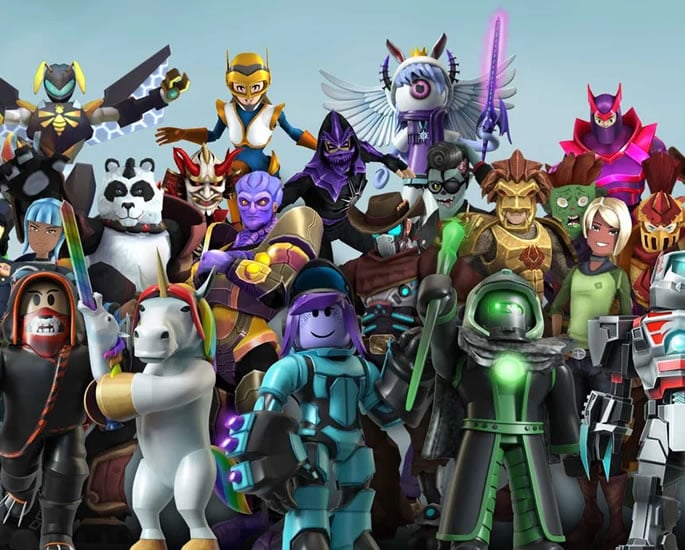
Roblox has not been included in the UK’s social media ban, and ministers have not confirmed whether gaming platforms will be covered.
So far, the government has only named Snapchat, TikTok, YouTube, Instagram, Facebook and X.
However, ministers have said the UK’s approach will closely follow Australia’s, where Reddit, Threads, Twitch and Kick are also banned for under-16s.
That leaves uncertainty around Roblox and similar gaming services.
Roblox remains one of the UK’s most popular platforms for children, but it has faced criticism over child safety. The company has previously been accused of allowing situations where children could be targeted by predatory adults.
In response, Roblox says it has strengthened safety measures. These include expanded age-estimation tools that help determine what games and experiences users can access.
Lorna Woods, professor of internet law at Essex University, said:
“It is not yet clear how they will treat gaming sites.
“Though if they follow the Australian approach, these will lie outside the Australian ban.”
Regardless of whether Roblox is eventually included, gaming services will still be affected by wider child safety measures announced alongside the ban.
The government says platforms will be required to disable features that allow strangers to communicate directly with children. Ministers specifically stated that this requirement would apply to gaming services.
Children will still be able to take part in multiplayer online games under the proposals.
What is Happening with YouTube and YouTube Kids?
YouTube will be included in the UK’s under-16 social media ban, while YouTube Kids will remain exempt.
However, questions remain over how the restrictions would work in practice.
One issue is how YouTube would prevent children from accessing content through search without creating an account. The government has not explained how those situations would be handled.
There are also concerns about educational content.
YouTube said it was a “vital resource for young people” and that a ban risked pushing children towards “anonymous, less safe services”.
The platform is widely used by students for learning and revision.
Google and Livity research found that 95% of surveyed UK teenagers said watching videos helps with schoolwork.
The government says there will be “a narrowly defined list of exemptions” to ensure educational services remain available to children.
Exactly what those exemptions will include remains unclear.
Why are WhatsApp and Pinterest not Included?
WhatsApp is not expected to be included in the ban because the government does not currently plan to apply the restrictions to messaging apps.
Meta-owned WhatsApp is used by around half of UK children aged between eight and 17, according to Ofcom. Despite its popularity, ministers do not expect it or Signal to fall under the proposed rules.
The government says the ban will apply to platforms “whose purpose is to enable social interaction and which allow users to post material”.
That definition is unlikely to capture private messaging services. However, it raises questions about other platforms that combine social interaction with content sharing.
Services such as Discord, Pinterest, Bluesky, Tumblr and Telegram could potentially fall within that definition. Yet none currently appear on Australia’s list of banned platforms.
As a result, there is still uncertainty about which services will ultimately be included when the government publishes its final rules.
Does this Mean a VPN Crackdown?
The government has not announced plans to regulate VPNs, but ministers say further details on enforcement will be published in July.
VPNs have become one of the biggest talking points surrounding the proposed ban because they could allow some users to bypass restrictions.
To enforce the rules, the government plans to rely on “highly effective age assurance” systems. These technologies are designed to identify or estimate a user’s age before granting access.
Methods could include facial age estimation technology, photo ID matching and digital identity services such as Yoti.
The introduction of age checks has already led to speculation that some teenagers may use VPNs to get around restrictions.
Children’s minister Josh MacAlister told the BBC there were “options there about whether we could age-gate VPN use, which would be really welcome”.
Privacy experts and VPN providers have raised concerns about that approach. They argue that age-gating VPNs would require additional user data collection, undermining the privacy benefits many people seek when using the services.
Prime Minister Sir Keir Starmer has acknowledged that some teenagers may attempt to circumvent the ban. However, he said that should not prevent the government from introducing measures designed to protect children online.
Will the Ban happen by Spring 2027?
The government wants the social media ban to take effect by Spring 2027, but legal challenges could delay implementation.
Unlike the Online Safety Act, ministers do not need to pass an entirely new piece of primary legislation.
Instead, the government is using powers granted under the Children’s Wellbeing and Schools Act. That allows restrictions to be introduced through secondary legislation, significantly shortening the process.
Tech Secretary Liz Kendall told MPs: “I want a vote on it by the end of the year, and I want it to come into force as early as possible in the first couple of months of 2027”.
However, technology companies could still challenge the government’s approach through judicial review.
Giulia Carloni, senior associate at law firm Winston Taylor, says:
“Whilst primary legislation is effectively immune from challenge, secondary legislation is subject to review by the courts as it lacks the rigorous multi-stage scrutiny required for statutes.”
Any legal action would have the potential to slow implementation, even if the government ultimately succeeds in introducing the social media ban.
The UK has committed to introducing a social media ban for under-16s, but key details remain unresolved.
Ministers have yet to clarify whether platforms such as Roblox will be included, how educational content on YouTube will be protected, whether VPNs will face restrictions and exactly which services will fall under the final rules.
With further announcements expected in July, the next stage of the government’s plans could determine how millions of young people access the internet in the years ahead.