
















































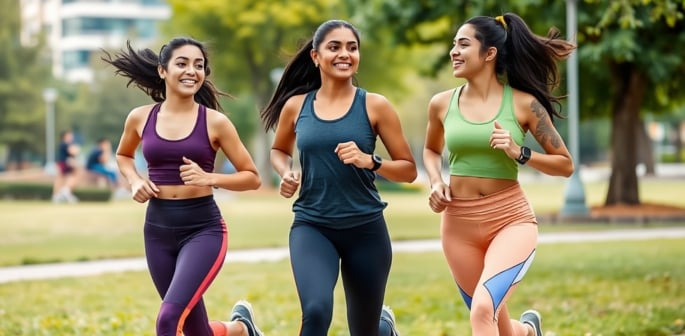
Social media has added a new dimension to the rise of run culture.
Running is no longer just a solo sport or weekend hobby.
It is quickly becoming a cultural movement.
Across the UK and beyond, the rise of run clubs marks a shift in how young people socialise, cope and seek fulfilment.
In 2024, run club membership grew by 59%, according to data from Strava.
This surge reflects a growing desire for structured, communal activity at a time when many in their twenties feel adrift.
Often dubbed a “quarter-life crisis”, this period of uncertainty sees young adults grappling with career doubts, relationship fatigue, and identity pressures.
For many, the answer lies not in nightlife or escapism, but in endurance and routine.
Run clubs offer that structure. They replace ambiguity with clear training plans, community support, and a physical outlet that can double as an emotional release.
For South Asians, where barriers to individual fitness often remain, particularly for women, run clubs are emerging as a culturally resonant alternative.
They offer safety in numbers and motivation rooted in group effort.
More than a trend, the rise of running culture among young British Asians is part of a broader shift in how wellness, identity and community are being redefined.
The New Social Scene
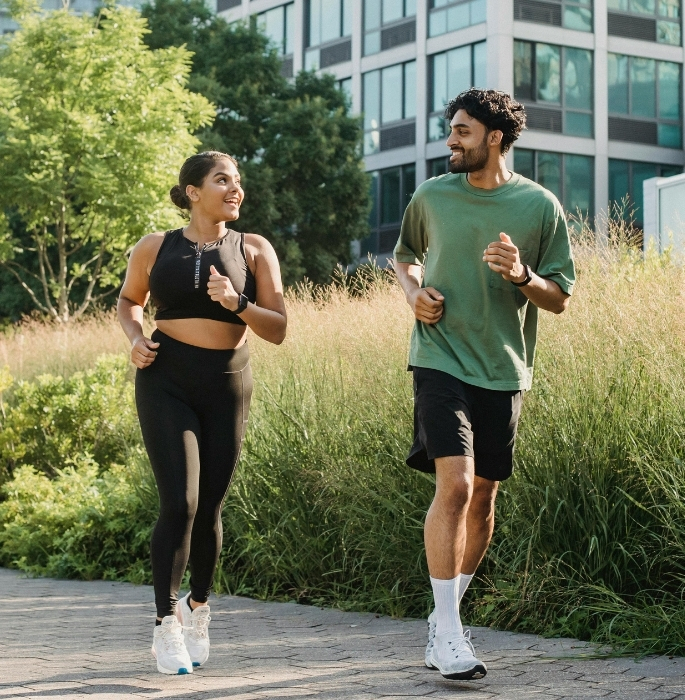 Friday nights once meant queuing outside a bar or swiping through dating apps.
Now, for a growing number of Gen Zers, the experience begins with a warm-up and ends with protein smoothies.
LADnation reports that 72% of Gen Z runners join clubs primarily to meet people.
Many cite run clubs as a replacement for traditional social settings that no longer align with their values.
Drinking rates are falling, and with them the appeal of chaotic nights out.
Instead, young people are gravitating toward fitness-centred communities that offer connection without the hangover.
For South Asians, this evolution is particularly significant.
Run clubs sidestep many of the cultural stigmas around nightlife, providing a space to socialise that feels more acceptable to family and community.
What’s more, these groups are inclusive. They welcome beginners, promote wellness over competition, and challenge dated notions of who “looks” like a runner.
In short, the run club is no longer niche.
It is fast becoming Gen Z’s answer to the social club; a space for belonging, movement and mutual support.
Turning Uncertainty Into Endurance
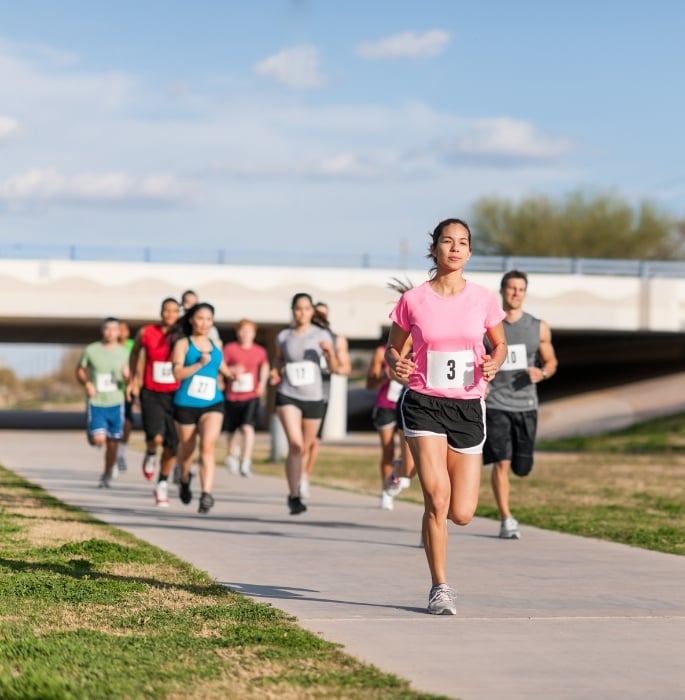 The phrase “quarter-life crisis” has long described the existential fog that descends in your twenties.
But increasingly, that crisis is being addressed not in therapy rooms, but on running tracks.
Many young adults are signing up for half-marathons as a way to impose order on their chaotic lives.
In the face of job insecurity, cost-of-living pressures, and post-pandemic burnout, long-distance running offers a form of control.
It also offers visible progress. Each kilometre covered, each goal achieved, becomes a tangible marker of success in an otherwise uncertain landscape.
This phenomenon has found particular relevance among British Asians.
With community expectations often high and life paths rigidly defined, running allows space to recalibrate personal ambition without abandoning cultural identity.
Whether it’s the clarity that comes from early morning runs or the confidence built through incremental training, the appeal is both psychological and physical.
In many cases, it’s not about running away from problems, but running toward a stronger, more grounded sense of self.
The Strava Effect
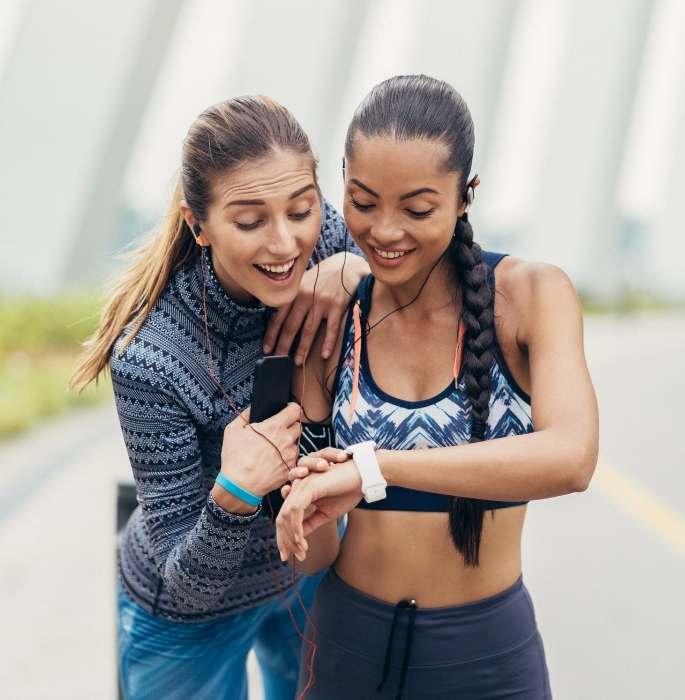 Social media has added a new dimension to the rise of run culture.
Platforms like Strava, Instagram and TikTok’s growing #RunTok community turn private routines into public milestones.
Progress is not only measured by personal records, but also by likes, comments, and followers.
In many ways, running has become a digital performance as much as a physical one.
While some critics warn of increased pressure and performativity, others argue that the visibility helps normalise wellness.
Seeing a wider range of body types, backgrounds, and goals shared online is inspiring new demographics to get involved.
Public figures have also played a role in legitimising the movement.
Comedian Romesh Ranganathan and chef Gordon Ramsay regularly take part in marathons, while personalities like Adele Roberts and Gemma Atkinson bring authenticity and relatability to organised events.
For many young Desis, representation matters.
Seeing familiar faces in spaces once considered elite or exclusive helps dismantle the myth that fitness is only for a certain type of body or background.
When Fitness Becomes a Punchline
 Not everyone takes the run club boom seriously.
On social media and in marketing campaigns, there’s a growing stream of self-aware humour about “early midlife crises” and the new culture of cardio.
Satirical takes suggest that run clubs are this generation’s answer to the sports car, a marker of emotional turbulence wrapped in Lycra.
But beneath the jokes lies a clear truth: running offers what many young adults are missing.
It provides structure, purpose, and a clear beginning, middle and end.
In a world defined by scrolling and short-term attention spans, long-distance running rewards patience and perseverance.
For British Asian communities, which often navigate pressures from both Eastern and Western worlds, that commitment carries extra weight.
Even the satire reflects a shift.
Trading in “pub nights and bad decisions” for “5Ks and chia pudding” is now a badge of honour, not a punchline.
At a time when mental health concerns are rising and traditional social spaces are falling out of favour, the run club may just be the most unexpected wellness tool of the decade.
This shift toward group-based running marks more than a fleeting fitness fad.
For South Asian communities in particular, it represents a powerful intersection of culture, health and identity.
Run clubs are democratising fitness, providing accessible spaces where anyone, regardless of background, gender or ability, can find support and motivation.
They also serve a deeper function: helping young people, especially those facing the pressures of a quarter-life crisis, reconnect with their bodies, peers and purpose.
In cities across India and the diaspora, run clubs are growing into cultural collectives.
At their core, they remind us that movement matters.
Not just for our bodies, but for our relationships, our communities, and the way we navigate uncertainty.
And if the path to self-discovery starts with a pair of trainers, perhaps that’s a journey worth running.