
















































this would “ensure that a thorough approach continues"
MPs have voted in favour of the assisted dying bill following a heated commons debate.
The Terminally Ill Adults (End of Life) Bill would give terminally ill people with less than six months to live access to assisted dying.
MPs were given a free vote, meaning they could make a decision based on their own conscience rather than having to follow a party line.
Among those who backed the proposal was Rishi Sunak as he believed it would help to “reduce suffering”.
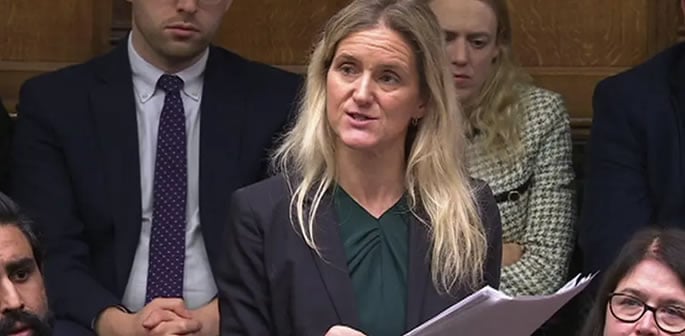
The proposal was made by Kim Leadbeater but she told the House of Commons, this “is not going to happen overnight”.
It will remain a Private Member’s Bill (PMB) but will proceed to the next stages.
Committee Stage
Ms Leadbeater conceded to concerns that, as a PMB, her proposed assisted dying legislation will not receive sufficient scrutiny, by moving a motion for the public bill committee to gather oral and written evidence.
She said that this would “ensure that a thorough approach continues to be taken” and added:
“That is not normal procedure for a private members bill but I think it is the right thing to do.”
The MP also promised to include opponents on the committee, telling the Commons “that will mean there will be representatives of different parties with a range of views on the committee”.
She will select all committee members and have a majority for each vote on an amendment, meaning amendments she does not back are unlikely to succeed.
A Ministry of Justice minister will also be assigned, who can recommend amendments to adopt.
The committee decides how many sittings are needed, their date and their duration. It may continue its work until it has disposed of every amendment and every clause.
Report Stage
The goal is to complete the work by the first PMB Friday (April 25, 2025) in time for the report stage.
During this stage, the Commons will review the amended version of the Bill on the House floor and consider further changes.
The chairman will determine which amendments to consider and how to group them.
Amendments that fall outside the Bill’s scope or purpose will be excluded.
Similar amendments may be grouped together, such as one group addressing eligibility criteria for assisted death and another focusing on safeguards.
Afterwards, the Bill will proceed to a third reading vote in the Commons. If it passes, it will move on to the Lords for further consideration.
House of Lords
By convention, the Lords typically grant a second reading to Bills approved by the Commons.
If numerous amendments are proposed, the committee and report stages could extend over several days.
If the Bill is not sent back to the Commons by the final PMB Friday (July 11, 2025) it will lapse unless the Government provides additional time to address the amendments.
Implementation
Once a Bill has passed its third reading in both Houses, it is considered politically unacceptable for it to fail due to time constraints.
This creates pressure on the Government to allocate the necessary few hours to finalise any remaining amendments.
The Bill includes a “commencement period” of up to two years, as proposed by Ms Leadbeater.
Professor Richard Ekins KC, a law and constitutional government expert at the University of Oxford, noted that this provision means the legislation will “automatically come into force in two years’ time, even if the Government has not been able to make adequate arrangements for its implementation”.