
















































“For men, these muscles play a key role in sexual function"
Pelvic floor strength is not something most men think about when it comes to better sex, but perhaps it should be.
Conversations around male sexual health usually focus on testosterone, gym routines or supplements promising stronger performance in the bedroom.
Yet one of the most important muscle groups linked to erections, stamina and ejaculation control is often ignored entirely.
The pelvic floor plays a major role in how men perform sexually, how much control they have during intimacy and how confident they feel when it comes to intimacy.
As more health experts highlight its importance, pelvic floor training is finally moving beyond physiotherapy clinics and into mainstream men’s wellness conversations.
From supporting erection quality to helping manage premature ejaculation, strengthening these muscles can play a role in male sexual health.
Better still, pelvic floor exercises do not require expensive equipment or punishing workouts.
A few targeted movements added to a weekly routine can help men improve strength, circulation and control.
For men wanting to improve their sex life naturally, the pelvic floor may be one of the most underrated areas of fitness.
Pelvic Floor Strength and its Importance on Male Sexual Function

The pelvic floor is a group of muscles located between the pelvis and tailbone. These muscles support the bladder and bowel, but they also play an important role in male sexual function.
Dr Luke Pratsides, a GP and Head of Medical at digital health provider Numan, explains:
“The pelvic floor is a group of muscles located between the tailbone and pelvis, designed to support the bowel, bladder, and beyond.
“For men, these muscles play a key role in sexual function, particularly in controlling ejaculation and maintaining erections.
“Strengthening your pelvic floor can give you a feeling of greater control during sex, delaying ejaculations and helping to manage conditions like premature ejaculation and erectile dysfunction.”
During an erection, pelvic floor muscles help support blood flow and pressure within the penis, which can contribute to maintaining firmness.
If those muscles are weak, some men may find erections harder to sustain.
There is also a confidence factor involved. Men who feel more control over ejaculation and arousal often report reduced performance anxiety, which can positively influence sexual experience.
Importantly, pelvic floor weakness is not limited to older men. Sedentary lifestyles, prolonged sitting, obesity and low physical activity levels may all contribute to reduced pelvic floor strength over time.
Fitness culture has traditionally focused on visible muscle groups such as abs, chest and arms. The pelvic floor, by contrast, is hidden and often overlooked despite its functional importance.
How a Weak Pelvic Floor can Affect Men

A weak pelvic floor can influence several aspects of male health, although symptoms and severity vary between individuals.
One potential issue is erectile dysfunction. Erections rely on healthy blood flow and muscular support. If pelvic floor muscles are not functioning optimally, some men may experience reduced rigidity or difficulty maintaining erections.
There is also some evidence suggesting that pelvic floor dysfunction or poor muscular coordination may contribute to premature ejaculation in certain men. In these cases, improving muscular control may form part of a wider management approach.
Urinary symptoms can also occur. These may include leakage after urination or during activities that increase abdominal pressure, such as coughing, sneezing or heavy lifting.
The pelvic floor works closely with core and glute muscles to support posture and stability. Weakness in this system may contribute to reduced functional strength and coordination.
Lifestyle factors can also influence pelvic floor health. Excess belly fat may increase pressure on the pelvic region, while smoking, stress and poor circulation can all affect overall tissue function.
Pelvic floor muscles are responsive to training, but results vary between individuals. Some men may notice changes within weeks, while others require longer periods of consistent practice.
It is important to note that pelvic floor exercises are not a standalone treatment for erectile dysfunction.
Persistent symptoms should be assessed by a healthcare professional, as they may be linked to cardiovascular, hormonal or psychological factors.
Pelvic Floor Exercises to Help
Kegels
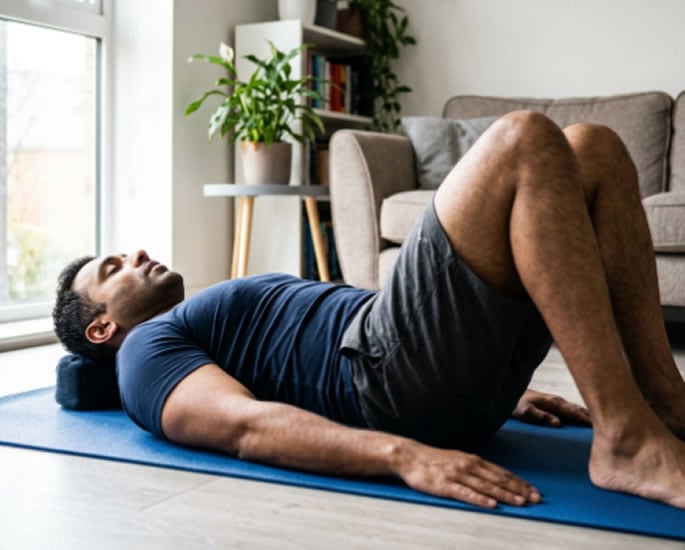
Kegels are one of the most widely recognised pelvic floor exercises and can be beneficial for men when performed correctly.
Dr Pratsides said: “You’ve probably heard of Kegels as something women practice after giving birth, but they’re just as important for men.
“Kegels help to strengthen the pubococcygeus muscle – one of the key muscles involved in ejaculation and erection control.”
“First, try and find the right muscle by stopping your flow of urine mid-stream (don’t do this regularly though, as it can interfere with normal bladder function).
“Later down the line, now that you’ve identified the muscle, contract it for 3-5 seconds, then relax for the same amount of time. Aim for three sets of 10 reps, 3-4 times a week.
“With a bit of practice, you’ll likely notice an improvement in your control during sex. Some men have even reported delayed climax and firmer erections after just a few weeks.”
While individual results vary, Kegels may help improve awareness and control of pelvic floor muscles when practised consistently.
Squats
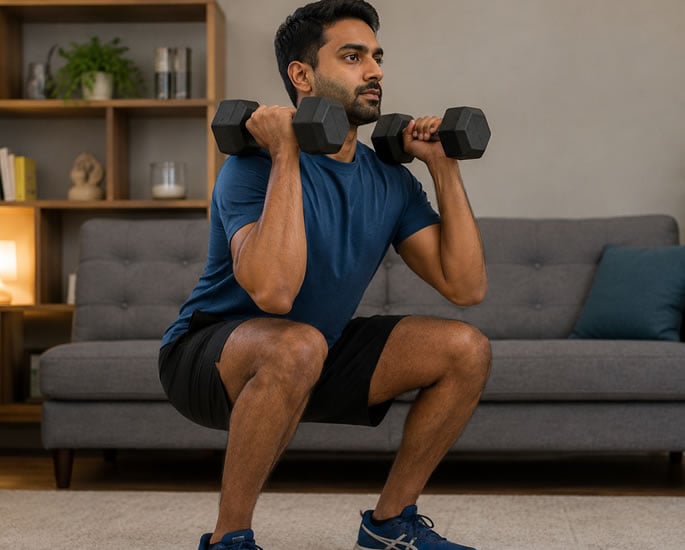
Squats are a compound lower-body exercise that engage multiple large muscle groups, including the glutes, core and indirectly the pelvic floor.
Dr Pratsides explained: “Squats are great for a number of reasons, including the fact they activate your largest muscle groups, which supports healthy hormone function as part of overall fitness.
“Perhaps more importantly, they also engage your core and pelvic floor, providing functional strength and improving blood flow to the groin.
“As a bonus, squats can contribute to reducing belly fat, which may have a positive impact on libido and overall well-being.”
Before adding weight, it is important to master correct form using bodyweight.
Stand with feet slightly wider than hip-width apart, keep the chest lifted and lower the hips back and down while maintaining knee alignment. Drive back up through the heels, engaging the glutes at the top.
Glute Bridges
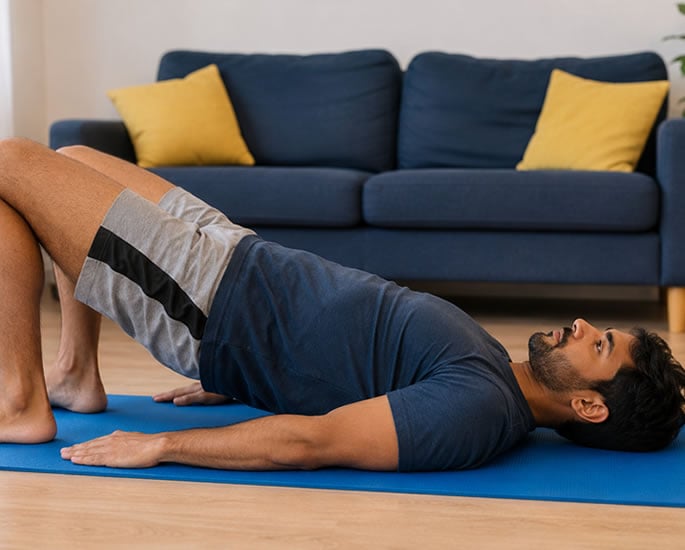
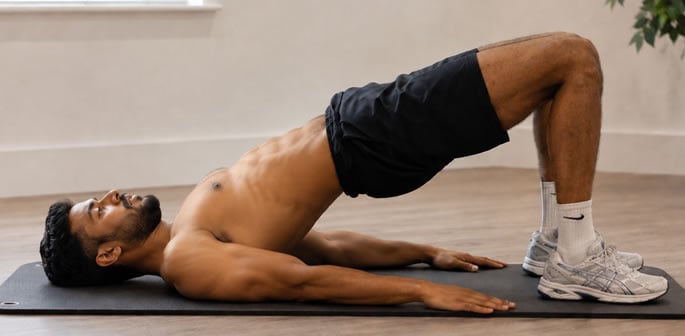
Glute bridges are a low-impact exercise that activate the glutes, core and pelvic floor muscles.
Dr Pratsides said: “Glute bridges often go under the radar as a great exercise to target both your glutes and your core – they also help to activate your pelvic floor, which is particularly useful for building stamina in the bedroom.”
To perform the movement, lie on your back with knees bent and feet flat on the floor.
Engage the glutes and core, then lift the hips until the body forms a straight line from shoulders to knees. Hold briefly before lowering with control.
This movement may support pelvic stability and muscular coordination when included as part of a wider training routine.
Pelvic floor strength is often overlooked in discussions around male sexual health, yet it plays a meaningful role in erection quality, ejaculation control and overall physical stability.
While it is not a cure for medical conditions such as erectile dysfunction, pelvic floor training may support sexual function for some men when combined with broader lifestyle improvements.
Exercises such as Kegels, squats and glute bridges are simple, accessible and can be incorporated into regular fitness routines. Over time, they may help improve muscular awareness, control and confidence.
Ultimately, sexual health is shaped by multiple factors, including circulation, hormones, mental well-being, and lifestyle habits.
The pelvic floor is just one part of that wider system, but an increasingly recognised one in men’s health.