















































"they may need to perform more moderate-intensity physical activity"
Unless you’re Gen Z, heart health and exercise were rarely part of growing up as a South Asian. Previous generations either ignored physical activity, stigmatised exercise for women, or reduced it to a means of achieving thin bodies.
With the surge of fitness influencers on social media, however, society’s view of exercise is changing.
The younger generation now holds a more positive attitude towards physical activity. They are breaking stereotypes and cultural barriers which once prevented their parents from engaging in exercise.
But even with this shift in perspective, South Asians, on average, remain less active compared to the general population, according to the UK-based South Asian Health Foundation (SAHF).
It is well known that people from the Indian subcontinent, regardless of where they have migrated, carry a higher risk of developing major diseases.
Globally, one in nine people have diabetes, which is already concerning. But among South Asians, that rate is around three to five times higher.
Heart attacks also tend to occur up to 10 years earlier in South Asians compared with White Europeans, even when lifestyles are considered “healthy”.
This granular understanding of ethnic health trends is underpinned by long-term research initiatives such as the MASALA study. For decades, these projects have tracked South Asian cohorts, aiming to replace generic health models with culturally tailored clinical guidelines.
While the research has raised important questions that will shape future studies, it has also provided some clearer answers.
Exercise helps Beat the Odds
While these risk markers are significant, they are not insurmountable. Evidence suggests that purposeful movement can effectively offset hereditary predispositions, acting as a critical buffer against the onset of chronic disease, particularly when it comes to heart health.
Experts agree that exercise, alongside a healthy diet, remains one of the strongest tools for protecting against modern illnesses, most notably diabetes and cardiovascular disease.
Dr Alka Kanaya, Professor of Medicine at the University of California and Principal Investigator of the MASALA study, says:
“It’s a reasonable hypothesis.
“Because South Asians start with a higher burden of prediabetes, hypertension, dyslipidemia, and other inherited factors at younger ages, there should be greater effort to modify all risk factors with lifestyle interventions, including more exercise, better diet, no tobacco or alcohol use, more sleep, and stress reduction at earlier ages.”
But we are different not only in our likelihood of becoming sick, but also in our response to exercise. This calls for a more tailored approach to heart health and physical activity.
According to SAHF’s panel of experts: “South Asian people oxidise less fat during exercise.
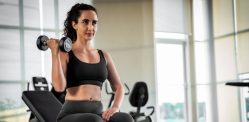
“This means that they may need to perform more moderate-intensity physical activity to exhibit a similar cardiometabolic risk profile.”
In other words, South Asians may benefit from a higher volume and higher intensity of exercise to support better cardiovascular outcomes.
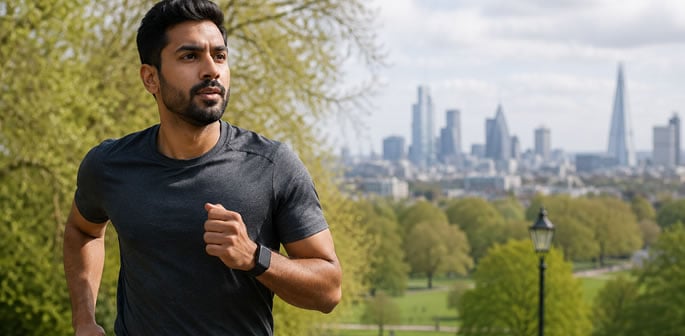
Yet, in many South Asian communities, physical activity is still largely limited to regular walks.
Walking is accessible and beneficial for both mind and body, but it only scratches the surface of what exercise can offer for heart health.
Meeting daily step counts alone is not enough to build the strength and balance needed later in life. Variety in exercise is key to developing all-around cardiovascular fitness and resilience.
According to one study, every kilogram increase in strength was associated with a 5% lower risk of type 2 diabetes. People also benefit from building flexibility, balance, and cardiorespiratory fitness.
What Exercises to Try
Here are some exercises that can act as a “good average fitness test” for South Asians.
This test is designed to help assess different aspects of overall fitness, with a particular focus on strength, mobility, and cardiovascular health.
According to Shireen Ismail, an osteopath practising in North London, who helped design this test, being able to complete all of the exercises comfortably in one session indicates an “average fitness level”.
Ismail adds that if you can complete the exercises, albeit with some difficulty, you are considered “below average”. Those who are unable to complete them would need to put in more work.
If you are fairly active, it is safe to attempt this test.
However, if you lead a sedentary lifestyle, it is best to seek medical advice first to avoid the risk of serious injury.
Downward-facing dog (DFD) (Shoulder strength, flexibility)
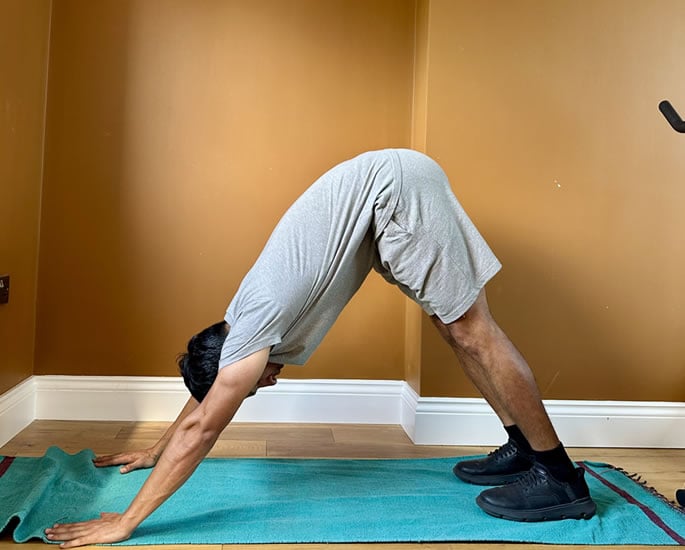
This is a common yoga pose that can be thought of as an inverted ‘V’ pose.
A good posture demonstrates strength and flexibility in the shoulders, spine, hamstrings and calf muscles.
Test: Hold for 30 seconds, maintaining a good posture.
Deep squat hold (Hip, knee and ankle mobility)
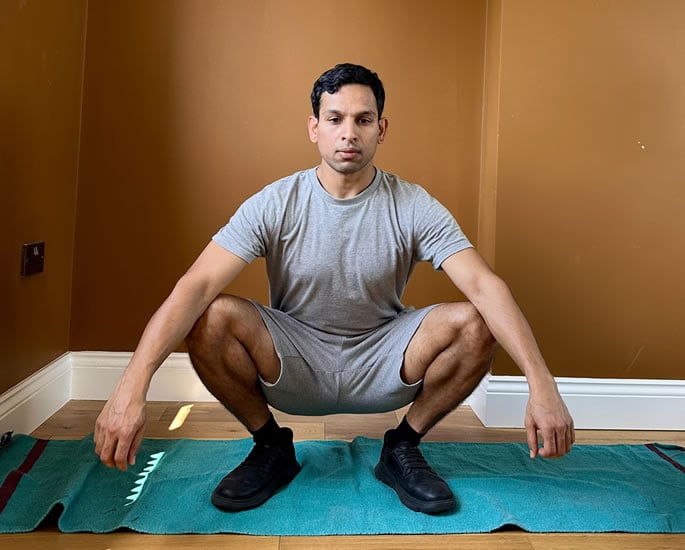
Squat hold is a great exercise to test your lower limb mobility, which diminishes in sedentary people with desk jobs.
Deep squat was practised in many South Asian cultures. When people didn’t have a chair or a sofa, this is how they sat.
Test: Hold for 30 seconds, maintaining an upright posture.
Warrior I pose (Balance, leg strength)
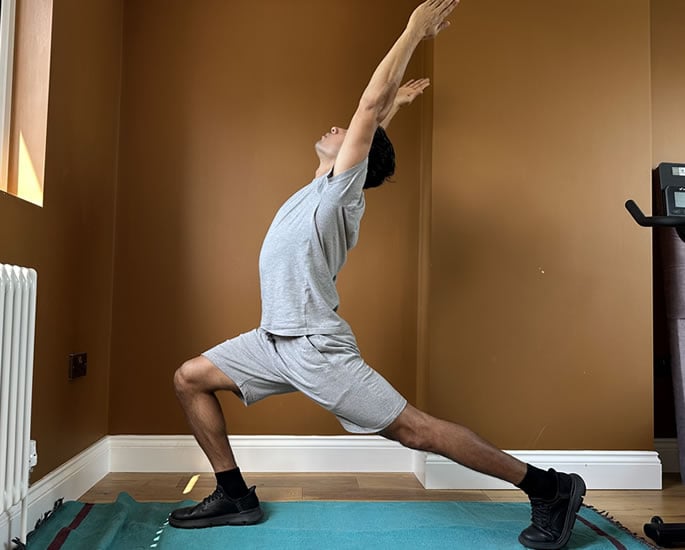
Similar to the DFD, Warrior I is also an isometric hold. It is a test of your lower body strength, flexibility and balance.
As we get older, the risk of dangerous falls rises sharply, unless you have a good balance.
Test: Hold for 30 seconds on one side before switching to the other.
Lift test (full body and grip strength)
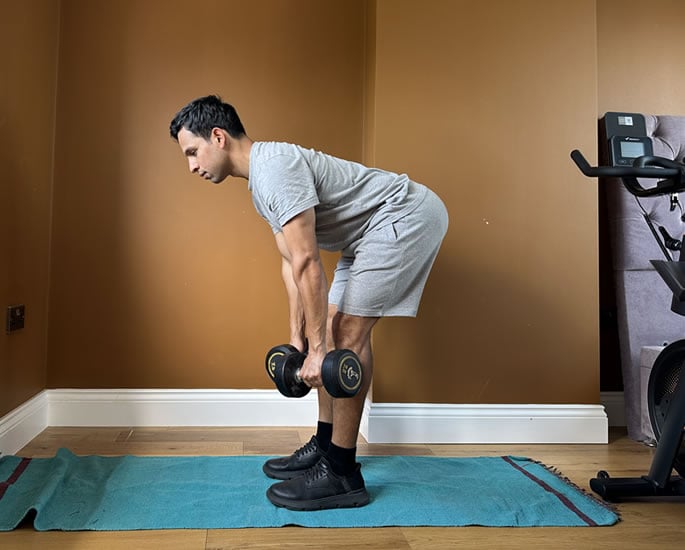
Whether it’s a bucket full of water, shopping bags, or a bag of compost in the backyard, we all have to lift something.
It’s a mundane but essential skill.
Without this, repetitive lifting gradually becomes problematic, causing injuries to your spine.
Test: Lift weight from close to the ground, either a gym bar or a pair of dumbbells, weighing 20 per cent of your body weight. Perform five repetitions.
Incline brisk walk or Bollywood dance (stamina, blood circulation)
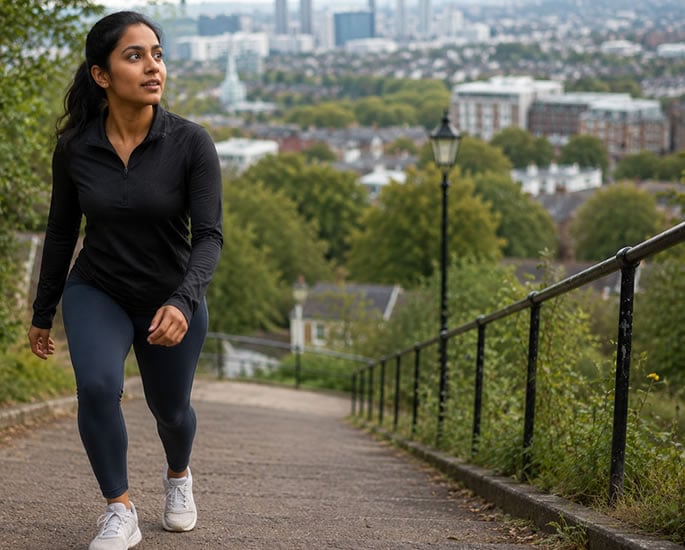
While the previous tests assess your strength, this one challenges your cardiovascular fitness. It shows how efficiently your heart circulates blood and recovers from an increased workload.
If during this test you’re gasping for air or finding it strenuous, it’s a cue to address aerobic fitness.
Test: Walk on an uphill stretch of a street or a park for five minutes at a brisk pace. Alternatively, pick your favourite Bollywood tune and dance for 10 minutes.
South Asians should leverage tools such as diet and exercise to turn their inherent risks into a motivation for health, a legacy they can pass on to future generations.
Ismail says: “Having good physical health, good muscle power, and good mobility has powerful effects in older life.
“It’s like saving for your pension. It’s best not to save for your pension when you’re 60; it’s much better to start when you’re 30.”