


















































When testosterone drops, libido often follows.
Microplastics are all around us but new research suggests that they may be interfering with male sexual health.
That shift matters because it moves the issue from environmental pollution into something far more personal: hormone balance, libido, and sexual performance.
Scientists are now asking whether the tiny plastic particles found in air, food, and water could be quietly disrupting systems in the male body that regulate sexual function.
Early studies have detected microplastics in male organs linked to reproduction, including the testes, raising questions about what chronic exposure means over time.
The science is still developing and human evidence remains limited, but animal research and early biological findings are starting to point towards mechanisms that cannot be ignored.
What are Microplastics?
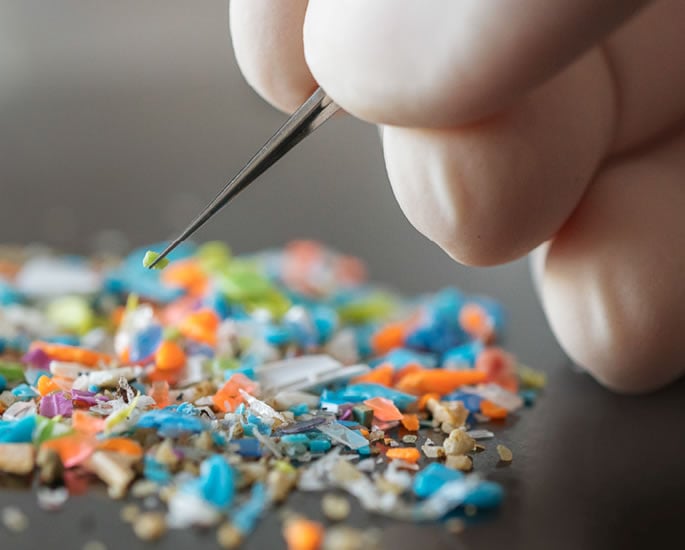
Microplastics are plastic fragments smaller than five millimetres, many far smaller at microscopic or even nano scale.
They are created when larger plastics break down, but also manufactured intentionally for industrial use and found in synthetic fibres.
They are present in bottled water, seafood, table salt, household dust, and packaging. They are also released from clothing made with synthetic materials during washing and wear.
In practical terms, exposure is constant.
Once inhaled or ingested, these particles do not simply pass through the body in all cases.
Research has confirmed their presence in human blood and multiple organs.
A 2024 study found microplastics in 100% of human testicles they examined, adding urgency to questions around reproductive health and hormone regulation.
Potential Biological Disruption

Male sexual function is closely tied to testosterone, which is produced in the testes by Leydig cells.
These cells are sensitive to internal stressors, particularly inflammation and oxidative damage.
This is where much of the concern around microplastics begins. In controlled animal studies, exposure has been linked to reduced testosterone levels.
A 2022 study on mice found that prolonged exposure to microplastics corresponded with measurable declines in testosterone production.
Researchers propose several possible mechanisms.
One is oxidative stress, where unstable molecules damage cell structures, including mitochondria that supply energy to hormone-producing cells.
Another is direct cellular toxicity, where particles may impair Leydig cell function or trigger cell death pathways.
There is also the chemical dimension. Microplastics can carry additives such as phthalates and bisphenol A, both of which are recognised endocrine-disrupting chemicals.
A growing body of review literature suggests that combined exposure to plastic particles and these chemicals may amplify hormonal disruption, although the scale of this effect in humans is still being investigated.
Libido and Erectile Function

When testosterone drops, libido often follows. That connection is well established in clinical endocrinology.
What is still being explored is whether microplastic exposure could contribute to changes in libido indirectly through hormonal disruption.
Currently, there is no direct clinical proof in humans linking microplastics to reduced sex drive.
However, the biological pathway being studied is plausible: disruption of hormone production affecting brain signalling, particularly dopamine pathways linked to motivation and sexual desire.
Erectile function introduces another layer. Erections depend on healthy blood vessels and efficient nitric oxide signalling, which allows arteries in the penis to relax and expand.
Some experimental research suggests microplastics may contribute to inflammation and endothelial stress, which could impair vascular function.
A 2022 review of emerging evidence in environmental toxicology noted that microplastics may interfere with signalling pathways relevant to both cardiovascular and reproductive systems.
That matters because erectile dysfunction is often a vascular issue as much as a hormonal one. If blood flow is compromised, sexual function is affected regardless of libido.
Still, it is important to be precise.
These mechanisms are largely derived from animal and laboratory research. Human clinical evidence directly linking microplastics to erectile dysfunction has not yet been established.
Sperm Quality and Wider Reproductive Trends
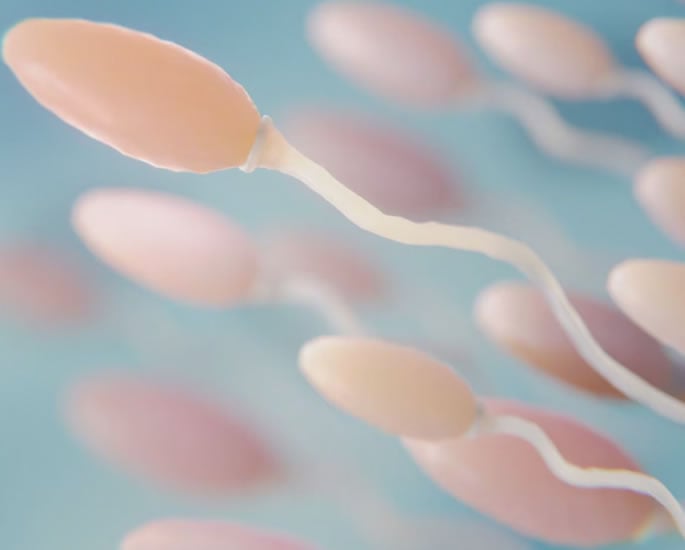
One of the most studied areas is sperm health.
Animal research has repeatedly shown that chronic exposure to microplastics can reduce sperm count, impair motility, and damage sperm DNA.
A 2024 study detected microplastics in human semen samples and reported associations with poorer sperm quality.
At the population level, sperm counts have declined significantly over recent decades.
Researchers have suggested that this is due to multiple contributing factors, including lifestyle changes, obesity, heat exposure, chemical pollutants, and environmental toxins.
Microplastics are now being added to that list of possible contributors, but they remain one part of a much larger and more complex picture.
The timing of rising plastic production and declining fertility trends is notable, but it is not evidence of causation.
The idea that microplastics could be affecting male sex drive and sexual function is no longer purely speculative, but it is also not settled science.
What exists today is a growing body of experimental and early human research suggesting plausible biological pathways involving hormones, blood vessels, and reproductive cells.
At the same time, the strongest evidence still comes from animal and laboratory studies, not large-scale human clinical trials. That gap matters because it means we cannot yet quantify risk with confidence.
What can be said with certainty is that microplastic exposure is widespread and biologically active in ways researchers are still mapping.
Whether that translates into meaningful impacts on libido and sexual performance in humans remains an open question.
The research is moving quickly, and so is the urgency to understand what long-term exposure actually means for reproductive health.